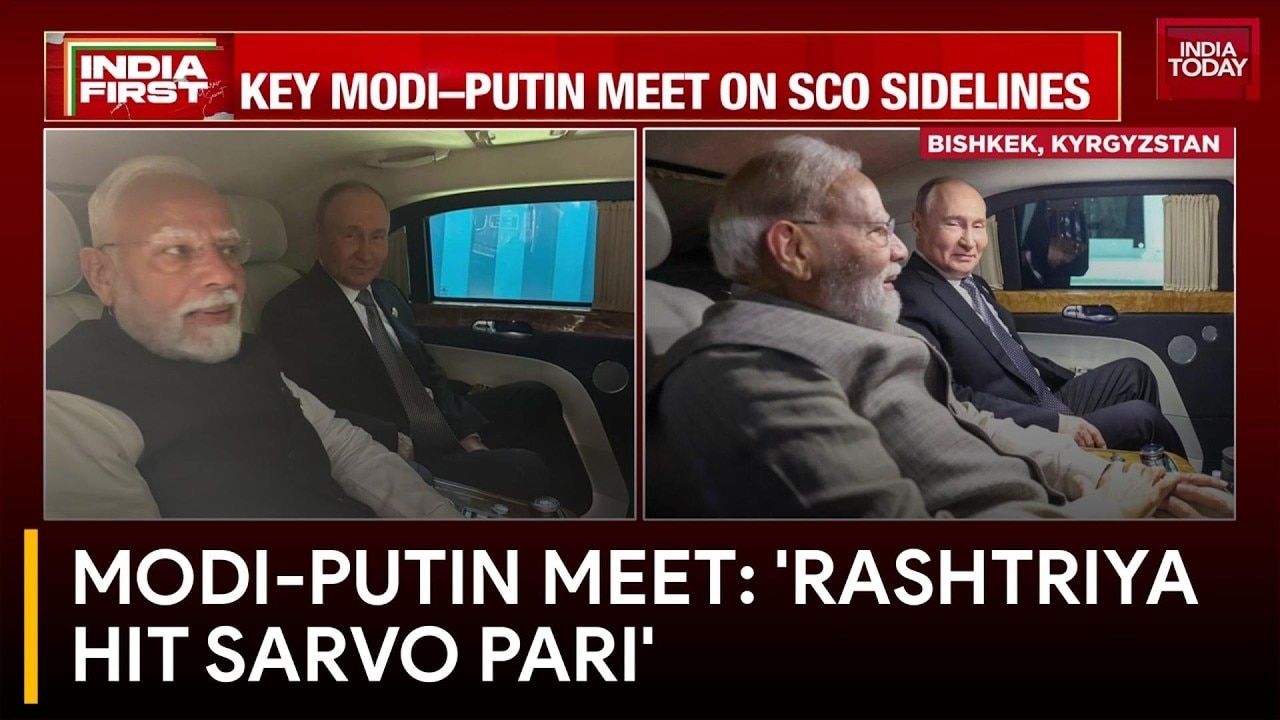
Prime Minister Narendra Modi met with President Vladimir Putin in Bishkek to strengthen strategic ties, while simultaneously highlighting India's robust 7.8% GDP growth driven by domestic demand.
- PM Modi and President Putin conducted high-level bilateral talks in Bishkek.
- India recorded a significant 7.8% GDP growth in the first quarter.
- Growth is primarily fueled by government capital expenditure and strong domestic consumption.
In a pivotal diplomatic encounter in Bishkek, Prime Minister Narendra Modi engaged in comprehensive bilateral discussions with President Vladimir Putin. The meeting comes at a critical juncture in global geopolitics, where India continues to balance its strategic autonomy while maintaining a legacy partnership with Russia. The talks focused on defense cooperation, energy security, and regional stability in Central Asia.
Parallel to the diplomatic discourse, Prime Minister Modi underscored India's economic resilience. The Prime Minister highlighted that the Indian economy has surged with a 7.8 per cent GDP growth in the first quarter. This economic momentum is seen as a testament to the structural reforms implemented by the current administration, positioning India as a global bright spot amidst a slowing global economy.
Why This Matters
BozokMedia analysis shows that the synchronization of high-level diplomacy with economic reporting is a strategic move to project India as a 'Vishwa Mitra' (Global Friend) that is both politically influential and economically powerhouse. By showcasing a 7.8% growth rate during a meeting with a major global power, India signals its increasing leverage in international negotiations.
"The intersection of strategic diplomacy in Bishkek and robust domestic economic growth reinforces India's trajectory toward becoming a top-three global economy."
The growth trajectory is largely attributed to two main pillars: domestic consumption and government capital expenditure. The Indian government's aggressive push into infrastructure—including highways, railways, and digital connectivity—has created a multiplier effect, stimulating private investment and job creation across various sectors.
Historically, India-Russia relations have been anchored in the Cold War era, evolving from a buyer-seller relationship in defense to a comprehensive strategic partnership. The Bishkek meeting serves as a continuation of this legacy, ensuring that despite Western pressures, the pragmatic interests of New Delhi and Moscow remain aligned.
Frequently Asked Questions
What drove India's 7.8% GDP growth?
The growth was primarily driven by strong domestic consumption and significant government spending on capital projects.
Where did the Modi-Putin bilateral meeting take place?
The bilateral meeting took place in Bishkek, the capital of Kyrgyzstan.