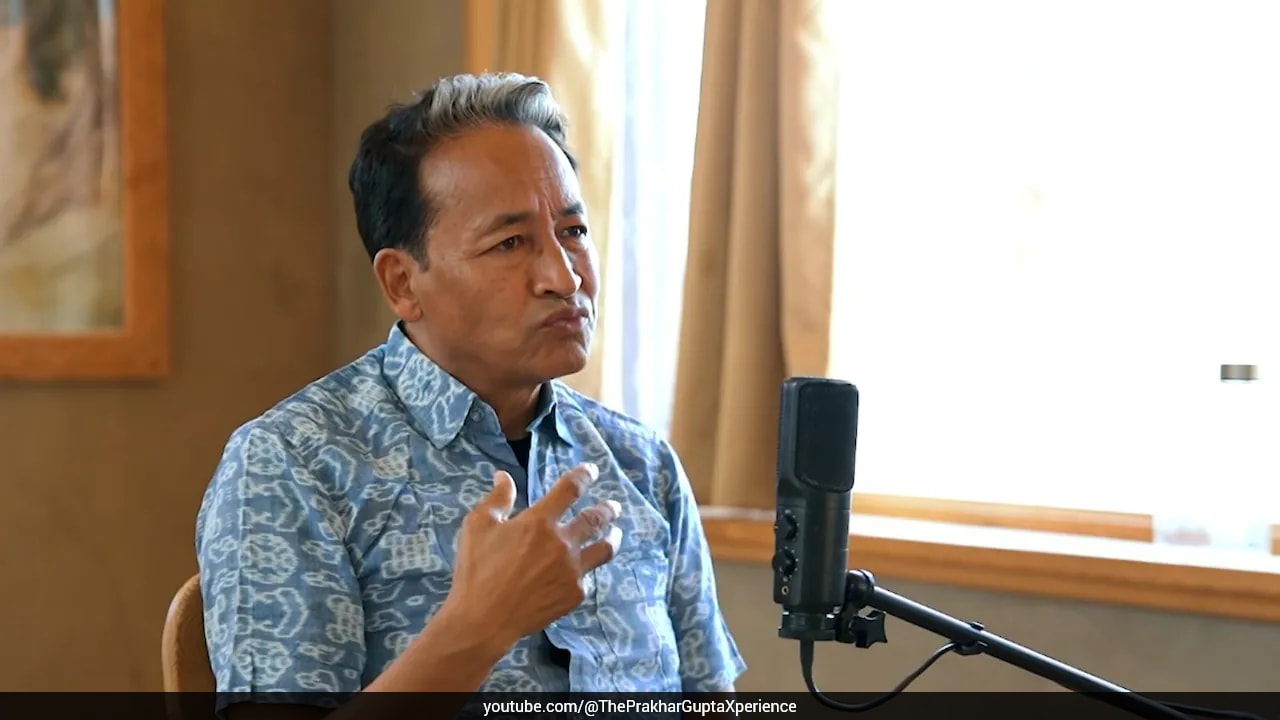
Activist Sonam Wangchuk revealed in a podcast with Prakhar Gupta that CJP urged him to tell the public to end their protests, while also praising NEET aspirants for their resilience.
- Sonam Wangchuk revealed pressure from CJP to discourage ongoing protests.
- Praised the tenacity of students fighting the NEET paper leak scandal.
- Emphasized the critical need for Ladakh's constitutional safeguards.
Renowned environmentalist and education reformist Sonam Wangchuk sparked a significant conversation during a recent appearance on Prakhar Gupta's YouTube channel. In a candid disclosure, Wangchuk claimed that the Citizens' Justice Project (CJP) wanted him to influence the public to cease their protest activities. This revelation adds a new layer of complexity to the ongoing struggle for Ladakh's statehood and Sixth Schedule protections.
Wangchuk detailed the friction that often arises between grassroots activists and organized legal or advocacy bodies. He emphasized that while strategic shifts are common in any movement, the core demand for democratic rights must remain non-negotiable.
Why This Matters
BozokMedia analysis shows that this public fallout highlights a strategic divide within India's activist ecosystem. The tension between 'legalistic' approaches to justice and 'mass-mobilization' tactics often creates friction, potentially weakening the collective bargaining power of marginalized regions like Ladakh.
"The strength of a democratic movement lies not in its uniformity, but in its unwavering commitment to the truth regardless of external pressure."
Beyond the internal politics of activism, Wangchuk pivoted to the NEET paper leak controversy. He lauded the young students for their persistence, stating that their refusal to let the agitation lose steam is a sign of a healthy, questioning generation. He argued that such student-led movements are essential for cleaning up systemic corruption in the examination process.
Furthermore, Wangchuk reiterated the urgency of protecting Ladakh's fragile ecosystem. He argued that without the promised constitutional safeguards, the region's unique environment and culture are at risk of industrial exploitation, making the current protests a necessity rather than a choice.
Frequently Asked Questions
1. What was the nature of the conflict between Wangchuk and CJP?
Wangchuk alleged that CJP pressured him to advise protesters to end their demonstrations.
2. Why did Wangchuk mention the NEET protests?
He used the example of NEET students to highlight the importance of youth-led resistance against institutional failure.