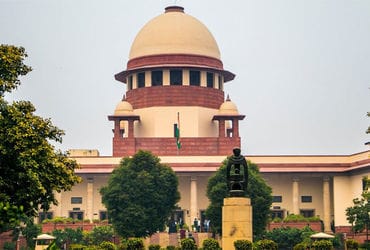
The Supreme Court of India has validated the Election Commission's power to perform Special Intensive Revisions (SIR) of voter lists, ruling that such measures are essential for ensuring free and fair elections.
- Supreme Court upheld ECI's authority to conduct Special Intensive Revision (SIR) under Article 324.
- Court ruled that accurate electoral rolls are the foundation of the democratic process.
- The verdict clarifies that ECI can conduct limited citizenship inquiries during roll revisions.
- Procedural safeguards were found sufficient to prevent arbitrary voter exclusion.
In a landmark judgment, the Supreme Court of India has upheld the decision of the Election Commission of India (ECI) to undertake a Special Intensive Revision (SIR) of electoral rolls. A Bench comprising Chief Justice of India (CJI) Surya Kant and Justice Joymalya Bagchi ruled that the exercise is well within the constitutional and statutory powers of the poll body, aimed specifically at preserving the integrity of the democratic process.
The court addressed a series of petitions challenging the legality of the SIR, focusing on whether the ECI had exceeded its mandate under the Representation of the People Act (RPA), 1950. The Bench concluded that the SIR does not violate any statutory provisions and is empowered by Article 324 of the Constitution read with Section 21(3) of the RPA Act.
Why This Matters
BozokMedia analysis shows that this ruling provides the ECI with a powerful legal shield to purge ghost voters and rectify inaccuracies caused by decades of urban migration. By validating the 'Special' nature of this revision, the Court has acknowledged that routine updates are often insufficient to handle large-scale demographic shifts, thereby strengthening the credibility of future election outcomes.
"Free and fair elections do not rest merely upon the mechanics of polling; they fundamentally depend upon the integrity and accuracy of the electoral rolls."
The Court highlighted that more than forty years had passed since the last intensive revision. With rapid urbanization and mass migration, the possibility of duplication and inaccuracies had increased significantly. The Bench rejected the argument that the SIR was merely for administrative convenience, instead labeling it a "constitutional imperative."
Regarding the concerns of proportionality and arbitrary exclusion, the Court found that the ECI had implemented sufficient procedural safeguards. The judgment noted that the requirements of notice and hearing under Rule 21A of the Registration of Electors Rules, 1960, were preserved in substance, ensuring that citizens have a fair opportunity to contest deletions.
Furthermore, the Court validated the ECI's structured documentation framework. While some petitioners argued that the document requirements were too rigid, the Bench held that such a framework is necessary for administrative consistency and evidentiary reliability. This includes the power to conduct limited inquiries into citizenship to ensure that only eligible citizens are registered.
Frequently Asked Questions
Q1: What is Special Intensive Revision (SIR)?
SIR is a comprehensive verification process where the ECI goes beyond routine updates to intensively scrub electoral rolls of duplicates, deceased voters, and ineligible entries.
Q2: Does this mean the ECI can delete voters without notice?
No. The Supreme Court specifically upheld that procedural safeguards, including the right to notice and hearing, must be maintained to prevent arbitrary exclusion.


