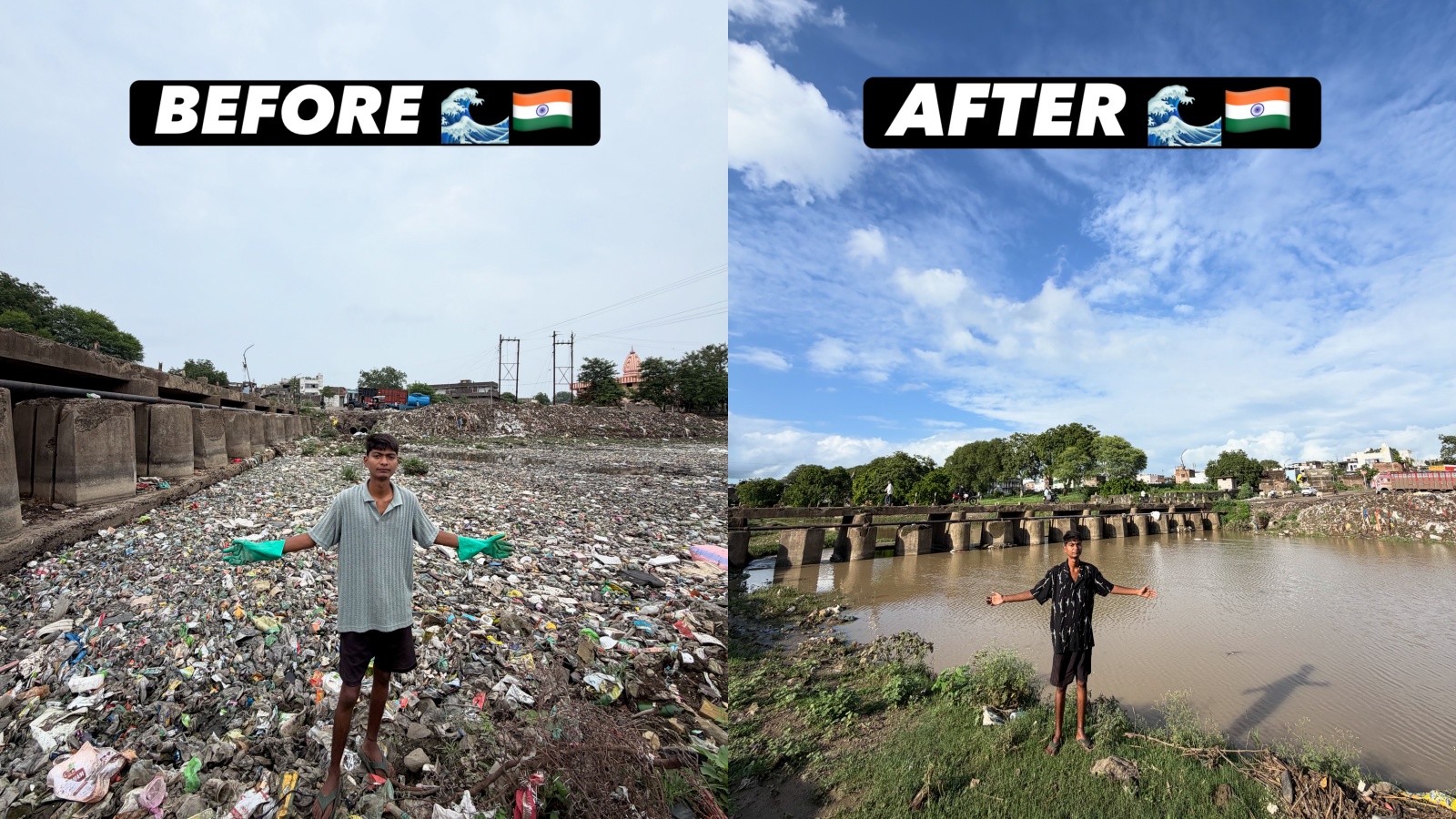
Bittu, a 20-year-old from Madhya Pradesh, is single-handedly battling pollution in the Ajnar River, risking his health to remove plastic and waste.
- Bittu, known as 'Bittu Tabahi', is cleaning the Ajnar River using his own funds.
- The young activist faces severe skin infections due to contact with toxic waste.
- He has faced social ridicule and accusations of seeking social media fame.
In a remarkable display of civic duty, a 20-year-old student from Madhya Pradesh is transforming the landscape of the heavily polluted Ajnar River. Known online as Bittu Tabahi, this young man has bypassed the wait for government intervention and has instead taken it upon himself to manually remove plastic, discarded waste, and hazardous debris from the riverbeds.
The journey has not been easy. Bittu has frequently encountered skepticism from netizens who accused him of performing these acts merely to go viral. Responding to these claims, Bittu shared that each river ghat requires over three months of intensive, manual labor, proving that his efforts are rooted in genuine environmental concern rather than digital clout.
Why This Matters
BozokMedia analysis shows that individual activism like Bittu's acts as a catalyst for social accountability. When a single youth steps up to address systemic failures in waste management, it forces both the community and the authorities to confront the reality of environmental degradation.
'I wanted to make a machine to clean the river, but I didn't have the money. I am a student. So I thought, I will clean as much as I can with my own hands.'
The physical toll on Bittu has been significant. He revealed in an interview that the constant contact with toxic, polluted water has led to severe skin infections, causing the skin on his hands and feet to peel off. Despite the pain and the social stigma—where some mockingly call him a 'drain cleaner'—his mission continues unabated.
Historical Background
River pollution in India has reached critical levels due to rapid urbanization and inadequate sewage treatment. While large-scale government projects exist, local rivers often suffer from neglect, leaving the burden of cleanliness on local residents and grassroots activists.
Frequently Asked Questions
Question 1: Is Bittu receiving government support?
Answer: No, he is currently using his own money and resources to fund his cleaning drives.
Question 2: How has the public reacted to his work?
Answer: While some mock him, many celebrities and influencers have expressed deep admiration for his dedication.