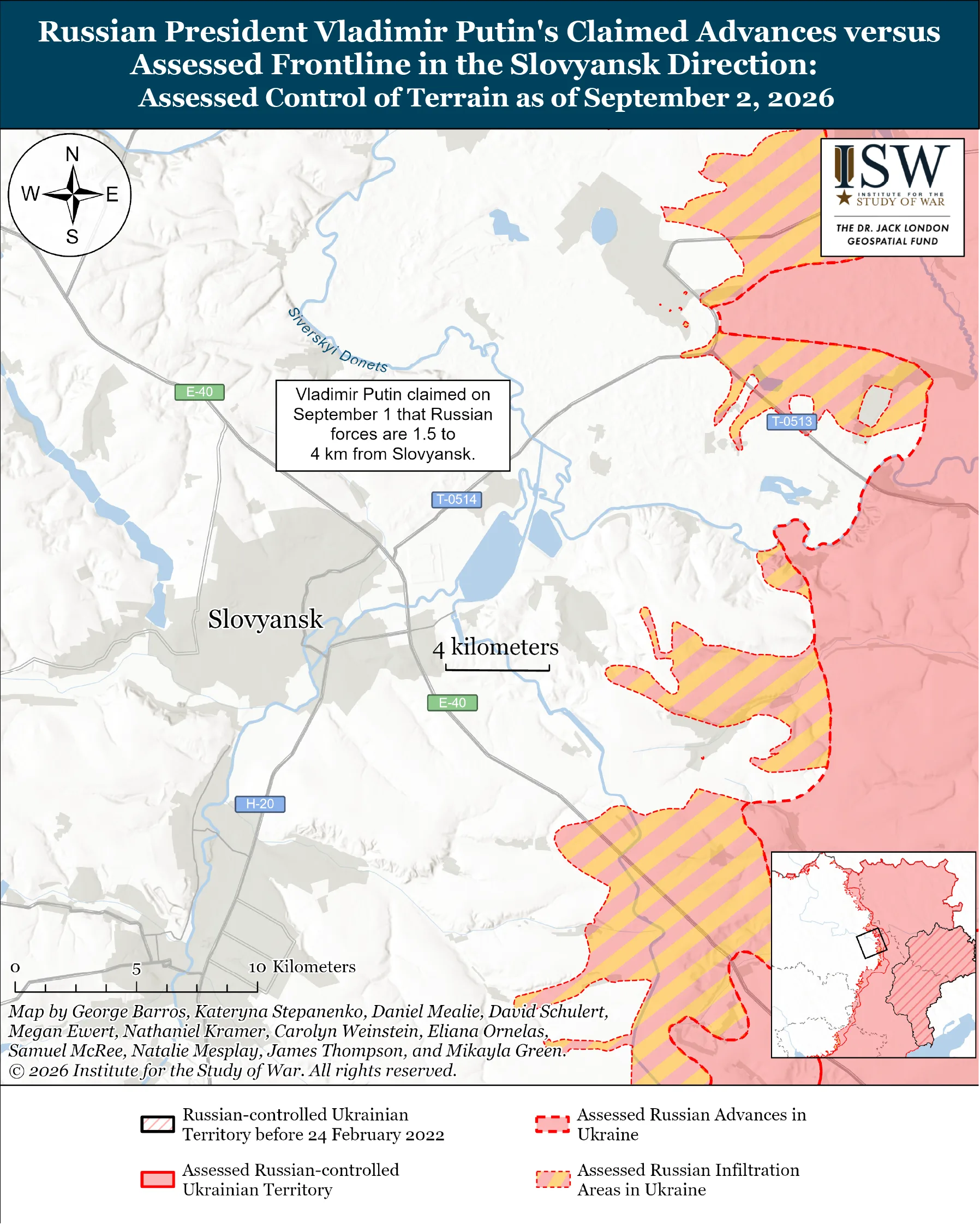
A new assessment from the Institute for the Study of War (ISW) reveals a significant discrepancy between Russian President Vladimir Putin's claims of military progress and the actual assessed control of terrain near Slovyansk.
- Significant discrepancies exist between Kremlin claims and ISW ground assessments.
- The Slovyansk direction remains a critical flashpoint in the ongoing conflict.
- Terrain control is highly contested and fluctuates based on tactical engagements.
The conflict in the Slovyansk direction has entered a phase of intense scrutiny. According to the latest report from the Institute for the Study of War (ISW) dated September 2, 2026, there is a stark contrast between the military advances claimed by Russian President Vladimir Putin and the actual assessed control of the terrain on the ground. This gap highlights the ongoing struggle between political narrative and tactical reality.
As the offensive campaign continues, the Slovyansk axis has become a focal point for both Russian strategic ambitions and Ukrainian defensive operations. While Russian official channels suggest significant territorial gains, independent analysts and satellite imagery suggest that the actual frontline has not shifted as dramatically as the Kremlin suggests. This suggests a sophisticated level of information warfare being deployed alongside kinetic military actions.
Why This Matters
BozokMedia analysis shows that the divergence between official rhetoric and battlefield reality is a common feature in modern high-intensity conflicts. Such discrepancies are often used to bolster domestic morale and project an image of unstoppable momentum to the international community, even when operational progress is stalled or incremental.
The gap between political victory claims and tactical battlefield reality is often the widest during periods of high attrition.
Historically, the Slovyansk region has been a cornerstone of defense in the Donbas area. Control over this sector provides significant logistical advantages and dictates the flow of future offensives. The current situation indicates that both sides are heavily invested in a war of attrition, where even small gains are fought for with immense cost.
The implications of this stalemate are profound. If Russia fails to translate its claims into actual territorial control, it may face mounting pressure regarding resource allocation and troop fatigue. Conversely, Ukraine's ability to hold these assessed lines is crucial for its long-term strategic stability.
Frequently Asked Questions
Question 1: What is the main discrepancy noted by ISW?
Answer: The main discrepancy is between the territorial advances claimed by the Russian leadership and the actual terrain control assessed by independent analysts.
Question 2: Why is the Slovyansk direction critical?
Answer: It is a key strategic and logistical hub that influences the broader dynamics of the conflict in Eastern Ukraine.