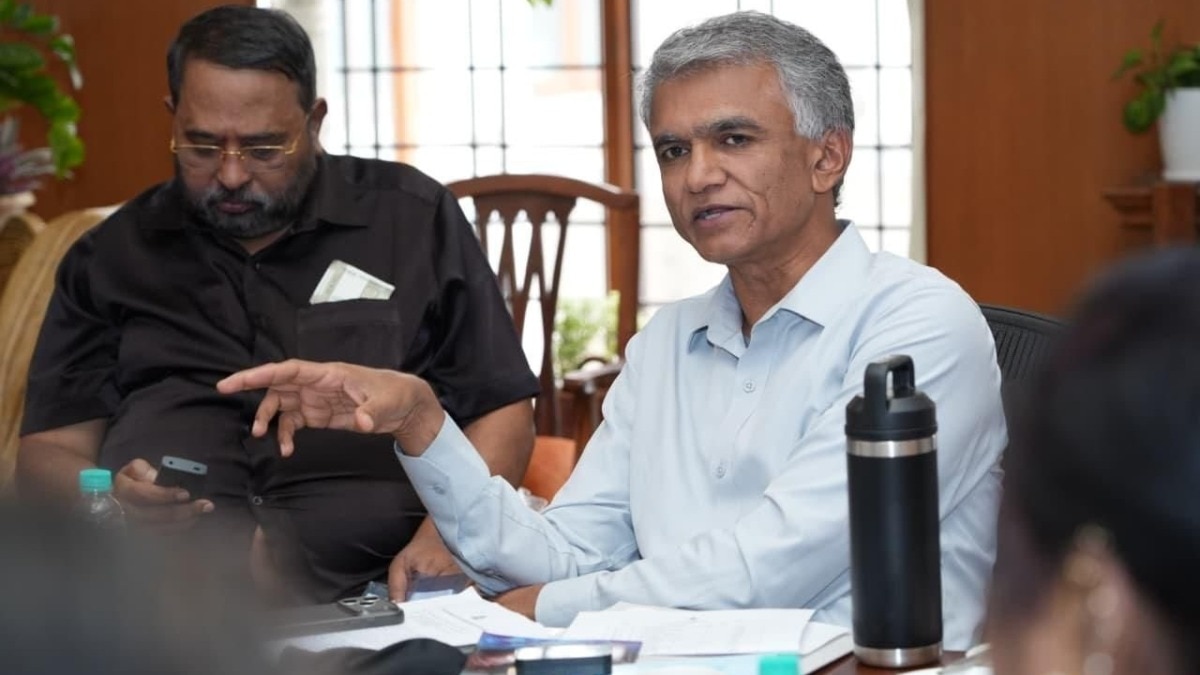
Former journalist H. Ramakrishnan reflects on the transformation of Chennai, moving from the tranquil, tree-lined streets of 1951 Madras to the mechanical pace of today.
- In 1951, Madras was a tranquil, 'townish village' characterized by trams and tree-lined avenues.
- The transition from Madras to Chennai saw the disappearance of trams and an explosion in vehicular traffic.
- Despite the mechanical nature of the modern metropolis, the emotional bond with the city remains intact.
In a deeply nostalgic reflection, former television journalist H. Ramakrishnan chronicles the profound metamorphosis of a city. His journey began in 1951, when he was a ten-year-old boy witnessing a version of Madras that exists now only in the annals of history—a place that felt more like a sprawling, green village than the concrete jungle it is today.
Ramakrishnan vividly recalls the charm of traveling in trams and the sight of narrow, unmetalled roads lined with lush trees. The pace of life was dictated by nature and community; milkmen arrived with cows and calves at dawn, and local vendors provided a rhythmic, daily presence in every household. This was a time of simplicity, where pure drinking water was sourced directly from wells and taps.
The Era of Transition
As he became a permanent resident in 1962, the landscape began to shift. Staying at a lodge on Pycrofts Road in Tiruvallikeni, he witnessed the early signs of urbanization. The charm of the old ways—like enjoying a meal at Sydoji Mess for just ₹10 or late-night ice cream at the legendary Buhari—formed the social fabric of the time. The city was transitioning from a slow-paced settlement to a bustling urban hub.
The introduction of more 'pleasure cars' and buses marked the beginning of the end for the old tram system and the quiet, tree-shrouded avenues. The intimacy of the neighborhood was gradually replaced by the anonymity of a growing population.
Why This Matters
BozokMedia analysis shows that such personal narratives are crucial for understanding urban sociology. The evolution from Madras to Chennai is not just a change in nomenclature, but a reflection of India's rapid socio-economic shift from communal, village-style living to a high-speed, mechanical urban existence.
"Urbanization brings progress, but it often leaves behind the very soul that made the city a home."
Today, the metropolis is described as 'mechanical,' a stark contrast to the sensory-rich Madras of the 1950s. However, the essence of the city survives through the affection of its long-term residents, who find beauty in its modern chaos just as much as its historical tranquility.
Frequently Asked Questions
1. What was the main difference between old Madras and modern Chennai?
Old Madras was characterized by trams, narrow tree-lined roads, and a slower, community-driven lifestyle, whereas modern Chennai is a fast-paced, mechanical metropolis.
2. Who is the author of this memoir?
The memoir is written by H. Ramakrishnan, a former television journalist.