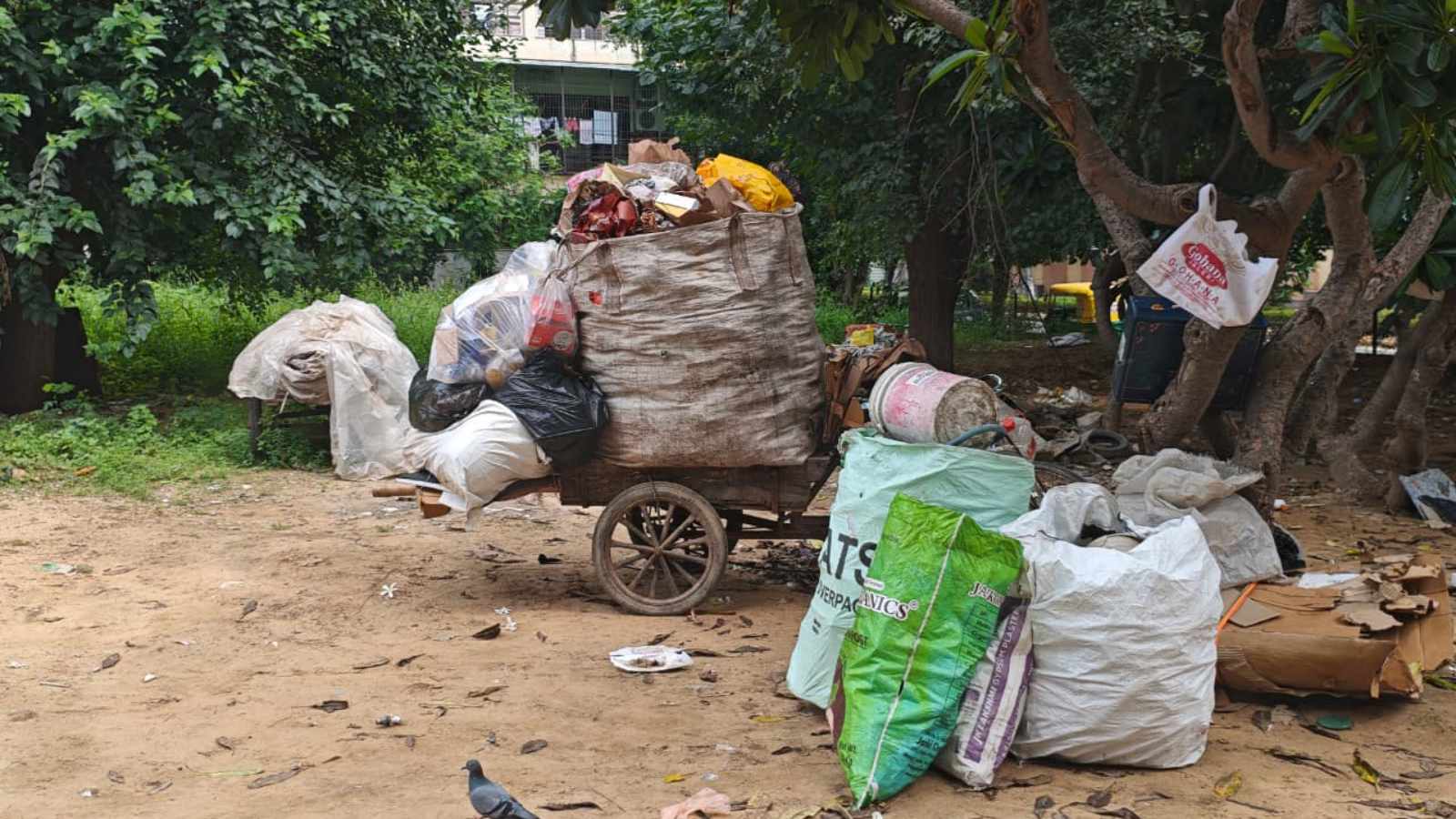
A prolonged strike by sanitation workers and fire department staff has entered its second month in Gurgaon, leading to massive waste accumulation in residential and commercial areas. Delayed wages and contractual disputes remain at the heart of the crisis.
- Sanitation workers' strike has crossed the 30-day mark.
- Waste is piling up in upscale townships and local markets.
- Delayed salaries and contractor changes are fueling the unrest.
- Labor unions accuse the Haryana government of misleading the public.
The urban landscape of Gurgaon is facing a severe hygiene crisis as the indefinite strike by municipal sanitation workers and fire department staff enters its second month. From the upscale residential pockets of Sector 54 to the bustling markets of Sector 56, heaps of domestic waste have become a common sight, posing significant public health risks.
In Suncity Township, the situation is particularly tense. While Resident Welfare Associations (RWAs) are attempting to hire private laborers to manage sweeping, the scale of the crisis remains overwhelming. Municipal Corporation of Gurugram (MCG) supervisors report that only a fraction of the required workforce is reporting for duty, as many workers fear backlash from unions if they attempt to break the strike.
Why This Matters
BozokMedia analysis shows that this crisis highlights a deep-seated structural flaw in urban governance: the over-reliance on precarious contractual labor for essential services. When the payment chain between contractors and workers breaks, the entire city's sanitation infrastructure collapses, turning a high-tech hub into a zone of environmental hazard.
"The sanitation crisis in Gurgaon is a direct result of administrative apathy and the failure to provide basic financial security to essential workers."
The Nagarpalika Karamchari Sangh has intensified its protests, accusing the Haryana government of making contradictory claims regarding the resolution of worker demands. Union leader Basant Kumar pointed out that while various ministers claim different numbers of demands have been met, no official written notification has been issued to validate these statements.
Adding to the complexity is the issue of payment delays. Rakesh Kumar, an MCG supervisor, noted that recent changes in contracting companies have left many workers waiting for up to three months for their salaries. This financial instability has crippled the waste-lifting mechanism across the city.
Historical Background
As Gurgaon transitioned from a rural outpost to a global corporate hub, its civic infrastructure struggled to keep pace. The reliance on outsourced, contract-based models for sanitation and sewage management has historically led to labor disputes, as these workers often lack the protections and regularized status enjoyed by other government cadres.
Frequently Asked Questions
Question 1: Why are the sanitation workers on strike?
Answer: The primary demands include regularized employment, better wages than the current ₹9,000-₹10,000, and the withdrawal of suspension orders.
Question 2: How is the strike affecting residents?
Answer: Residents are facing uncollected garbage in parks, streets, and markets, increasing the risk of disease outbreaks.