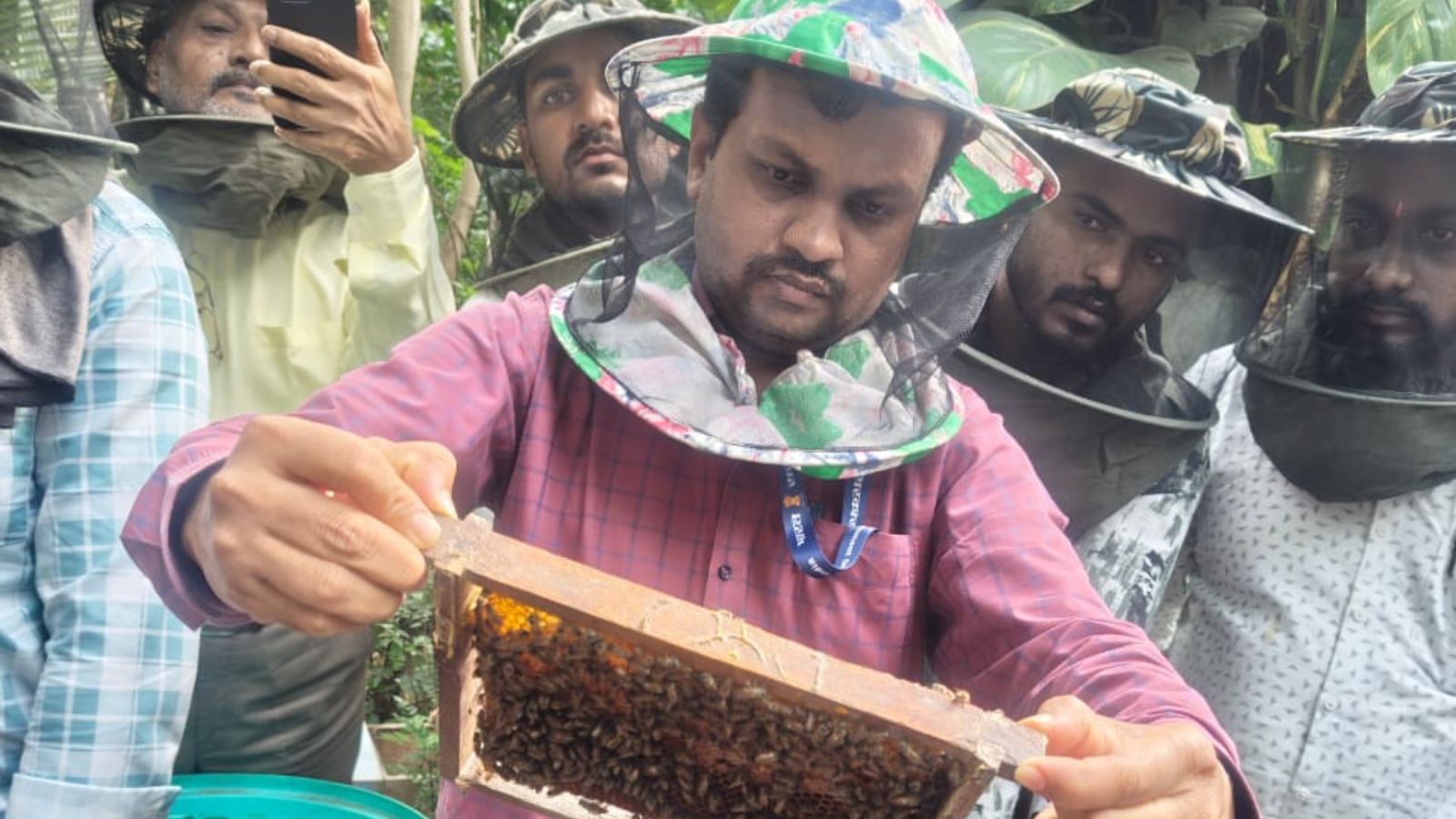
The single-room bee museum at Pune’s Central Bee Research and Training Institute offers a deep dive into apiculture and its vital role in agriculture. With interactive displays and real-life exhibits, it educates visitors from school kids to budding beekeepers.
- Pune’s one-room bee museum is a hub of educational and agricultural knowledge.
- Bee pollination can boost crop yields by 26-40%.
- The exhibit showcases honey, pollen, and predators of bees.
Discovering Pune’s Secret Bee Museum
Located in Shivajinagar, the Central Bee Research and Training Institute (CBRTI) opened its doors in 1962. The museum, though modest in size, houses a wealth of information on bees, from basic biology to advanced apicultural practices.
Interactive Pathways of Bee Trivia
Visitors climb a staircase where each step presents fascinating facts—"A queen bee rarely lives beyond two years," "A hive detects a missing queen within 15 minutes," and "A queen stores semen in her body after mating." The journey continues with details on honey bee anatomy and behavior.
Bee Pollination and Agriculture
A board lists crops that depend on honey bees: mustard, sunflower, cotton, coffee, almond, avocado, guava, peach, orange, watermelon, onion, pumpkin, radish, and coriander. Training Coordinator Rahul Kale emphasizes the importance of bee boxes for cross‑pollinated farms, especially those growing moringa and papaya.
Bee Products and Health Benefits
The museum displays honey extractors, wasp traps, and a nest of predator wasps. It also covers the process of honey extraction, the role of bee pollen in nutraceuticals, and the therapeutic use of bee venom for arthritis and rheumatism.
Why This Matters
BozokMedia analysis shows that bee conservation is gaining urgency in both urban and rural settings. This museum serves as a vital educational tool for farmers and citizens alike.
"With bee populations declining, educational centers like this museum are essential for raising awareness." – Rahul Kale, Training Coordinator, CBRTI
Frequently Asked Questions
- What are the museum’s visiting hours?
- Does the museum host special programs for children?