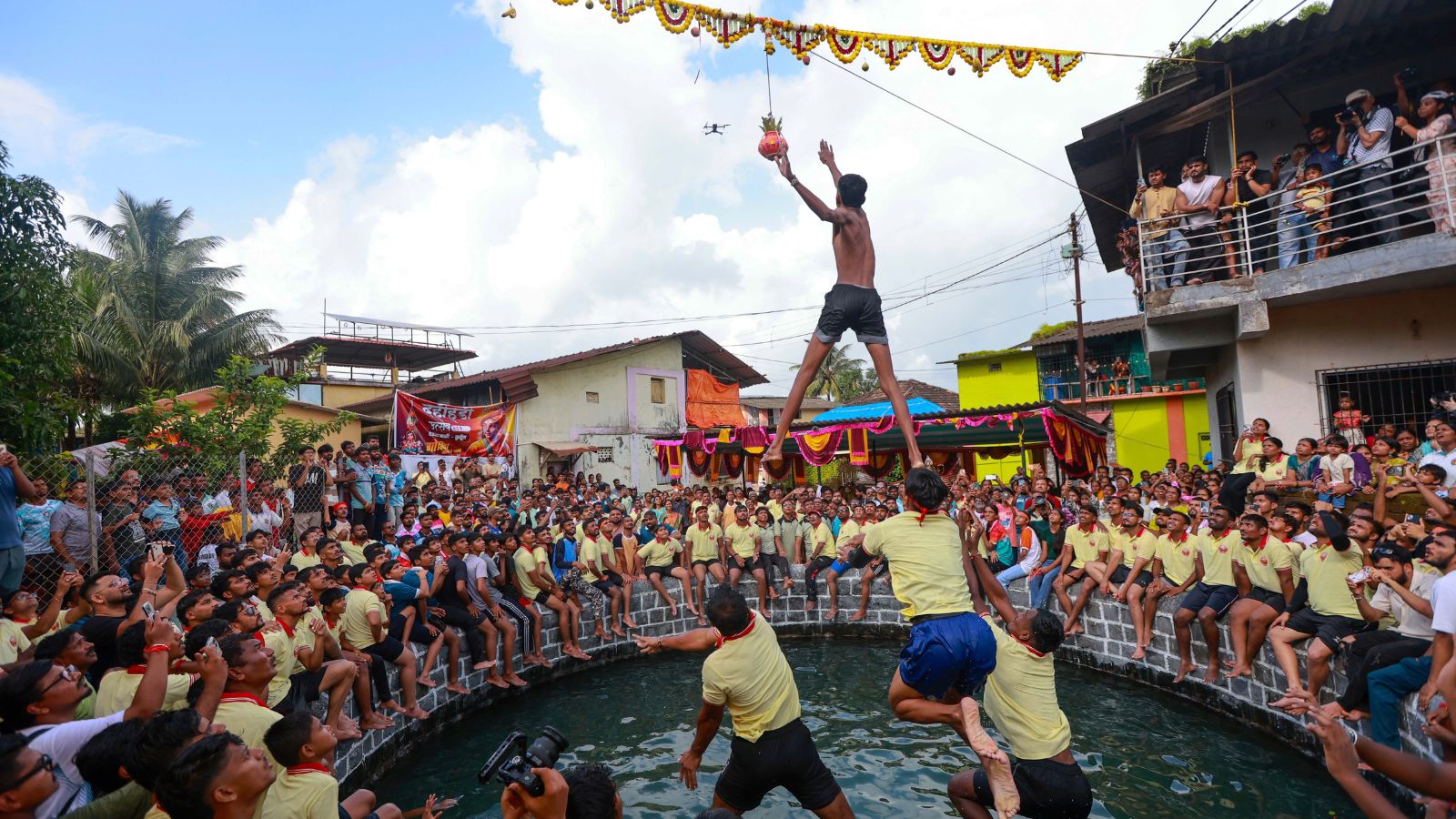
In the village of Kurdus, Maharashtra, the traditional Dahi Handi celebration skips human pyramids in favor of a thrilling leap from a village well.
- Kurdus village has maintained this unique tradition since 1992.
- Participants jump toward a suspended pot instead of forming human pyramids.
- The 40-foot deep well acts as a natural safety cushion for jumpers.
While the streets of Maharashtra typically erupt with massive human pyramids during Dahi Handi, the village of Kurdus in the Alibaug taluka of Raigad district offers a breathtakingly different spectacle. Instead of climbing atop one another, local residents participate in a tradition that involves leaping through the air toward a clay pot suspended over a massive village well.
Historical Background
The tradition was birthed in 1992 by a group of local farming families, including the Patil, Pingle, Keni, Thale, and Sheramkar families. What began as a casual, fun activity involving a custard apple tree near the well has evolved into a massive cultural phenomenon. Over the last 34 years, the method has transitioned from jumping off trees to jumping from the well's curb to reach the handi, which hangs approximately 15 to 20 feet above the water.
The Mechanics of the Leap
Unlike conventional celebrations that require dozens of participants to build tiers, the Kurdus version is remarkably streamlined. Each attempt involves just four people: three form a stable base, and the fourth—the jumper—is launched toward the target. The winner is the individual who successfully touches the handi mid-air.
Success in this unique sport depends more on physical flexibility and precision than on raw muscular strength.
Why This Matters
BozokMedia analysis shows that the digital transformation of rural traditions is creating new economic opportunities for small villages. The viral nature of these jumps on platforms like Instagram and YouTube has turned Kurdus from a quiet farming hamlet into a trending destination for tourists and social media enthusiasts, proving that local heritage is a powerful driver for regional tourism.
Community and Safety
The centerpiece of this festival is a 40-foot-deep well built in 1954 through shramdan (voluntary labor). The well is not just a ritual site but a vital resource used by the community year-round. Safety is inherently built into the tradition; because the well is wide and filled with water, the jumpers land safely in the pool below. This has resulted in an incredible safety record with no major injuries reported in over three decades.
Frequently Asked Questions
1. How many people are needed for one attempt in Kurdus?
Only four people are required: three to form the base and one to jump.
2. Where is Kurdus located?
Kurdus is located in the Alibaug taluka of the Raigad district, about 150 km from Pune.