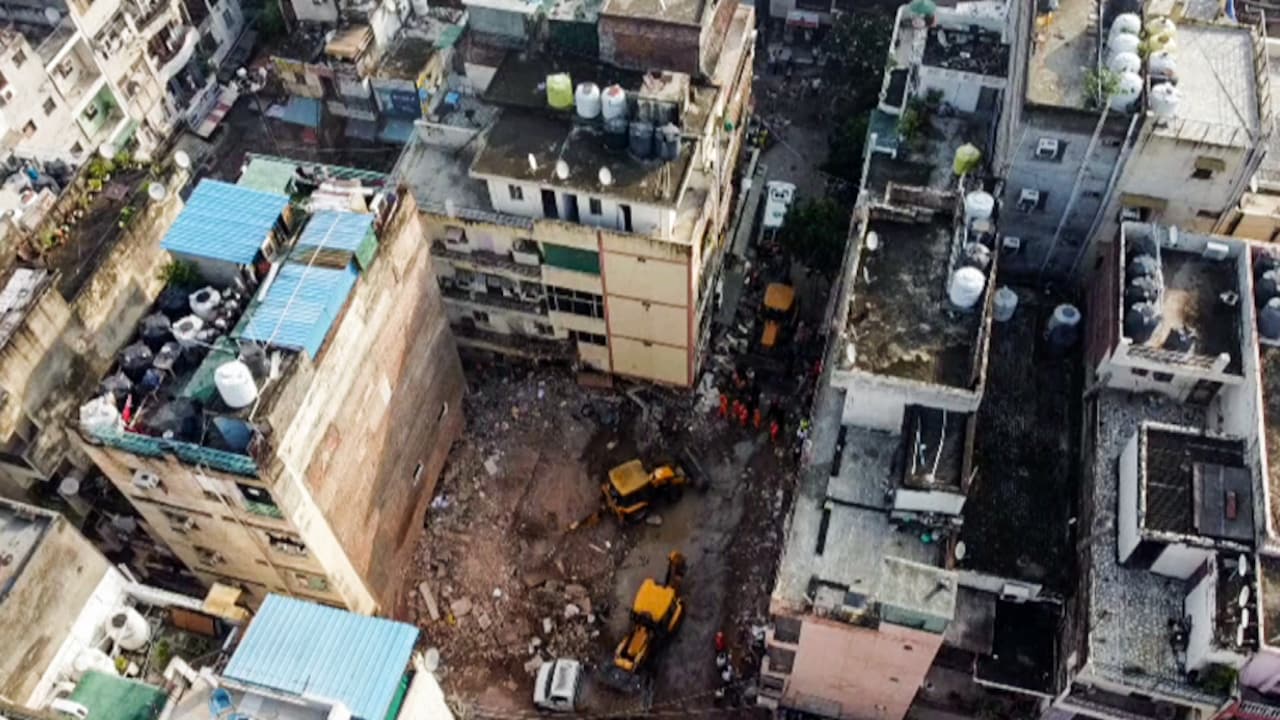
In the aftermath of a devastating PG building collapse in South Delhi's Satya Niketan, families faced the harrowing task of identifying mutilated bodies using only small physical marks.
- A PG accommodation collapse in Satya Niketan, South Delhi, caused multiple fatalities.
- Severe facial injuries made visual identification of the victims nearly impossible for grieving families.
- Unique physical markers like moles and old surgical scars became the only way to confirm identities.
The collapse of a paying guest (PG) accommodation in Southwest Delhi’s Satya Niketan has left a trail of devastation, not just in the debris, but in the hearts of families waiting for answers. As rescuers pulled bodies from the wreckage, a grim reality set in for the parents: the faces of their loved ones were no longer recognizable.
For Pushpa Jhajj, the pain was compounded by the suddenness of the loss. Her 19-year-old son, Arpit, had just returned to Delhi from his hometown in Dewas, Madhya Pradesh, after celebrating Raksha Bandhan. "He called me after reaching his room... Who would have known that was the last time we would speak?" she recounted. At the AIIMS Trauma Centre, the identification process was agonizing. "His face was completely distorted; his left cheek was heavily injured. The only way I could identify him was the big mole on his chest," she said.
Why This Matters
BozokMedia analysis shows that such tragedies highlight the extreme psychological trauma faced by families during disaster recovery. When traditional methods of identification, like facial recognition, fail due to trauma, the reliance shifts to forensic dermatoglyphics and unique bodily markers, lengthening the period of uncertainty and grief.
In cases of extreme facial trauma, physical idiosyncrasies like moles or surgical scars become the most critical forensic tools for familial identification.
A similar heartbreaking scene unfolded for the family of 18-year-old Akshat Singh Yadav. Akshat, who had moved to Delhi from Madhya Pradesh just two days prior for his studies, was also unrecognizable due to severe injuries. His uncle, Biren Kumar Yadav, shared that it was an old injury on Akshat's knee—a scar from a childhood operation—that finally allowed the family to claim his body. The family had been waiting at the hospital since the early hours of the morning, caught in a limbo of hope and horror.
Historical Background
The proliferation of high-density student housing in areas like Satya Niketan and Mukherjee Nagar has often outpaced urban safety regulations. Historically, building collapses in these congested pockets have raised serious concerns regarding structural integrity, fire safety, and the oversight of commercial residential buildings in Delhi.
Frequently Asked Questions (FAQs)
Q1: Why was it difficult for families to identify the victims?
A: The victims suffered severe facial trauma during the building collapse, making facial recognition impossible.
Q2: What specific marks helped in identification?
A: Families relied on unique physical features such as a mole on the chest and old surgical scars on the knee.