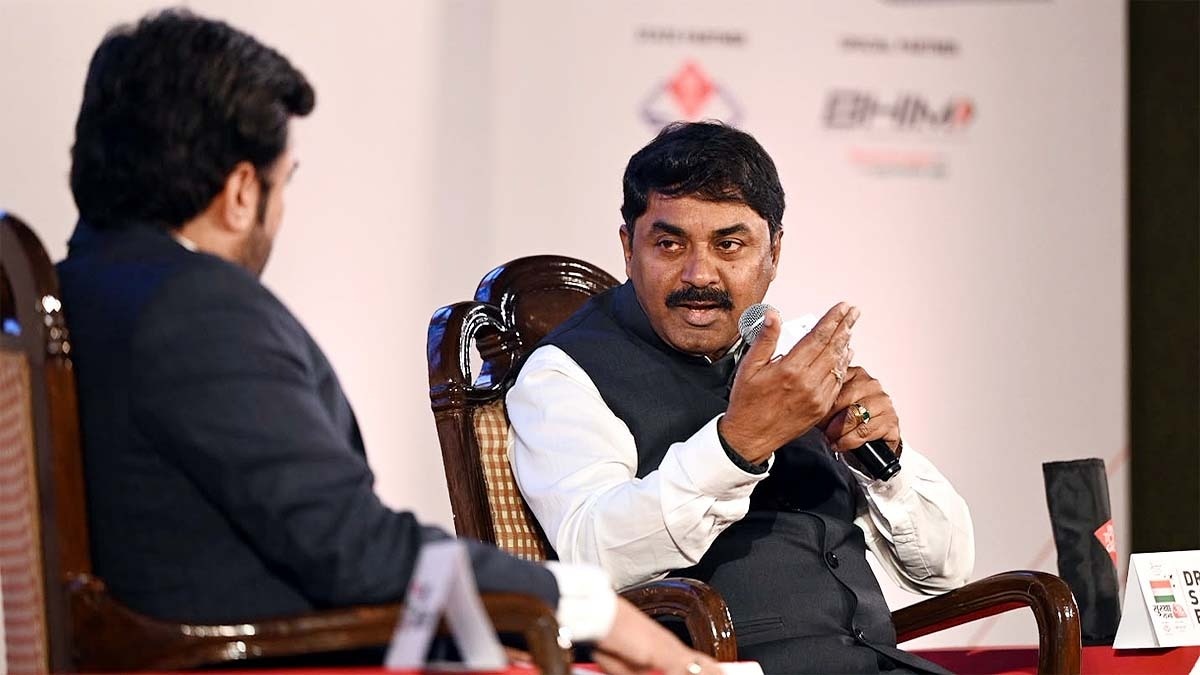
At the Suraksha Sabha, former DRDO Chairman G. Satheesh Reddy emphasized that while heavy platforms like tanks and submarines remain vital, low-cost autonomous systems will define asymmetric warfare. He also highlighted India's massive leap in defense exports and indigenization.
- Future combat will rely on a synergy between heavy platforms and low-cost autonomous systems.
- India's defense exports have surged from ₹23,666 crore to approximately ₹29,450 crore.
- The DCPP model has slashed defense development timelines from 12 years to just 4 years.
- Strategic focus is shifting toward semiconductors, sensors, and aero-engines for true self-reliance.
Speaking at the 'Suraksha Sabha' event, former DRDO Chairman G. Satheesh Reddy provided a profound analysis of the shifting paradigms in global warfare. He asserted that while traditional platforms—such as aircraft, submarines, destroyers, and tanks—will continue to provide necessary strategic depth, the rise of asymmetric and tactical warfare necessitates a heavy reliance on low-cost autonomous systems.
Drawing lessons from recent global conflicts, including the war in Ukraine, Reddy noted that the integration of heavy military assets with rapid-response drone technology is the current global trend. These autonomous solutions allow for mass deployment and high-speed reaction times, which are crucial in modern battlefields.
A Revolution in Industrial Partnership
One of the most significant shifts in India's defense landscape is the transition from the traditional DRDO-led model to the Development-cum-Production Partner (DCPP) concept. Previously, DRDO would design and develop a system before handing it over to industry. Now, private industry partners are involved from the very initial design and development stages.
The balance between traditional combat capabilities and low-cost autonomous technology will be the deciding factor in future military superiority.
This collaborative approach has drastically optimized timelines. Systems that once took over a decade to develop are now being ready in just four years. With over 2,000 defense industries in India, tier-one and tier-two companies are no longer just manufacturing components; they are designing complete systems, including light combat aircraft (LCA) and lightweight tanks.
Surging Defense Exports and Global Footprint
India is rapidly evolving from a major importer to a significant global exporter of defense technology. Defense exports have seen a remarkable climb, rising from ₹23,666 crore last year to nearly ₹29,450 crore. Systems like the Pinaka multi-barrel rocket launcher and Akash missile systems are gaining international traction, marking India's arrival on the global stage.
| Feature | Traditional Model | Modern DCPP Model |
|---|---|---|
| Development Time | 10-12 Years | ~4 Years |
| Industry Involvement | Post-Development | From Design Stage |
| Primary Focus | Government Led | Industry-Academic Partnership |
Securing Space and Economic Infrastructure
Reddy highlighted that the battlefield has expanded beyond physical territories to include space and economic infrastructure. Attacks on civilian targets like fuel terminals and oil storage are becoming part of modern warfare. India's successful Anti-Satellite (ASAT) test in 2019 served as a clear signal of its capability to protect its space assets.
The Road to 2030 and 2047
To achieve complete self-reliance, India must focus on deep fundamental research in materials, manufacturing, and quantum systems. While India has achieved nearly 90% indigenization in many missile components, the next frontier involves mastering semiconductors, advanced sensors, and aero-engines to eliminate any remaining foreign dependency.
Frequently Asked Questions
1. Why are low-cost autonomous systems important?
They provide a cost-effective way to achieve rapid response and mass deployment in asymmetric warfare.
2. How is India reducing its dependence on foreign defense tech?
Through the DCPP model, increased private sector participation, and focused R&D in critical areas like semiconductors.