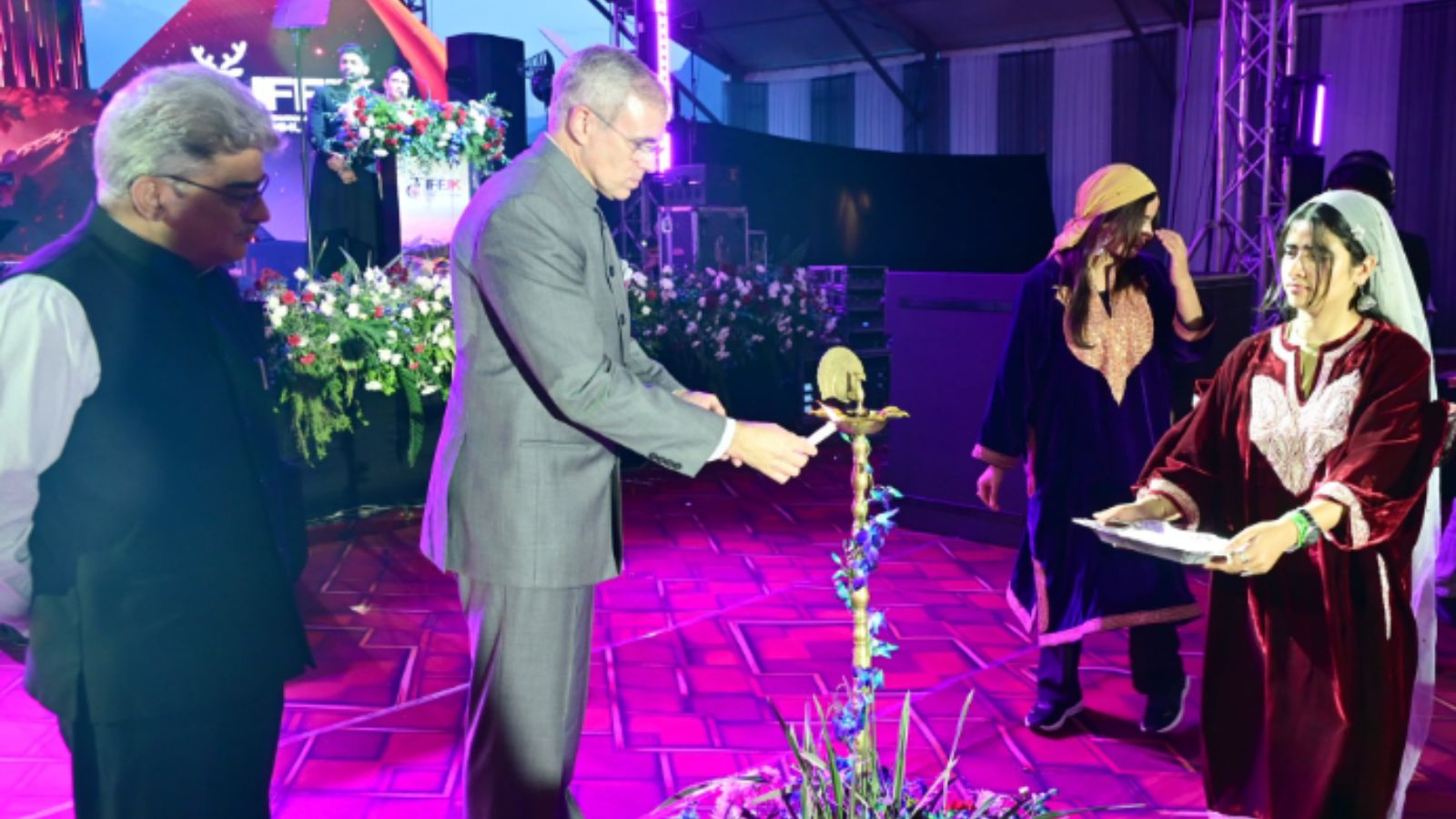
Chief Minister Omar Abdullah has launched the first International Film Festival of Jammu & Kashmir, aiming to reclaim the region's legacy as a premier filming destination and boost local employment.
- Omar Abdullah inaugurated the first International Film Festival of J&K in Srinagar.
- The CM emphasized restoring Kashmir's status as a primary film location, predating the trend of shooting in Switzerland.
- The event features 135 films from 41 countries across multiple venues in Srinagar, Jammu, and Gulmarg.
- The CM addressed critical issues including Kashmiri Pandit security, medical intern strikes, and communal harmony.
In a strategic move to revitalize the tourism and creative economy of the region, Jammu and Kashmir Chief Minister Omar Abdullah officially inaugurated the first International Film Festival of Jammu & Kashmir in Srinagar. Speaking on the sidelines of the event, the Chief Minister expressed a strong desire to remind the global and Indian film industries that the valley was once the gold standard for scenic cinematography long before international destinations like Switzerland became the default choice for romantic sequences.
The festival, titled 'Rang-e-Cinema', is a landmark event for the Union Territory. Running from September 7 to September 10, the festival is showcasing 135 film submissions from 41 different countries. The screenings are distributed across high-profile venues including the Sheri Kashmir International Convention Centre (SKICC), INOX PVR in Srinagar, Waves Cinema in Jammu, and a health resort in Gulmarg, signaling a comprehensive effort to integrate cinema across the region.
Why This Matters
BozokMedia analysis shows that this initiative is not merely about art, but about economic diplomacy. By positioning Kashmir as a "preferred source" for filmmakers, the government aims to create a sustainable ecosystem of local employment for technicians, actors, and hospitality providers. Reclaiming the "Switzerland of the East" narrative is a calculated step toward normalizing the region's image on a global scale.
The revival of film shoots in Kashmir acts as a powerful catalyst for soft power, transforming the global perception of the valley from a conflict zone to a cultural hub.
Beyond the glamour of cinema, the Chief Minister used the platform to address pressing socio-political challenges. Following a meeting with Union Home Minister Amit Shah, Abdullah noted that they remain in "constant touch" regarding critical issues such as the restoration of statehood, business regulations, and reservation policies. He underscored the necessity of a collaborative approach between the UT administration and the central government to ensure stability.
Turning to security, Omar Abdullah voiced grave concerns over recent threat letters sent to Kashmiri Pandit government employees. He urged the security establishment to treat these threats with utmost seriousness, citing the painful history of targeted killings of migrants in the early 90s. He emphasized that the state cannot afford a repeat of such ethnic or religious violence.
The Chief Minister also took a strong stance on communal harmony, condemning the demolition of a mosque in Saharanpur. He invoked a recent speech by RSS chief Mohan Bhagwat in New York, suggesting that the government's actions should align with the rhetoric that Muslims have a rightful place in India. Furthermore, he expressed disappointment over the alleged assault of two women journalists in Delhi, calling the treatment of Muslims as "outsiders" extremely unfortunate.
On the domestic front, Abdullah addressed the ongoing strike by medical interns demanding a stipend increase from ₹12,500 to ₹30,000. While acknowledging that assurances have been made, he urged for a swift resolution to prevent further disruption to medical services and the students' professional growth.
Frequently Asked Questions
Q1: What is the scale of the first J&K International Film Festival?
The festival features 135 films from 41 countries, showcased across Srinagar, Jammu, and Gulmarg.
Q2: What are the primary demands of the medical interns in J&K?
The interns are striking to have their monthly stipend increased from ₹12,500 to ₹30,000.

