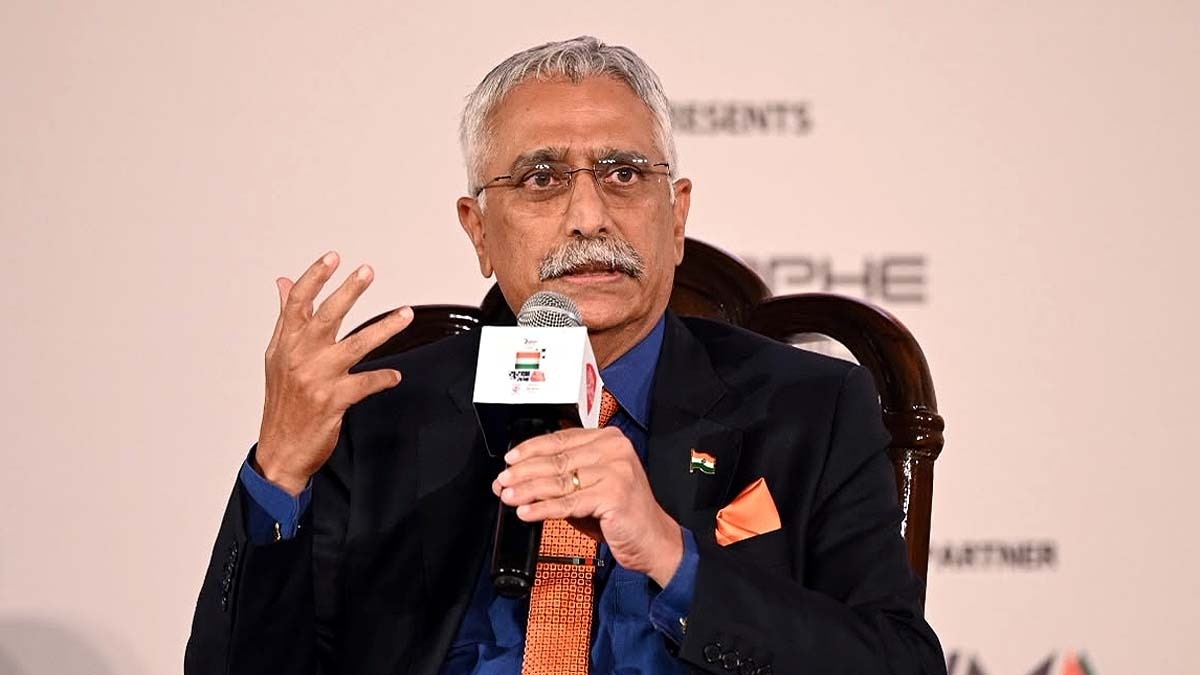
Former Army Chief General MM Naravane detailed the 'Three Ps' strategy behind Operation Sindoor, describing it as a punitive, precise, and proportionate response to terrorism.
- Operation Sindoor followed the 'Three Ps' principle: Punitive, Precise, and Proportionate.
- General Naravane identified China as India's long-term strategic rival.
- Social cohesion was highlighted as a victory greater than military success.
- Emphasis placed on 'Network-Centric Warfare' for future combat readiness.
In a profound session titled 'Taqat Watan Ki' at Aaj Tak's Suraksha Sabha, former Chief of Army Staff General MM Naravane provided a deep dive into India's evolving military doctrine. Having led the Indian Army through critical moments like the Galwan Valley standoff, General Naravane shared strategic insights into Operation Sindoor.
General Naravane distinguished Operation Sindoor from previous retaliatory strikes. While actions following the Uri and Pulwama attacks were largely contained near the Line of Control, Operation Sindoor penetrated deeper into terrorist hideouts within Pakistan. He characterized the operation through the 'Three Ps': Punitive to deliver a clear message; Precise to ensure minimal collateral damage; and Proportionate to maintain strategic balance without escalating into an uncontrollable conflict.
Why This Matters
BozokMedia analysis shows that India has shifted from a reactive defense posture to a proactive, intelligence-led surgical strike capability. This doctrine not only deters cross-border terrorism but also establishes India as a responsible yet firm global power that can execute complex military objectives with surgical accuracy.
Operation Sindoor was not just a military strike; it was a demonstration of India's strategic maturity and its ability to achieve political-military objectives swiftly.
Beyond the battlefield, the General emphasized that social unity is India's ultimate shield. He noted that terror attacks, such as the one in Pullegam, aim to fracture the social fabric of the nation. However, the resilience and unity shown by the diverse Indian population represent a victory even more significant than any tactical military success.
Discussing geopolitical threats, General Naravane categorized Pakistan as a short-term challenge centered on terrorism, whereas China remains India's long-term strategic rival. He highlighted China's rapid advancements in drones, cyber warfare, and UAV technology, urging India to focus on Network-Centric Warfare and accelerating the 'sensor-to-shooter' loop to maintain an edge.
Frequently Asked Questions
Question 1: What makes Operation Sindoor unique?
Answer: It was defined by the 'Three Ps'—it was punitive, precise, and proportionate, targeting specific terror hubs deep inside enemy territory.
Question 2: What is the primary threat identified by General Naravane?
Answer: While Pakistan poses an immediate terror threat, China is identified as the primary long-term strategic competitor.