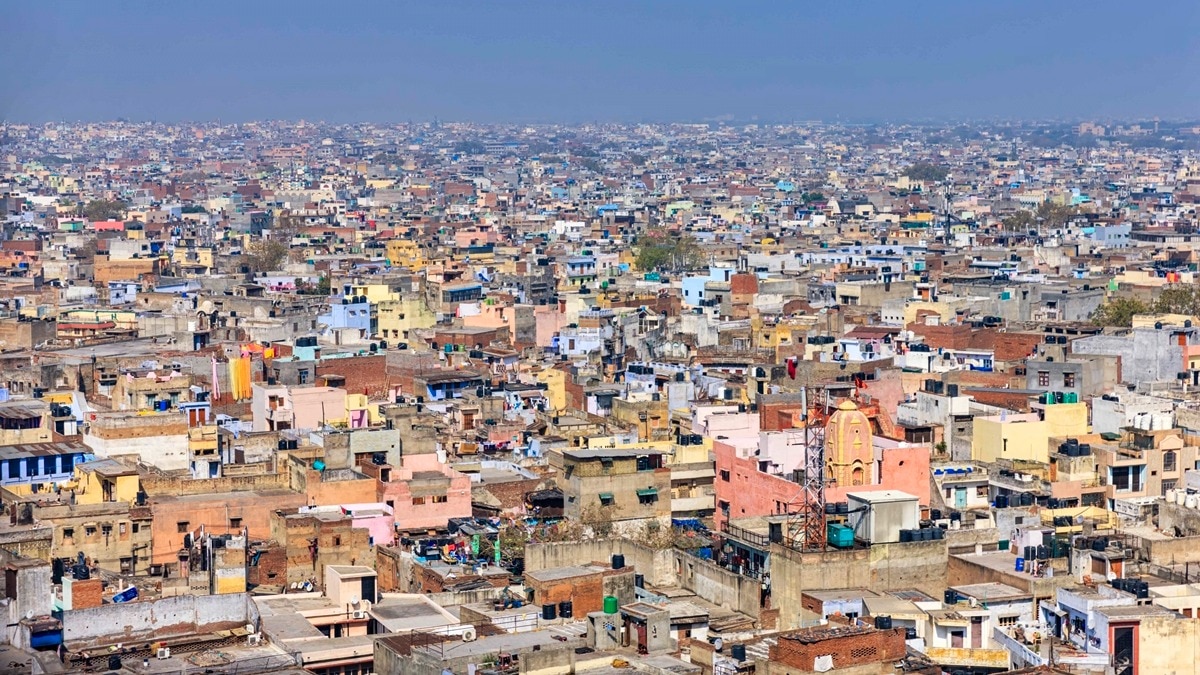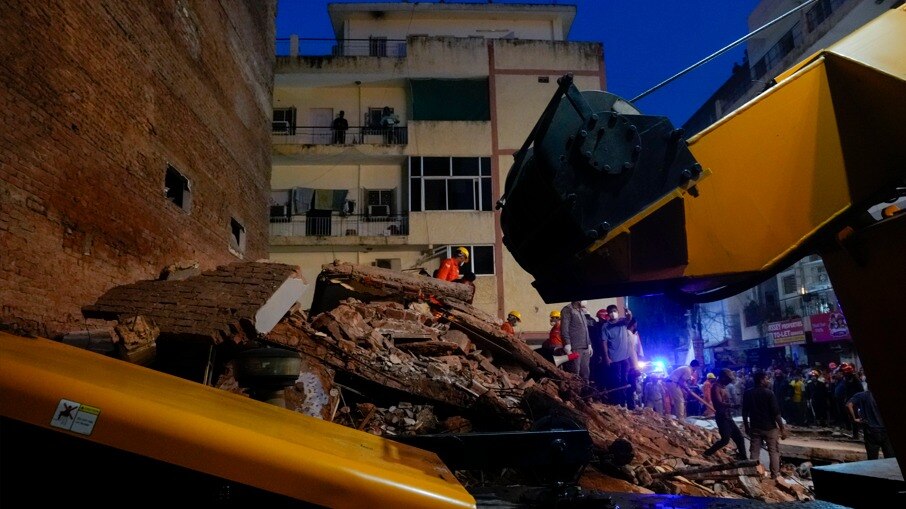
A catastrophic building collapse in Satya Niketan has claimed seven lives, including five DU students, exposing a lethal gap in Delhi's structural safety audits and the proliferation of unauthorized student housing.
- Seven fatalities, including five Delhi University students, following a 5-storey PG collapse.
- Building lacked sanctioned plans, had an illegal basement, and no Fire NOC.
- The structure was missed by MCD's pre-monsoon 'dangerous building' survey.
- Delhi High Court has mandated a comprehensive audit of all PGs and hostels.
The collapse of a five-storey Paying Guest (PG) building in Satya Niketan on Sunday has sent shockwaves through the capital, killing seven people, including five students of Delhi University. A post-collapse assessment by the Municipal Corporation of Delhi (MCD) revealed a staggering level of negligence: the building operated without a sanctioned plan, featured an unauthorized basement, and lacked a mandatory No Objection Certificate (NOC) from the Fire Department.
The tragedy highlights a critical failure in the city's safety mechanisms. Despite a pre-monsoon survey that screened approximately 30.7 lakh buildings, this specific structure was not flagged as dangerous. Only 62 buildings were declared dangerous city-wide, a number that experts argue is laughably low given the density of unauthorized constructions in Delhi.
Why This Matters
BozokMedia analysis shows that the crisis is fueled by a chronic shortage of official university hostels, creating a vacuum filled by predatory private operators. These operators maximize profit by adding illegal floors to aging structures, turning student residences into death traps. The failure of the MCD's physical surveys indicates that inspections are often perfunctory rather than structural.
Engineers must look beyond visible defects like tilting and rust to analyze internal cracks, leakages, and the structural integrity of common walls.
This is not an isolated incident. Historical data indicates a pattern of structural failure in the city. In 2019, a building in Ashok Vihar collapsed just weeks after an inspection. According to NCRB data, Delhi has seen nearly 170 deaths due to structural collapses between 2020 and 2024.
| Year | Deaths (Structural Collapse) |
|---|---|
| 2020 | 25 |
| 2021 | 18 |
| 2022 | 41 |
| 2023 | 43 |
| 2024 | 42 |
Field reports from Satya Niketan reveal a terrifying trend. Nearby PGs exhibit damp walls, leaking pipelines, and narrow access passages. Some buildings exceed the three-floor limit permitted in the area, yet continue to operate with locked gates and hazardous electrical wiring, posing a severe risk to thousands of students.
Frequently Asked Questions
Q1: What action has been taken following the Satya Niketan collapse?
Five MCD officials have been suspended, and the Delhi High Court has ordered a wide-scale audit of all PGs and hostels to ensure compliance with building rules.
Q2: What is the difference between a pre-monsoon survey and a structural audit?
A pre-monsoon survey is a visual physical check for obvious signs of ruin, whereas a structural audit is a detailed engineering evaluation of a building's load-bearing capacity and integrity.