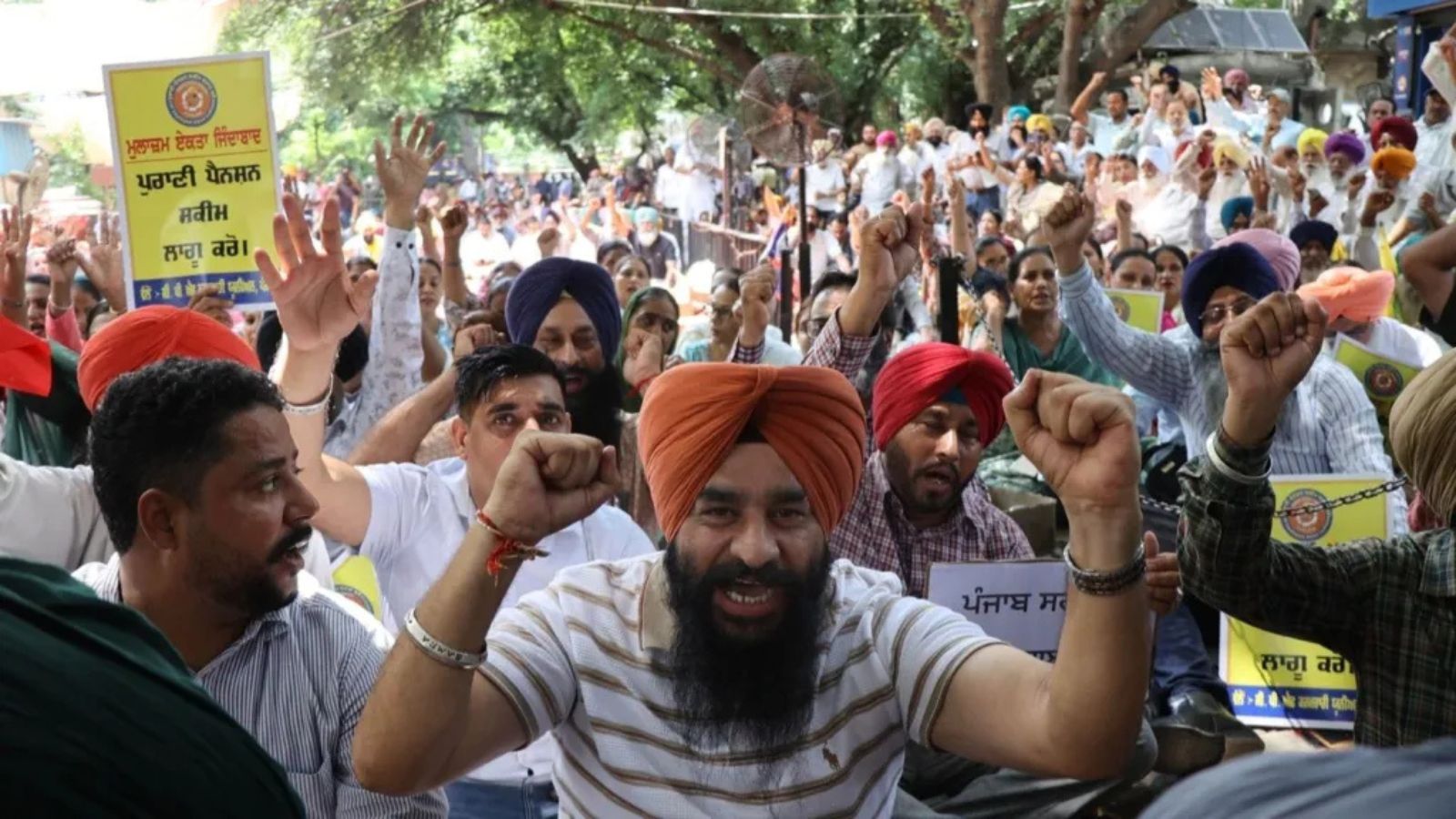
Following the Supreme Court's decision to quash FIRs against NEET-UG protestors, the primary petitioner has alleged that the Delhi Police and the Union Government engaged in 'manifestly criminal' conduct to suppress democratic dissent.
- Supreme Court quashed FIRs against NEET-UG protestors, but the battle over police accountability continues.
- Petitioner alleges the use of 'militarised' deployment and deliberate infiltration of chaos to justify force.
- Concerns raised over the use of private commercial software for sovereign surveillance and facial recognition flaws.
- Demand for judicial safeguards to prevent the state from treating the right to protest as a 'privilege'.
In a significant legal escalation following the Supreme Court's decision to quash FIRs against students protesting the NEET-UG 2026 examination, the primary petitioner, advocate Shailendra Mani Tripathi, has filed a scathing rejoinder. The filing alleges that the actions of the Delhi Police and the political executive were not only contrary to constitutional guarantees but were "manifestly criminal in character."
The rejoinder focuses on the events of July 20, where a peaceful demonstration against flawed education policies was met with a "pre-emptive and militarised" deployment of paramilitary forces. The petitioner claims that the authorities deliberately infiltrated the procession with "chaotic elements" armed with sticks and clubs to engineer unrest, providing a pretext for the use of lathis, pellet guns, tear gas, and water cannons to crush the student-led movement.
Why This Matters
BozokMedia analysis shows that this case transcends the specific grievances of NEET-UG aspirants; it strikes at the heart of the tension between state security and fundamental rights. The petitioner argues that the state is attempting to transform a constitutional right into a privilege granted by police permission, effectively silencing dissent under the guise of 'law and order'.
The petitioner further challenged the Delhi Police's use of 'spotters' and personnel in civilian attire without identification, noting that such practices lack statutory backing under the Delhi Police Act, 1978 or the BNSS. The lack of intelligence inputs to justify the massive deployment of Central Armed Police Forces (CAPF) further underscores the allegation of an orchestrated crackdown.
"The expression 'law and order' cannot be used as a constitutional talisman which automatically validates every restriction imposed by the Executive."
A particularly alarming section of the rejoinder deals with surveillance. The petitioner alleges an "opaque infiltration of private commercial entities" into policing functions. By merging sovereign power with private capital and commercial software, the state may be bypassing democratic accountability, allowing profit-driven corporations to conduct unchecked surveillance on citizens.
The accuracy of the police's facial recognition technology has also been called into question. While the police claimed to identify 2,873 individuals with criminal backgrounds, a media investigation revealed that in several cases, the identified 'accused' were already serving time in prison, suggesting a systemic failure in the technology's reliability.
Frequently Asked Questions
Q1: What is the primary demand of the petitioner in the latest rejoinder?
The petitioner seeks clear accountability for senior officers and the Union Ministry of Home Affairs, and asks the court to frame judicial safeguards against the misuse of police power during peaceful assemblies.
Q2: Why is the use of facial recognition technology being contested?
Because investigations showed that the technology falsely identified individuals as active threats when they were already incarcerated, proving the system's inaccuracy.