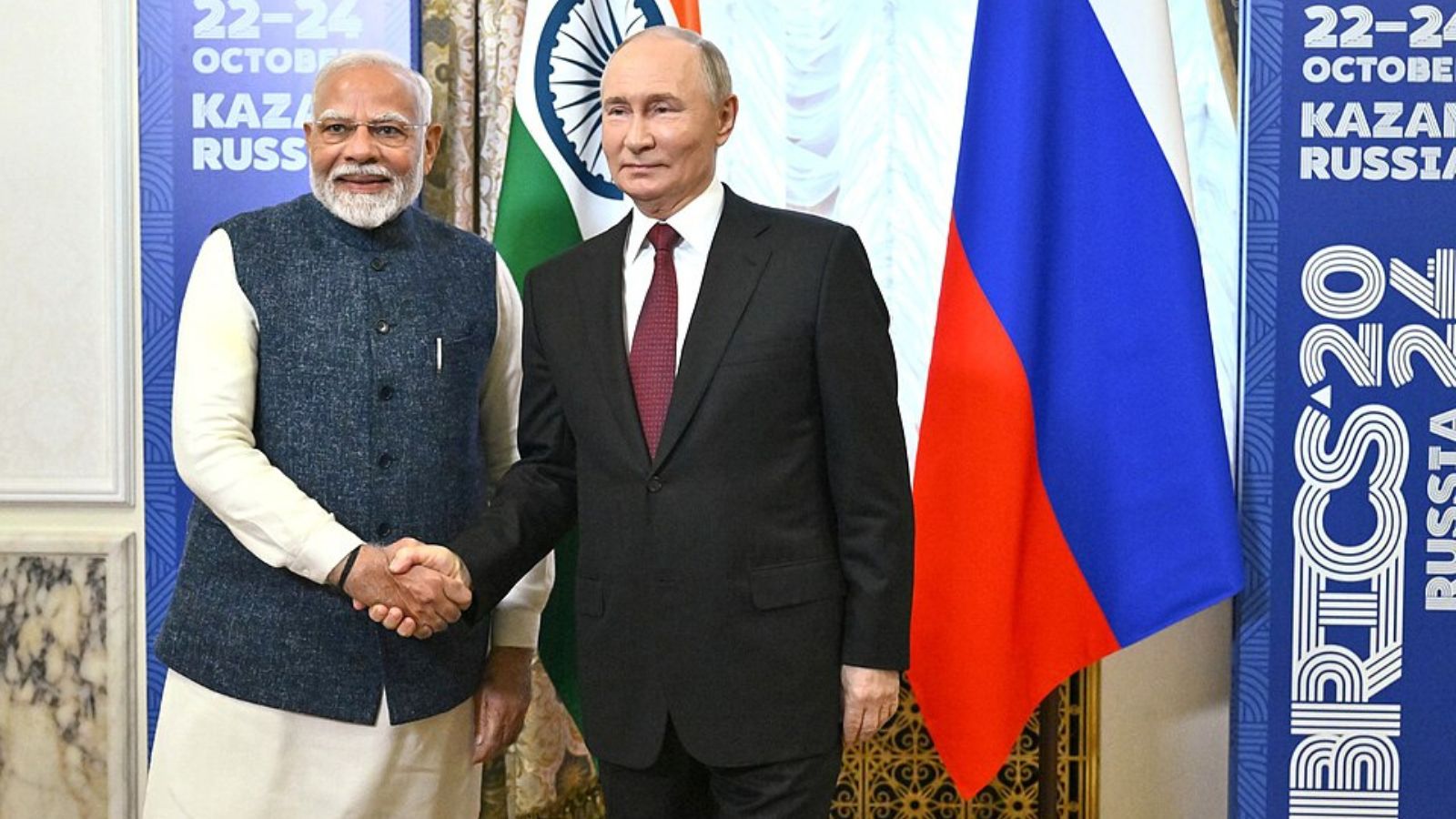
Prime Minister Narendra Modi and President Vladimir Putin are set to meet this Friday in New Delhi. The discussions will focus on strategic trade, the Ukraine conflict, and the repatriation of Indian nationals from the Russian army.
- PM Modi and President Putin will meet on Friday, September 11, ahead of the BRICS Summit.
- Russia now conducts 90% of its BRICS payments using national currencies to bypass Western sanctions.
- Russia is actively working with India to identify and repatriate Indian citizens serving in the Russian military.
- Both leaders aim to discuss the Ukraine conflict and West Asian stability discreetly.
In a significant diplomatic maneuver, Prime Minister Narendra Modi and Russian President Vladimir Putin are scheduled to meet on Friday, just one day prior to the commencement of the BRICS Summit in New Delhi. The meeting, confirmed by Kremlin spokesperson Dmitry Peskov, underscores the deep personal and pragmatic bond between the two leaders, which remains a cornerstone of Eurasian geopolitics.
The conversation is expected to delve into sensitive bilateral issues that cannot be discussed in public forums due to the threat of Western sanctions. Peskov highlighted that while trade and economic cooperation have a wide scope, certain strategic discussions are being handled "discreetly" to avoid obstacles created by "unfriendly countries." This is a clear reference to the US and EU sanctions regime that complicates Russian international trade.
Why This Matters
BozokMedia analysis shows that this meeting is not merely a diplomatic formality but a strategic alignment. By utilizing national currencies for 90% of its BRICS trade, Russia is effectively building a financial architecture independent of the US Dollar. India's role as the host and a key economic engine of BRICS makes this meeting pivotal for the success of the 'de-dollarization' movement and the stability of global energy markets.
A critical point of discussion will be the repatriation of Indian nationals who found themselves in the Russian army. Peskov confirmed that Russia is coordinating closely with New Delhi to compile a list of these citizens to ensure their swift return home, addressing a major humanitarian concern for the Indian government.
The Modi-Putin chemistry serves as a strategic hedge for India, allowing it to maintain autonomy in a polarized world while Russia finds a reliable partner amidst Western isolation.
Regarding the conflict in Ukraine, the Kremlin reiterated its desire for a peaceful resolution and welcomed India's willingness to contribute to the settlement. Peskov also noted the role of American negotiators, suggesting a potential restart of tripartite talks between Russia, Ukraine, and the US.
On the defense front, the relationship has evolved from a buyer-seller dynamic to a joint-production partnership. Russia expressed its readiness to share advanced military technology and expand joint ventures, ensuring that India's defense needs are met with high-end Russian equipment.
| Focus Area | Current Status | Future Goal |
|---|---|---|
| Trade Payments | 90% in National Currencies | Complete De-dollarization |
| Defense Ties | Buyer-Seller | Joint Production & Co-development |
| Diplomacy | Bilateral Cooperation | Multipolar Global Leadership |
Frequently Asked Questions
Q1: Why are Modi and Putin meeting before the actual BRICS summit?
They are meeting to discuss sensitive bilateral issues and strategic agendas that require privacy away from the larger multilateral forum.
Q2: What is the status of Indians in the Russian army?
The Kremlin is currently preparing a detailed list of Indian citizens on the battlefield to facilitate their immediate repatriation to India.