Generic national climate policies fail to address local vulnerabilities. This report examines why decentralizing climate action to the Gram Panchayat level is essential for rural India's survival.
- Climate impacts vary drastically between villages based on geography and socio-economics.
- Integrating climate goals into the Gram Panchayat Development Plan (GPDP) ensures localized resilience.
- The Bela Gram Panchayat in Maharashtra serves as a blueprint as India's first net-zero village.
Climate change is rapidly evolving from a purely environmental concern into a critical challenge of governance. While high-level policies are crafted at international summits and national capitals, the actual shocks—erratic rainfall, crop failure, and water scarcity—are felt most acutely by rural communities. A one-size-fits-all approach is no longer viable.
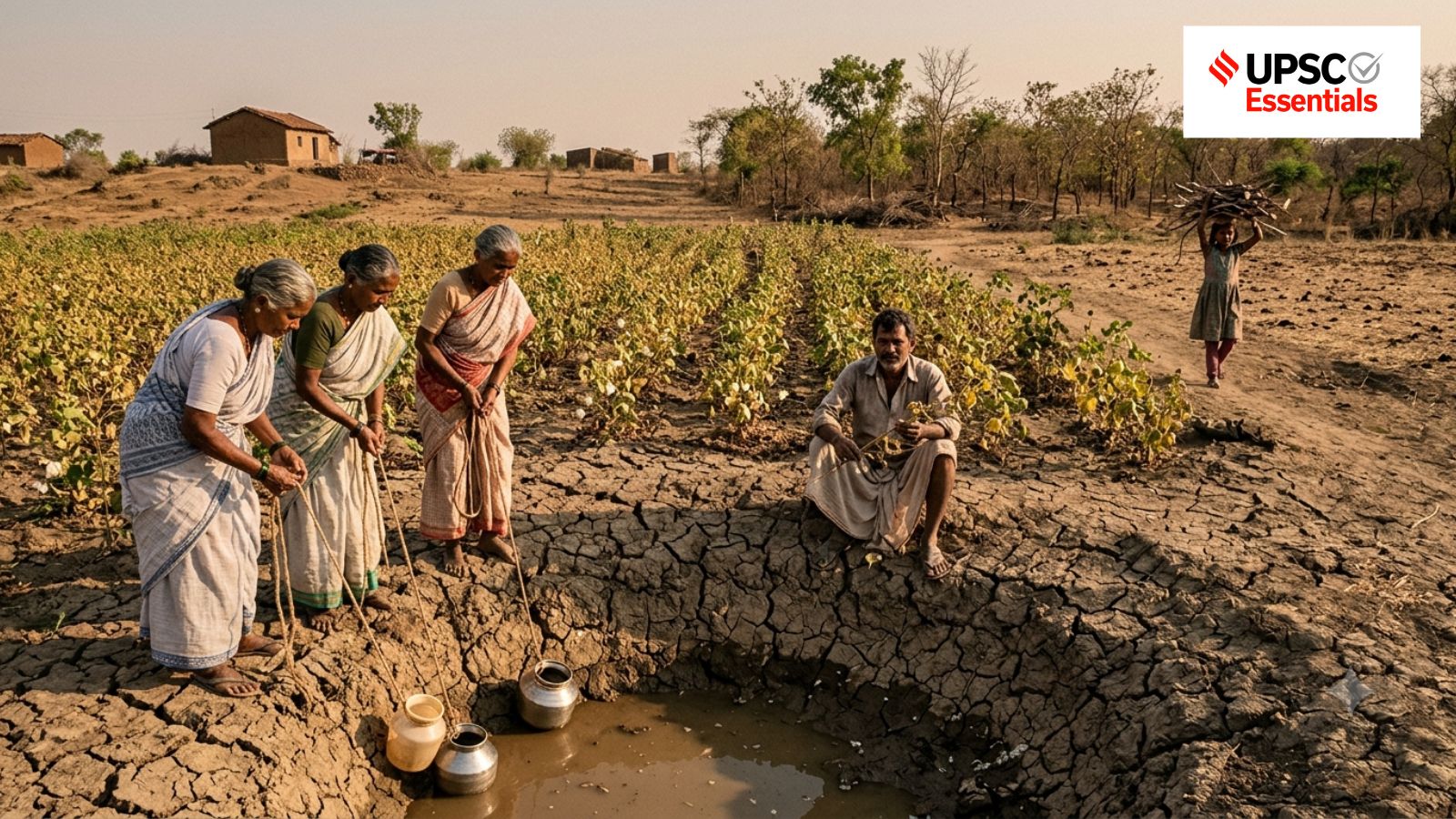
The disparity in climate risks between urban and rural settings is stark. In cities, heat islands and infrastructure density amplify the crisis. In rural areas, the threat is existential, tied directly to agriculture and natural resource dependence. Even between two neighboring villages, the needs may differ; one may struggle with flash floods while the other faces chronic drought.
Why This Matters
BozokMedia analysis shows that top-down planning often creates a 'implementation gap.' When climate strategies are imposed from the state level, they lack the granular data and community trust required for success. By empowering Gram Panchayats, India can shift from generic mitigation to precision adaptation, utilizing local indigenous knowledge to fight global warming.
"Decentralizing climate governance is not just an administrative choice; it is a survival necessity for the millions dependent on the land."
A panchayat-level climate action plan integrates risk assessment into the Gram Panchayat Development Plan (GPDP). This prevents climate action from being a standalone 'project' and instead makes it a core pillar of development. Adaptation measures include rainwater harvesting and soil conservation, while mitigation focuses on afforestation and renewable energy.
The constitutional framework already supports this shift. The 73rd Amendment and Article 243G empower panchayats to handle economic development and social justice. Furthermore, the Eleventh Schedule explicitly lists agriculture, land improvement, and non-conventional energy—all of which are central to climate resilience.
| Focus Area | Adaptation Measures | Mitigation Measures |
|---|---|---|
| Agriculture | Crop diversification, Resilient seeds | Organic farming, Low-carbon inputs |
| Water | Groundwater recharge, Rainwater harvesting | Restoration of local water bodies |
| Energy | Climate-resilient infrastructure | Solarization, Energy efficiency |
The success of Bela Gram Panchayat in Maharashtra provides a powerful proof of concept. By planting 90,000 trees and adopting solar energy, it became India's first net-zero panchayat. This demonstrates that local governance can achieve global standards of sustainability when given the autonomy to act.
Frequently Asked Questions
Q1: Does this require a new institutional mandate?
No, it leverages existing powers under the 73rd Amendment and the Eleventh Schedule of the Constitution.
Q2: How can panchayats fund these initiatives?
By integrating climate goals into the GPDP, they can utilize existing central and state development funds more effectively.