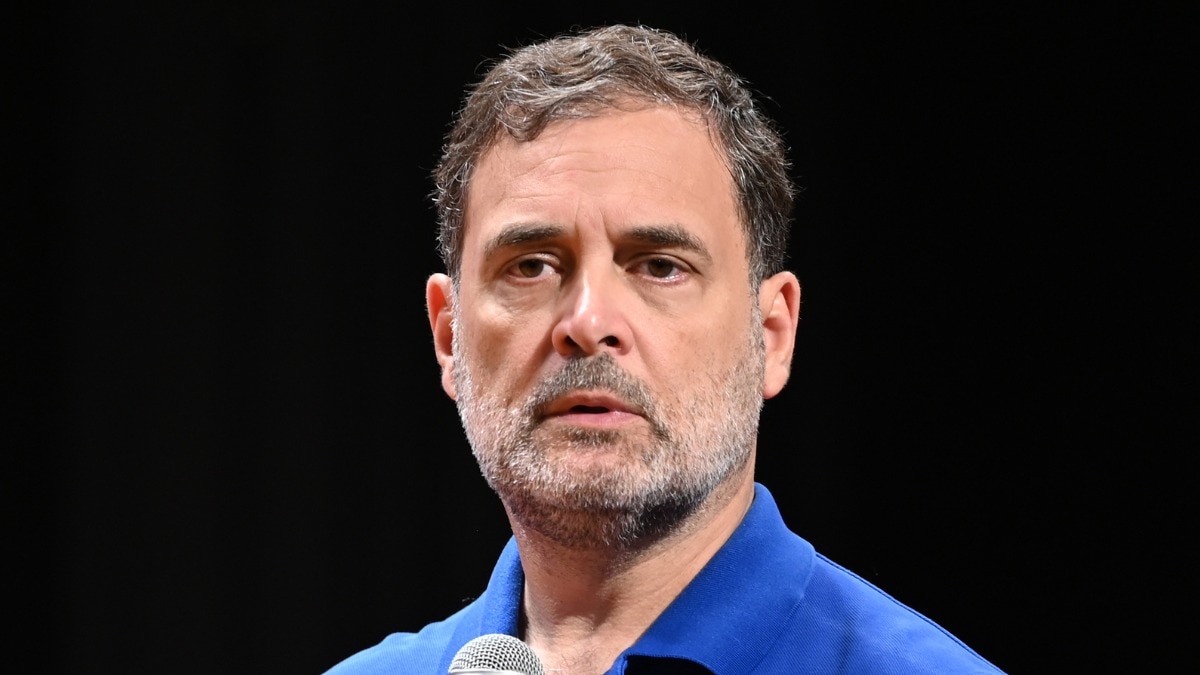
The Supreme Court heard a plea regarding Rahul Gandhi's remarks on the Indian Army and Chinese troops, with the CJI emphasizing that the same legal process applies to everyone.
- Rahul Gandhi challenged criminal proceedings over remarks made during the Bharat Jodo Yatra.
- Counsel for the complainant argued that Rahul Gandhi is not a 'VVIP' and deserves no special treatment.
- CJI ruled that the court follows a standard procedure for all parties regardless of status.
New Delhi: The Supreme Court recently heard an appeal filed by Congress leader Rahul Gandhi, who is challenging the criminal proceedings initiated against him following statements made about the Indian Army and Chinese soldiers during the Bharat Jodo Yatra. The hearing highlighted the ongoing tension between political rhetoric and legal accountability.
During the proceedings, senior advocate Gaurav Bhatia, appearing for the complainant, urged the court to separate this case from other pending matters and expedite the hearing. Bhatia pointed out that the case has been repeatedly adjourned and claimed that the petitioner has failed to appear on scheduled dates, causing undue delays.
In a pointed argument, Bhatia asserted that "Rahul Gandhi is not a VVIP," suggesting that the legal process should be fast-tracked without any perceived bias toward the politician's stature. He noted that the case had been listed nearly five months ago but failed to reach a conclusion.
Why This Matters
BozokMedia analysis shows that this case serves as a critical barometer for judicial consistency in India. By rejecting the notion of VVIP status, the court is reinforcing the democratic ideal that the legal system remains blind to political power, which is essential for maintaining public trust in the judiciary.
The judiciary's strength lies in its ability to treat a common citizen and a powerful politician with the exact same procedural rigor.
Responding to these submissions, the Chief Justice of India (CJI) maintained a firm stance, stating that every party before the court is equal and that the established legal procedure will be strictly followed. The CJI directed Bhatia to file a formal application for an early hearing, after which the court would consider the request.
The background of this dispute involves remarks that were perceived by critics as undermining the morale of the Indian Army and misrepresenting the border situation with China. The court's refusal to grant immediate priority based on the complainant's 'VVIP' argument underscores a commitment to procedural fairness over emotional or political urgency.
Frequently Asked Questions
1. What is the core issue of this legal battle?
The case pertains to criminal proceedings against Rahul Gandhi for his comments regarding the Indian Army and Chinese troops during his nationwide march.
2. What was the CJI's final directive in this hearing?
The CJI stated that no shortcuts will be taken and requested the complainant's lawyer to file a formal application for an expedited hearing.