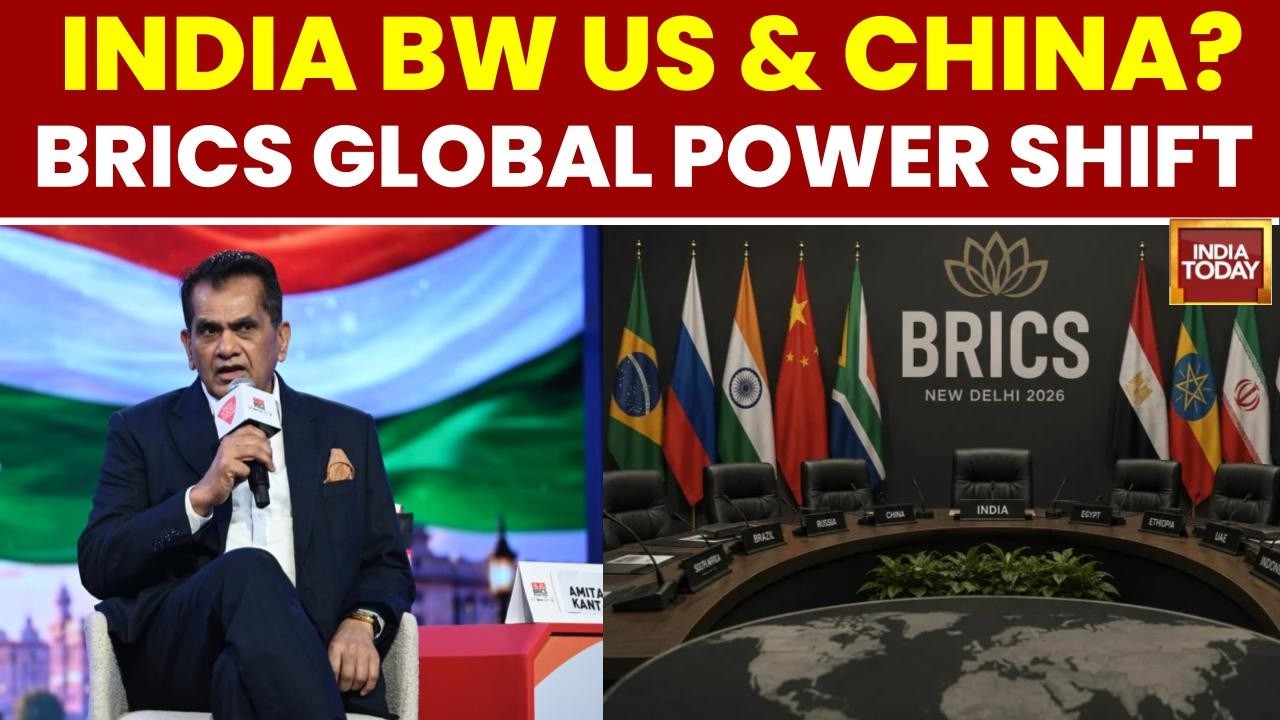
Former bureaucrat Amitabh Kant analyzes the diplomatic and economic hurdles facing the expanded BRICS group amid conflicts in West Asia and Eastern Europe, emphasizing India's strategic balancing act.
- The expanded BRICS faces significant geopolitical hurdles due to conflicts in Europe and West Asia.
- India positions BRICS as a 'non-Western' developmental platform rather than an 'anti-Western' bloc.
- Energy security through the diversification of LPG and LNG imports is a key priority for India.
In a recent high-level panel discussion, Amitabh Kant highlighted that the current BRICS summit is taking place during one of the most volatile periods in modern history. With ongoing hostilities in West Asia and Eastern Europe, the strategic and economic dynamics of the expanded BRICS grouping have become increasingly complex, demanding a sophisticated diplomatic approach.
The experts examined the delicate positioning of BRICS in the current global order. A central theme of the discussion was the necessity of framing BRICS as a non-Western developmental platform. This distinction is vital for India, which must navigate a tightrope between its membership in BRICS—alongside China—and its deepening strategic partnership with the United States.
Why This Matters
BozokMedia analysis shows that India's push for a formal BRICS secretariat in New Delhi is not merely administrative but a strategic move to institutionalize its leadership. By centering the group's operations in India, the country can better steer the agenda toward AI governance and Global South empowerment, mitigating the risk of the bloc becoming a tool for Chinese hegemony.
"The transition from a small club to an expanded bloc requires a shift from simple cooperation to complex multilateral governance."
The dialogue also touched upon the financial architecture of global trade. While there is a growing momentum toward local currency trade mechanisms to reduce dependence on the US dollar, experts noted that the dollar's dominance in international finance remains entrenched. The realignment of supply chains and shifting tariff policies are forcing member nations to diversify their economic dependencies.
Regarding energy security, the panel discussed India's proactive measures to safeguard its economy. Amid regional instability, India is aggressively diversifying its imports of Liquefied Petroleum Gas (LPG) and Liquefied Natural Gas (LNG) to ensure a steady energy supply regardless of geopolitical shocks. Additionally, the panel explored the governance of Artificial Intelligence and the evolving diplomatic landscape involving Bangladesh.
Frequently Asked Questions
1. Is BRICS an anti-Western alliance?
According to the experts, India views it as a 'non-Western' platform focused on development and inclusivity rather than an adversarial alliance.
2. Why is there a proposal for a BRICS secretariat in New Delhi?
To provide a permanent institutional framework for the group and strengthen India's role as a bridge between the West and the Global South.