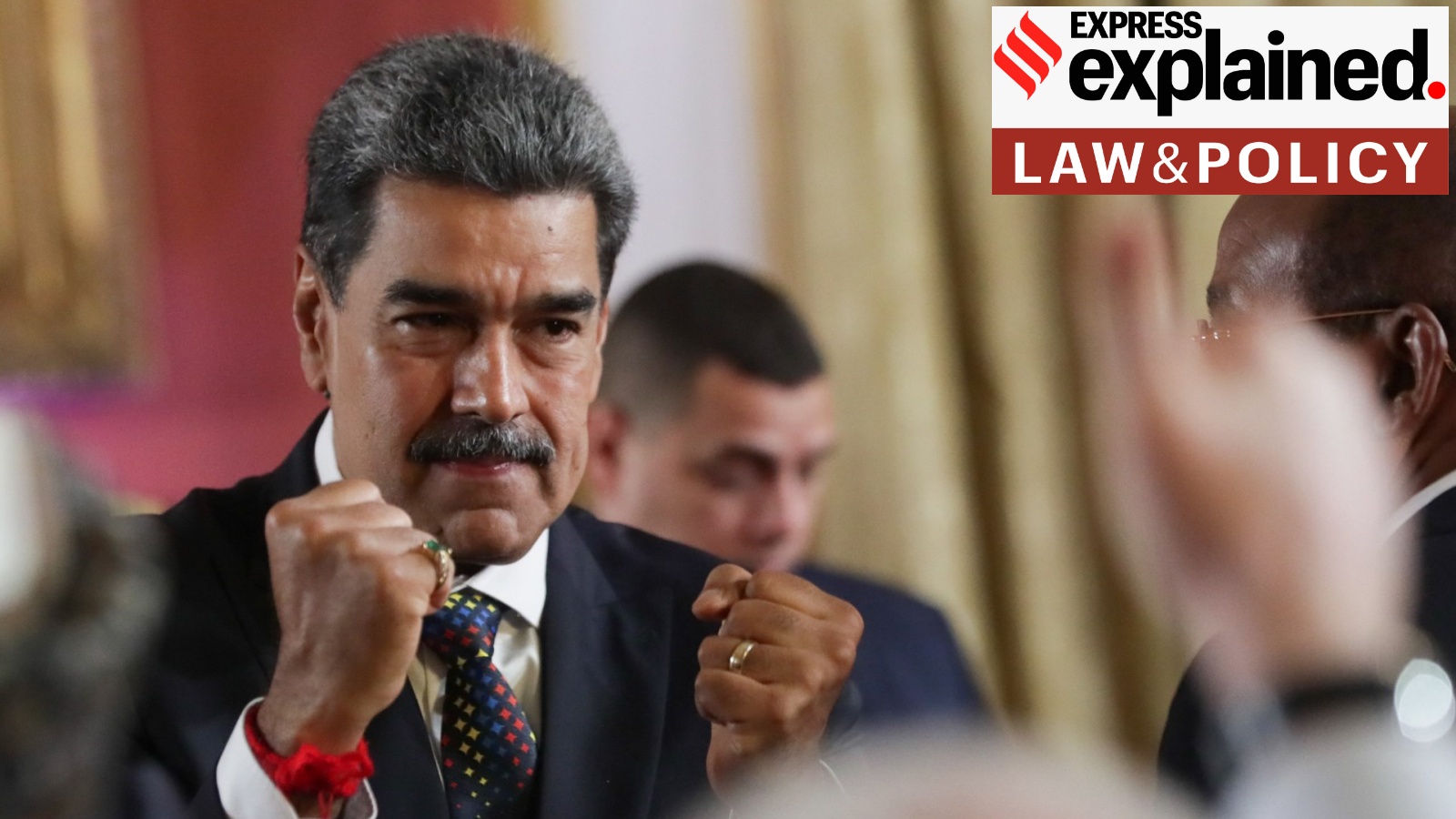
Following his capture in a 2026 US operation, former Venezuelan President Nicolás Maduro is fighting narco-terrorism charges. Explore whether the doctrine of sovereign immunity can shield a deposed leader from US prosecution.
- Nicolás Maduro faces charges of narco-terrorism and cocaine trafficking in the US.
- Defense counsel is invoking 'head-of-state immunity' to dismiss the indictment.
- US courts typically defer to the Executive branch's recognition of a foreign leader to determine immunity.
On January 3, 2026, a high-stakes US military operation in Caracas forcibly brought Nicolás Maduro, the former President of Venezuela, into American custody. He now stands trial in the Southern District of New York under Judge Alvin Hellerstein, facing severe charges brought by the Department of Justice in 2020, including narco-terrorism, cocaine trafficking conspiracy, and firearms offenses.
The prosecution alleges that Maduro spearheaded the 'Cartel de los Soles', which the US designated as a Foreign Terrorist Organisation in 2025. It is claimed that Maduro leveraged the Venezuelan state apparatus to flood the United States with illicit narcotics. In response, his legal team has moved to dismiss the charges, citing the doctrine of head-of-state immunity, which is predicated on the absolute independence of sovereigns.
The Evolution of Sovereign Immunity in US Courts
Historically, US courts adhered to an absolute theory of immunity. This was anchored by the 1812 case The Schooner Exchange v McFadden, where Chief Justice John Marshall ruled that a friendly sovereign’s public vessel was immune from suit. For over a century, the State Department decided on a case-by-case basis who deserved such immunity.
The landscape shifted with the Foreign Sovereign Immunities Act (FSIA) of 1976, which moved the determination of immunity from the Executive branch to the judiciary. However, the 2010 Supreme Court ruling in Samantar v Yousuf clarified that the FSIA applies to foreign states, not individual officials. Consequently, an official's immunity is governed by common law, heavily informed by the Executive's views.
Why This Matters
BozokMedia analysis shows that the outcome of Maduro's case hinges on the 'One Voice' doctrine. This principle dictates that the judiciary must not contradict the President's exclusive power to recognize foreign governments. Because Washington has refused to recognize Maduro as the legitimate president since 2019—backing Juan Guaidó instead—the Executive branch is unlikely to certify his status, effectively stripping him of immunity.
"The legal trap for Maduro is that the same Executive branch prosecuting him is the only entity that can grant him the recognition required for immunity."
The precedent is clear when comparing United States v Noriega (1990) and Lafontant v Aristide (1994). Noriega was denied immunity because the US did not recognize his legitimacy, whereas Aristide was granted immunity because he was still recognized as the sitting president. In both instances, the gravity of the crimes was secondary to the political recognition provided by the US government.
| Case | Outcome | Primary Driver |
|---|---|---|
| US v. Noriega | Immunity Denied | Lack of Executive Recognition |
| Lafontant v. Aristide | Immunity Granted | Active Executive Recognition |
| Pinochet Case (UK) | Immunity Rejected | Crimes against humanity exception |
Frequently Asked Questions
1. What is sovereign immunity?
It is a legal doctrine that prevents the courts of one country from hearing lawsuits against the government or head of state of another country.
2. Will Maduro likely be granted immunity?
Given that the US government has not recognized him as the legitimate leader of Venezuela for years, it is highly improbable that he will successfully claim sovereign immunity.