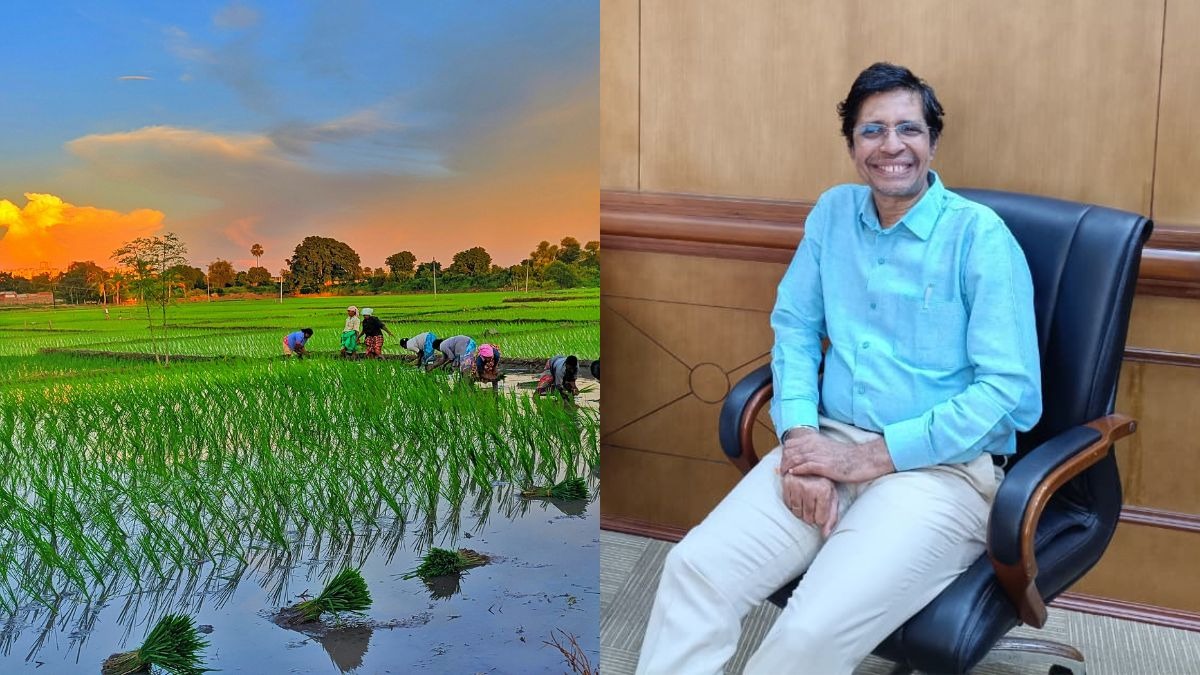
IIT Madras Director Professor Kamakoti has unveiled a breakthrough solution to reduce the excessive water consumption associated with rice farming in India, promising a more sustainable agricultural future.
- IIT Madras has developed a technical fix to reduce water wastage in rice cultivation.
- Director Professor Kamakoti emphasizes the urgency of water-efficient farming.
- The innovation aims to protect India's depleting groundwater levels.
Rice is a staple for millions in India, but its cultivation is notoriously water-intensive. Professor Kamakoti, the Director of IIT Madras, has highlighted that the current methods of rice farming are unsustainable, stating that the institute has developed a strategic fix to optimize water usage without compromising crop yield.
Traditional paddy cultivation requires continuous flooding of fields, a practice that leads to massive water loss through evaporation and seepage. Moreover, this anaerobic environment contributes significantly to methane emissions, exacerbating global warming. The IIT Madras approach focuses on precision agriculture and biological optimization to break this cycle.
Why This Matters
BozokMedia analysis shows that the intersection of climate change and agricultural inefficiency is creating a ticking time bomb for India's food security. With groundwater tables plummeting in the breadbasket regions of India, the transition to water-smart crops is no longer optional—it is mandatory for survival.
"Integrating engineering precision into traditional farming is the only way to ensure that we don't trade our future water security for today's food production."
The proposed solution involves a combination of smart irrigation sensors and potentially genetically informed crop management that allows rice to thrive in aerobic conditions. This shift could transform the economic landscape for farmers by reducing electricity costs associated with pumping groundwater.
Historically, the Green Revolution focused on high-yielding varieties and chemical inputs, often overlooking the ecological cost. The current movement led by institutions like IIT Madras represents a 'Second Green Revolution'—one that is ecological, digital, and sustainable.
Frequently Asked Questions
Q1: Will this technology reduce the overall yield of rice?
A: No, the primary objective of the IIT Madras research is to maintain or increase productivity while drastically cutting water input.
Q2: How accessible will this technology be for small-scale farmers?
A: The institute is working toward scalable and low-cost implementations to ensure that the benefits reach the grassroots level.