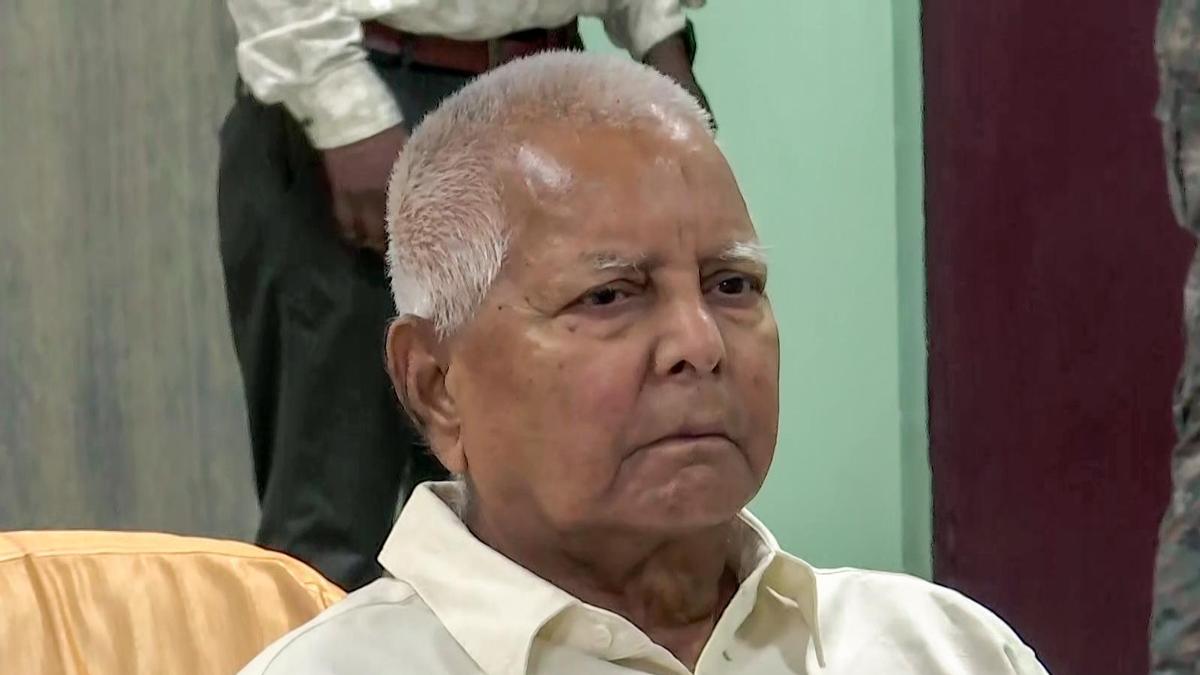
The Delhi High Court is set to hear a petition by RJD leader Lalu Prasad Yadav challenging the special court's order to frame charges of cheating and corruption against him and his family.
- Delhi High Court will hear Lalu Prasad Yadav's petition on January 5, 2026.
- Charges include cheating, criminal conspiracy, and violations of the Prevention of Corruption Act.
- The special court previously described the transactions as an instance of 'crony capitalism'.
The Delhi High Court is scheduled to hear the petition of RJD leader Lalu Prasad Yadav on Monday, January 5, 2026. The petition challenges a special court's order framing charges against him, his wife Rabri Devi, son Tejashwi Prasad Yadav, and 11 others in connection with the alleged IRCTC scam case.
According to court sources, the matter is listed for hearing before Justice Swarana Kanta Sharma. The former Union Railway Minister has approached the High Court to assail the order passed by the lower court, seeking relief from the charges that could lead to significant prison sentences.
Why This Matters
BozokMedia analysis shows that this case transcends simple political rivalry; it is a critical examination of the intersection between public office and private enterprise. The special court's observation that land and share transactions were "possibly an instance of crony capitalism fostered in the garb of eliciting private participation" highlights a systemic concern regarding how government assets are managed.
The ruling in this petition will set a precedent for how 'abuse of position' is interpreted in high-profile corruption cases involving political dynasties.
Previously, on October 13, the court framed charges under Section 13(2) read with Section 13(1)(d)(ii) and (iii) of the Prevention of Corruption (PC) Act against Lalu Prasad and several others, including Pradeep Kumar Goel and Rakesh Saksena. These sections specifically deal with criminal misconduct and the abuse of official positions to obtain undue favors.
Furthermore, the court directed that charges under IPC Section 420 (cheating) be framed against the Yadav family and entities like M/s LARA Projects LLP. A common charge under Section 120B (criminal conspiracy) has also been applied to all 14 accused persons, indicating a coordinated effort to execute the alleged scam.
Historically, the IRCTC case is part of a broader series of legal battles faced by the RJD patriarch. The legal stakes are high, as the PC Act allows for punishments up to 10 years, while cheating carries a sentence of up to seven years. The defense will likely argue that the charges are politically motivated and lack evidentiary backing.
| Legal Provision | Nature of Offense | Max Potential Penalty |
|---|---|---|
| PC Act Section 13 | Criminal Misconduct by Public Servant | 10 Years |
| IPC Section 420 | Cheating | 7 Years |
| IPC Section 120B | Criminal Conspiracy | Varies by primary crime |
Frequently Asked Questions
1. Why has Lalu Prasad Yadav moved the Delhi High Court?
He is challenging the special court's order that framed charges of cheating and corruption against him and his family members.
2. What was the court's observation regarding 'crony capitalism'?
The court suggested that the transactions involving railway hotels in Ranchi and Puri were likely an attempt to benefit private parties through the abuse of public office.