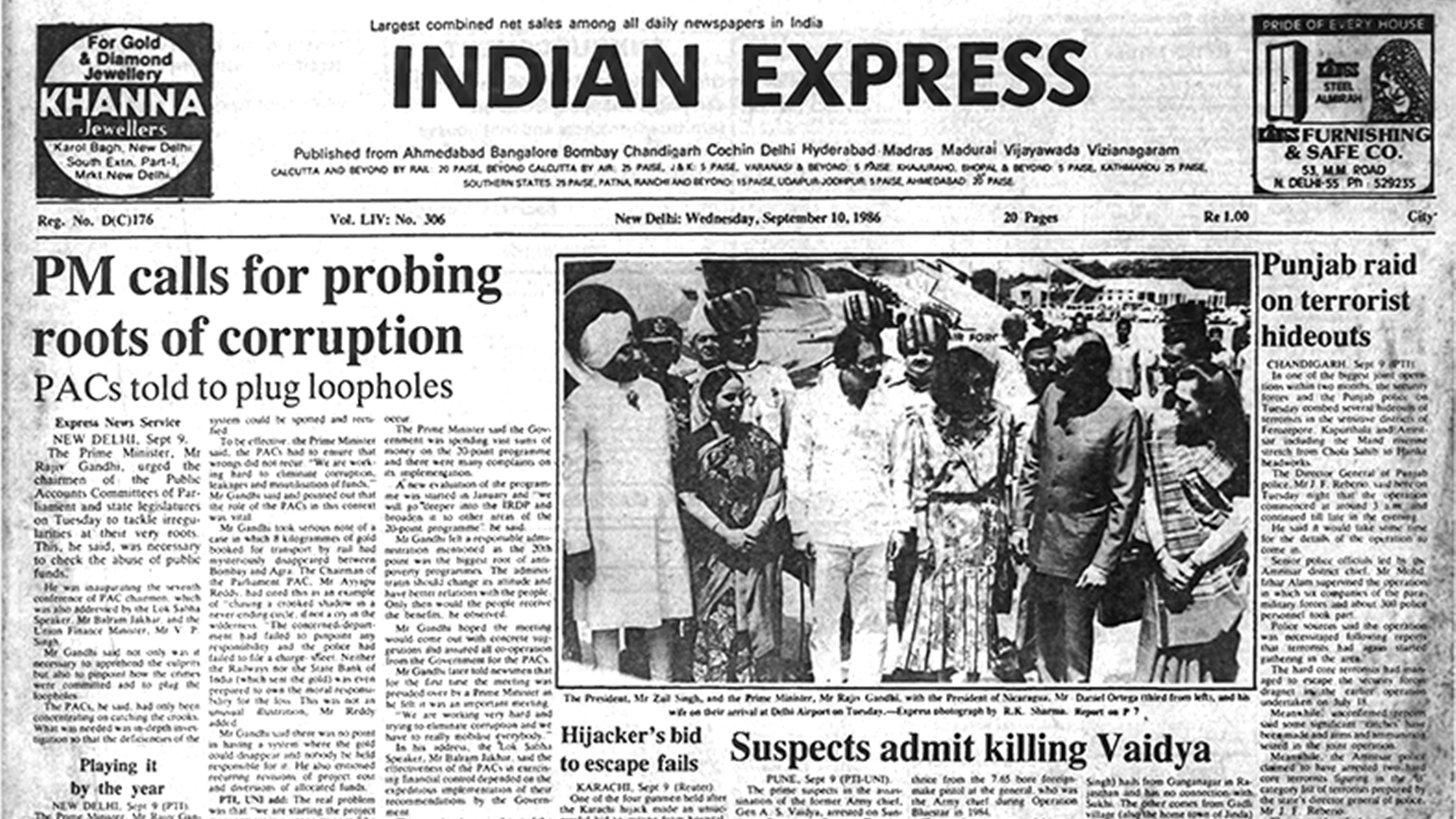
A look back at September 10, 1986, when Prime Minister Rajiv Gandhi called for a systemic overhaul of public fund management to eliminate corruption and leakages.
- PM Rajiv Gandhi urged PAC chairmen to target the root causes of financial irregularities.
- A mysterious disappearance of 8kg of gold between Bombay and Agra highlighted security lapses.
- Major security operations were launched in Punjab and a massive power project for Delhi was blueprinted.
On September 10, 1986, Prime Minister Rajiv Gandhi took a decisive stand against the systemic rot of corruption in India. While inaugurating the seventh conference of the Public Accounts Committees (PAC) chairmen, the Prime Minister emphasized that merely punishing the culprits was insufficient. He argued that the state must identify the structural loopholes that allowed crimes to occur in the first place, ensuring that such financial leakages never recurred.
The conference, which saw the presence of Lok Sabha Speaker Balram Jakhar and Union Finance Minister V P Singh, served as a platform to redefine the role of the PAC. Gandhi stressed that the abuse of public funds was a critical barrier to national development, and the PACs were the primary line of defense in safeguarding the taxpayer's money.
Why This Matters
BozokMedia analysis shows that this 1986 initiative was an early attempt at institutionalizing transparency in Indian governance. By focusing on "plugging the loopholes" rather than just reactive policing, the administration was attempting to shift from a culture of punishment to a culture of prevention—a precursor to modern auditing standards in India.
Adding to the gravity of the situation, the Prime Minister highlighted a shocking case of theft where 8 kilograms of gold, booked for rail transport between Bombay and Agra, vanished mysteriously. This incident served as a stark example of the "leakages" Gandhi was desperate to eliminate from the state's logistics and security apparatus.
The shift toward systemic auditing in 1986 laid the groundwork for the rigorous public accountability frameworks we see in contemporary Indian administration.
Beyond the fight against corruption, the day was marked by other significant national events. In Punjab, a massive combing operation led by DG J F Reberio targeted terrorist hideouts in Firozpur, Kapurthala, and Amritsar, involving hundreds of paramilitary personnel. Simultaneously, the Energy Ministry finalized an ambitious ₹1800-crore power project for Delhi, involving a super thermal station at Dadri and World Bank funding.
Key Events of September 10, 1986
| Sector | Event/Action | Key Figure |
|---|---|---|
| Governance | Anti-Corruption PAC Conference | Rajiv Gandhi |
| Security | Punjab Combing Operation | J F Reberio |
| Infrastructure | Delhi Power Project Blueprint | Energy Ministry |
| Crime | Gold Theft (Bombay-Agra) | Indian Railways |
Frequently Asked Questions
What was the primary goal of PM Rajiv Gandhi's address to the PAC?
The goal was to move beyond catching culprits and instead focus on identifying and plugging the systemic loopholes that allowed the misuse of public funds.
What was the scale of the Delhi power project announced in 1986?
It was a ₹1800-crore project including a super thermal station at Dadri and a 400-KV transmission network, partly funded by the World Bank.