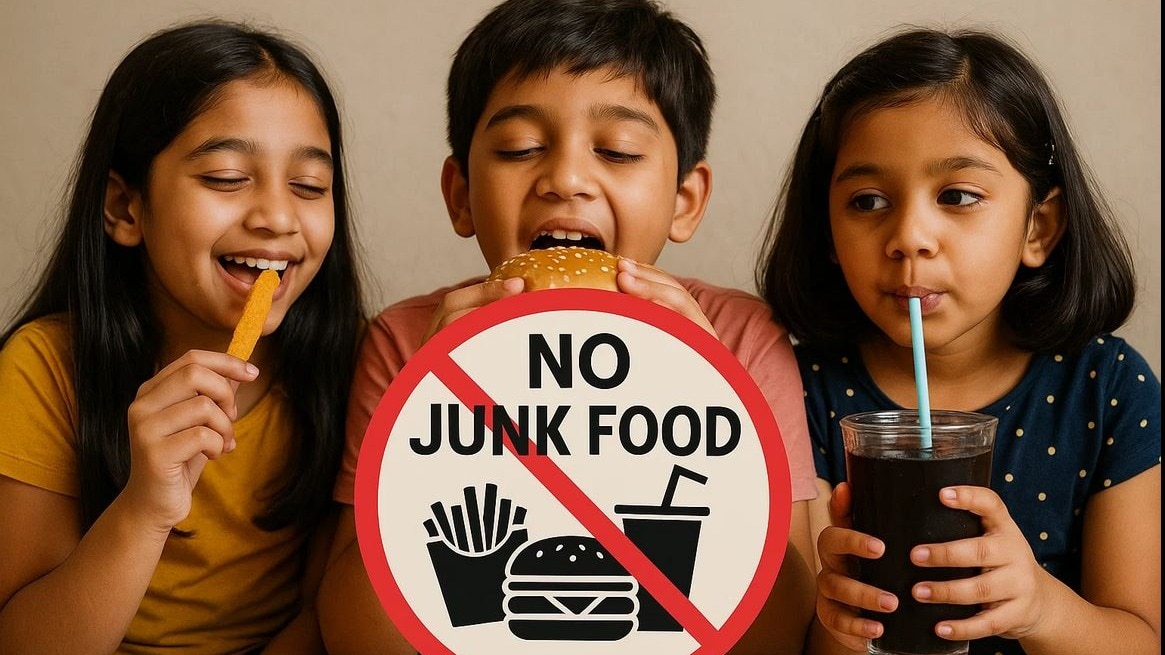
Expressing grave concern over childhood obesity and public health, the Supreme Court has urged FSSAI to implement front-of-pack warning labels for foods high in salt, sugar, and fat to empower consumers to make healthier choices.
- Supreme Court pushes for front-of-pack warning labels on high salt, sugar, and fat packaged foods.
- The court highlighted the rising addiction to junk food among growing children as a national concern.
- FSSAI proposes a red-colored hexagonal warning label for ultra-processed foods.
- The matter is listed for further hearing on September 28.
New Delhi: In a significant move toward safeguarding public health, the Supreme Court of India has expressed deep concern over the nutritional quality of packaged foods. A bench comprising Justices JB Pardiwala and K Vinod Chandran has called upon the Food Safety and Standards Authority of India (FSSAI) and other stakeholders to consider the implementation of front-of-pack warning labels in the national interest, specifically targeting products with excessive levels of salt, sugar, and saturated fats.
The apex court observed that critical nutritional information is currently relegated to the rear of the packaging, often in small print, making it nearly impossible for the average consumer—especially parents—to make informed decisions. The court emphasized that this is a "serious matter" affecting the health of the future generation. During the proceedings, it was argued that ultra-processed foods (UPF) should not be treated on the same level as basic nutritional foods like eggs or nuts and require a more stringent warning system.
Why This Matters
BozokMedia analysis shows that this judicial intervention could force a systemic shift in the Indian FMCG sector. For decades, food giants have used aggressive marketing to target children, while hiding the health risks in the fine print. By mandating a visual warning on the front, the court is effectively stripping away the 'health halo' from many processed snacks. This will likely compel manufacturers to reformulate their recipes to reduce harmful ingredients to avoid the stigma of a red warning label, thereby improving the overall dietary landscape of the country.
"Transparent labeling is not just a regulatory requirement; it is a fundamental right to health for every citizen."
In its affidavit, FSSAI revealed a proposal for a prominent red-colored hexagonal warning label. The implementation is planned in phases: Phase I will target products high in two or more of the critical nutrients (salt, sugar, fat) and sweetened beverages, based on the 2024 Dietary Guidelines for Indians issued by ICMR-NIN. Phase II will extend these warnings to products high in any single one of these nutrients.
The court previously criticized the Union government's stance that matching international standards was not feasible. The bench questioned whether India should remain an "underdeveloped country" in terms of health regulations, asserting that the fight against obesity—now a major public health challenge—requires bold and immediate action.
| Current Labeling System | Proposed Warning System |
|---|---|
| Nutrition facts on the rear side | Warnings on the front side |
| Detailed tables (Hard to read) | Red Hexagonal symbols (Easy to read) |
| Passive disclosure | Active warning/alert |
Frequently Asked Questions
1. What is Front-of-Pack Labeling (FOPL)?
FOPL is a simplified nutrition labeling system that provides a quick, visual summary of a product's health profile on the front of the pack, allowing consumers to identify unhealthy products instantly.
2. Which products will be most affected by these labels?
Ultra-processed snacks, sugary cereals, and sweetened beverages that exceed the salt, sugar, or fat thresholds set by health authorities.