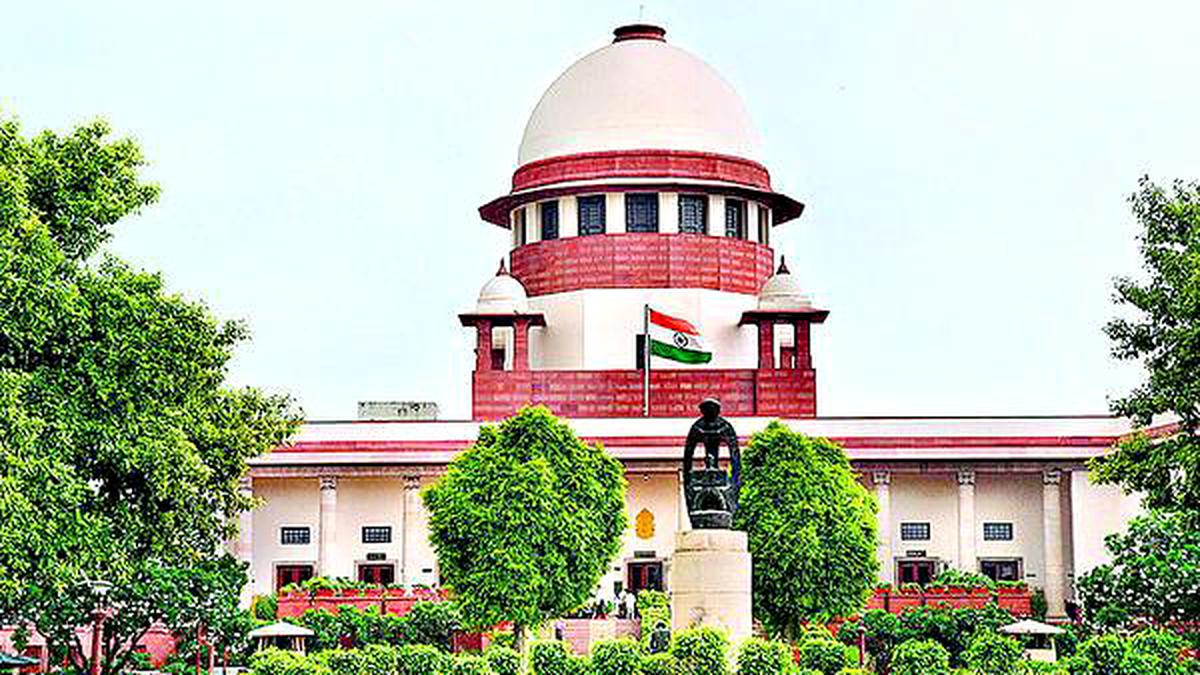
The Supreme Court has directed the Delhi Police to take swift action against anti-social elements harassing a 14-year-old student who protested against the NEET-UG paper leaks.
- SC ordered immediate police action against vigilantes threatening a minor CJP protester.
- CJI Surya Kant labeled the perpetrators as 'anti-social elements' and emphasized the child's safety.
- The court mandated police protection for the victim and her family in Uttar Pradesh.
NEW DELHI: In a stern intervention on Thursday, the Supreme Court of India directed the Solicitor General, Tushar Mehta, to ensure that the Delhi Police take "immediate action" regarding a complaint filed by a 14-year-old student. The minor, a member of the Cockroach Janta Party (CJP), alleged that she and her family have been subjected to open threats, harassment, and intimidation by vigilantes due to her role in the protests against the NEET-UG question paper leaks.
Chief Justice of India (CJI) Surya Kant, leading a three-judge Bench, expressed grave concern over the safety of the child. "These are anti-social elements. They commit violence against a child, and they roam free," the CJI observed, adding that the attempt to browbeat the family to prevent legal action is a very serious issue. To protect the teenager's privacy, the court ensured her name was not mentioned during the livestreamed proceedings.
Why This Matters
BozokMedia analysis shows that this case highlights a dangerous trend of 'social media vigilantism' where individuals use digital platforms to intimidate whistleblowers and young activists. By intervening, the Supreme Court is not only protecting a minor but is also reinforcing the principle that the right to protest must be exercised without fear of extra-judicial retaliation. This sets a critical precedent for the protection of vulnerable witnesses in administrative inquiries.
Justice Joymalya Bagchi specifically noted that since the student currently resides in Uttar Pradesh, the UP Police must assume responsibility for the safety of the victim and her family. The court emphasized that if the allegations of violence and harassment are true, the FIR filed at the Parliament Street police station must be acted upon with urgency.
"The protection of a minor activist is the ultimate test of a democracy's commitment to the rule of law over the rule of the mob."
The proceedings also touched upon broader constitutional concerns. Senior advocates, including Vrinda Grover and Menaka Guruswamy, raised alarms over the use of facial recognition technology at protest sites like Jantar Mantar and the alleged storage of surveillance data by private entities. They questioned how a fact-finding committee could address such deep-rooted constitutional violations.
Further complicating the matter, advocates Prashant Bhushan and Neha Rathi alleged a conflict of interest regarding a member of the High-Powered Enquiry Committee (HPEC). While the court agreed to look into these grievances, it cautioned against assuming bias against the entire committee, which was established to probe police excesses during the nationwide NEET protests.
Frequently Asked Questions
1. Who is the 'Cockroach Janta Party' (CJP)?
The CJP is a collective of students protesting against the systemic failures and leaks associated with the NEET-UG examinations.
The HPEC is a Supreme Court-appointed body tasked with investigating police excesses and the actions of anti-social elements against protesting students.

