Indian Railways has detailed the technical mechanics and legal repercussions of Alarm Chain Pulling (ACP). Learn when it is permissible to stop a train and the heavy penalties for misuse.
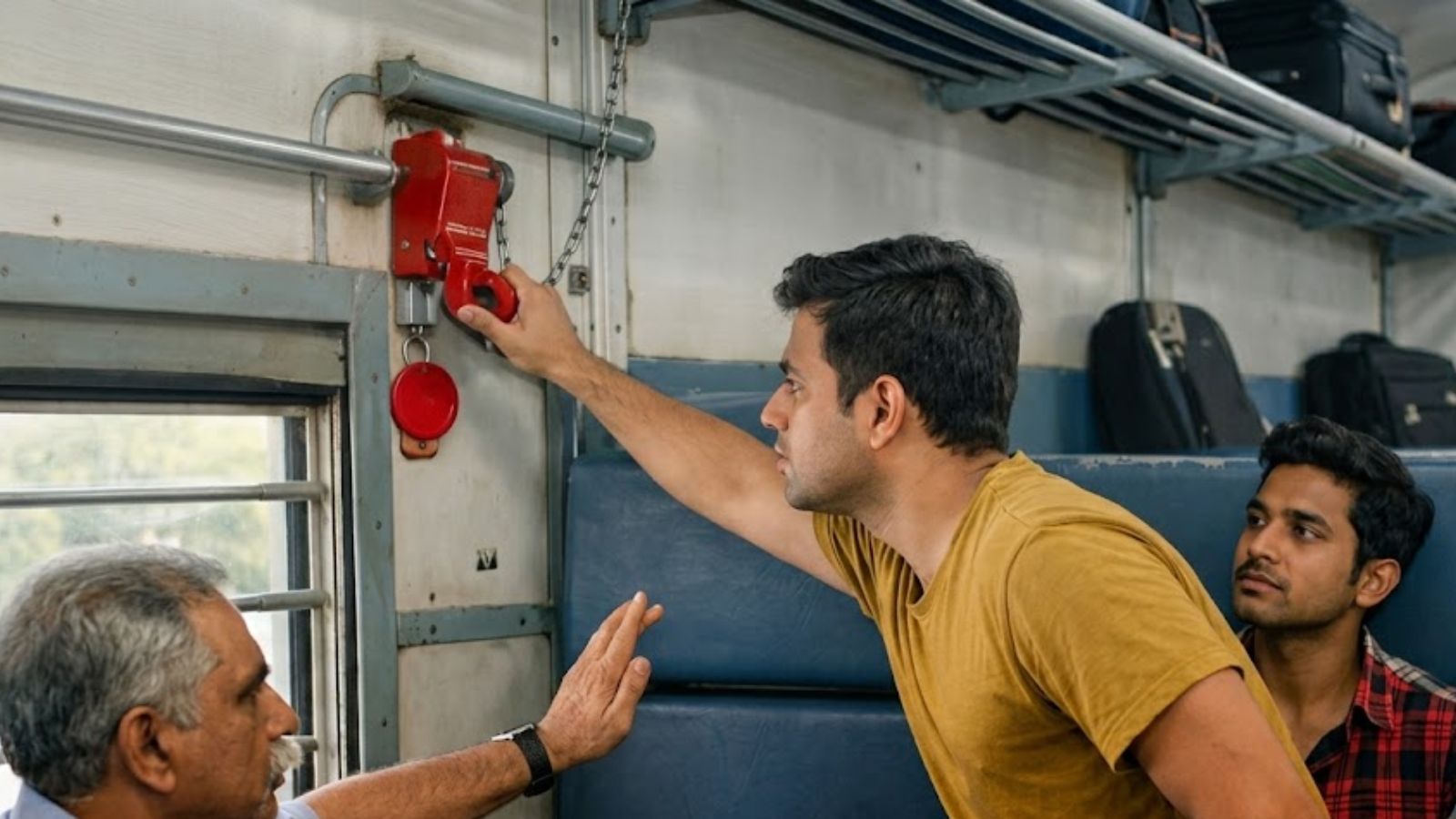
- Pulling the alarm chain reduces air pressure in the brake pipe, triggering a stop.
- Permitted only for life-threatening emergencies, fires, or security breaches.
- Misuse is a punishable offense under Section 141 of the Railways Act, 1989.
The Alarm Chain Pulling (ACP) system is a critical safety feature in Indian trains, designed to allow passengers to halt the train during genuine emergencies. However, the national transporter has repeatedly highlighted that its misuse has become a primary cause of operational delays across the country. An unscheduled stop doesn't just affect one train; it creates a ripple effect, delaying multiple services on the same route.
The Science Behind the Stop
According to Dr. Shivam Sharma, Chief Public Relations Officer (CPRO) of the North Central Railway (NCR), the alarm chains are connected to the train's main brake pipe via a vent valve. Under normal conditions, this pipe maintains an air pressure of approximately 5 kg per sq cm. When a passenger pulls the chain, the valve opens, allowing air to escape.
This sudden drop in pressure is immediately visible to the loco pilot on the pressure gauge, who then initiates the braking process. To alert guards and security personnel, three distinct horn sounds are blown. Furthermore, a loud hissing sound emanates from the coach where the chain was pulled, helping railway staff pinpoint the exact location of the emergency.
Why This Matters
BozokMedia analysis shows a worrying trend of passenger negligence. Between January and August 2026, a staggering 6,393 ACP cases were registered in the Agra, Jhansi, and Prayagraj divisions alone. This indicates that a significant portion of delays is caused by avoidable human error rather than technical failure, putting immense pressure on the railway's punctuality goals.
"Missing a station or boarding the wrong train is a personal oversight, not an emergency; stopping a train for such reasons is an injustice to thousands of other passengers."
When is it Legal to Pull the Chain?
Indian Railways stipulates that the alarm chain should be used only when passenger safety is at immediate risk. Valid scenarios include:
- Severe medical emergencies requiring urgent intervention.
- A passenger falling or slipping from the train.
- Outbreak of fire within the coach.
- Serious criminal activities or security threats.
| Scenario | Permissible? | Correct Action |
|---|---|---|
| Medical Emergency | Yes | Pull chain and alert staff |
| Missed Station | No | Alight at next station |
| Wrong Train | No | Alight at next station |
| Fire Hazard | Yes | Pull chain immediately |
Penalties and Legal Consequences
Unnecessary interference with the alarm chain is a criminal offense under Section 141 of the Railways Act, 1989. Offenders can face imprisonment for up to one year, a fine of up to Rs 1,000, or both. For a first-time offense, a minimum fine of Rs 500 is imposed, while subsequent offenses can lead to three months of imprisonment depending on the circumstances.
Frequently Asked Questions
Q1: Is it okay to pull the chain if I realize I'm on the wrong train?
Answer: No. This is not an emergency. You should proceed to the next station and make alternative arrangements.
Q2: How is the train restarted after a chain pull?
Answer: Railway staff must first investigate the reason for the stop and then manually reset the chain to restore air pressure in the brake pipe.