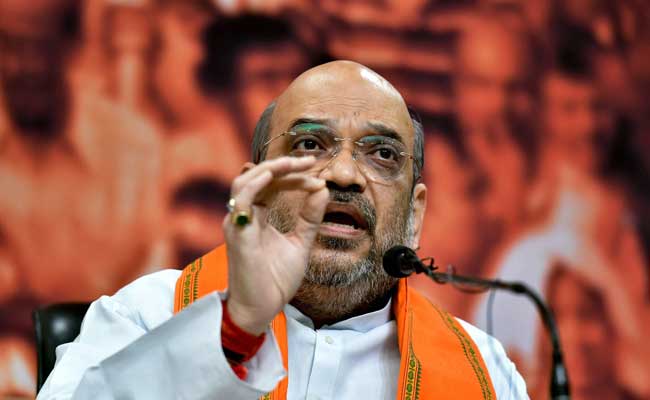
Home Minister Amit Shah aims for zero casualties during disasters, but the devastating Rasuwa tragedy in Nepal and long-ignored ISRO alerts highlight a critical gap in implementation.
- Home Minister Amit Shah has set a target of zero casualties during natural disasters.
- The Rasuwa tragedy in Nepal, claiming 1,400 lives, serves as a stark warning of Himalayan risks.
- ISRO had provided critical warnings regarding glacial instability years in advance.
Union Home Minister Amit Shah has proposed a bold vision for India's disaster management strategy: the goal of 'Zero Casualties.' While the ambition to eliminate loss of life during natural calamities is commendable, the path to implementation is fraught with systemic hurdles and a history of ignored intelligence.
The recent catastrophe in Rasuwa, Nepal, where a massive mud and ice avalanche claimed nearly 1,400 lives, stands as a grim reminder of the volatile nature of the Himalayan belt. This event underscores the lethal potential of glacial instabilities that affect both Nepal and the Indian border states.
Why This Matters
BozokMedia analysis shows that the failure is not one of intelligence, but of execution. The Indian Space Research Organisation (ISRO) had flagged these specific risks years ago. Through high-resolution satellite imagery and geospatial analysis, ISRO provided data on receding glaciers and unstable slopes, yet these warnings failed to translate into grassroots evacuation plans or infrastructure reinforcement.
"The gap between satellite data and ground-level action is where the tragedy resides."
Historically, the region has been prone to Glacial Lake Outburst Floods (GLOFs). As global temperatures rise, the acceleration of ice melt creates precarious reservoirs of water that can burst with little warning. To achieve the 'Zero Casualty' mandate, the government must move beyond reactive rescue operations and embrace a proactive, data-driven preventative model.
| Factor | Traditional Approach | Proposed 'Zero Casualty' Model |
|---|---|---|
| Response Time | Post-event relief | Pre-event precise prediction |
| Data Usage | Fragmented and limited | ISRO-driven real-time monitoring |
| Focus Area | Rescue and Recovery | Prevention and Safe Evacuation |
Frequently Asked Questions
1. What is the 'Zero Casualty' goal?
It is a strategic objective to ensure that no lives are lost during natural disasters through advanced warning and evacuation systems.
2. What caused the Rasuwa tragedy?
The tragedy was caused by a massive avalanche of mud and ice, which triggered flash floods in the downstream areas of Nepal.