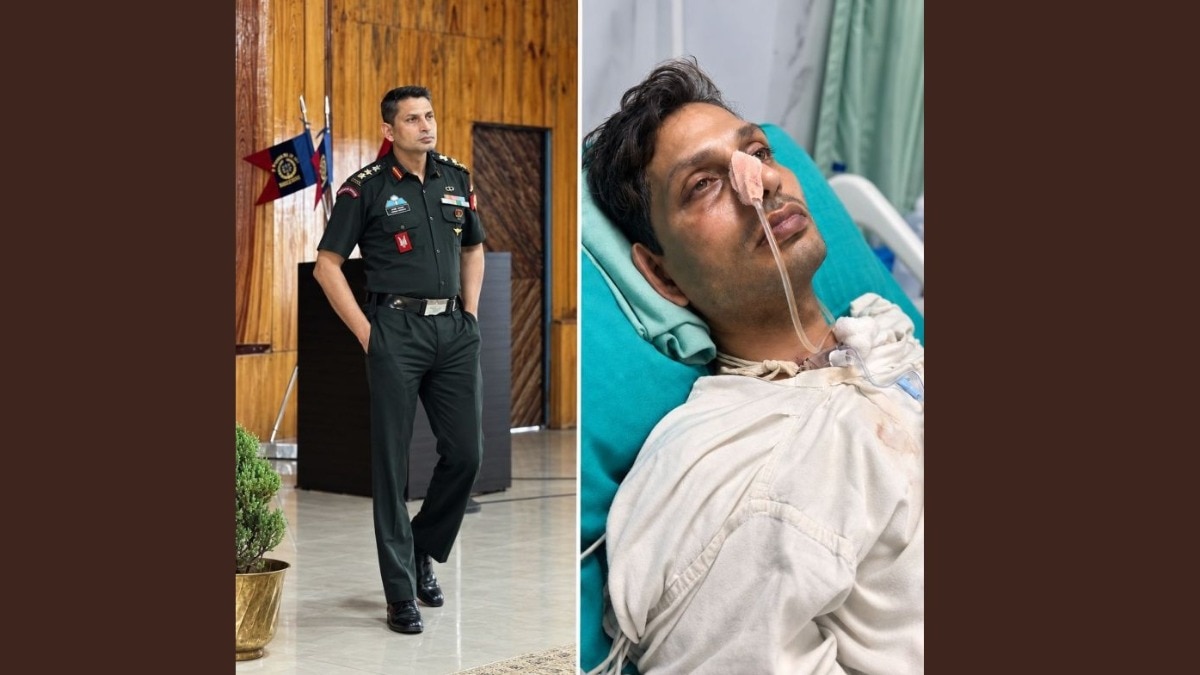
Colonel Anurag Upadhyay, a brilliant mind who scored in the 99th percentile of CAT, chose a life of elite military service with the Para Special Forces over a lucrative corporate career. Following a severe stroke in 2025 that left him with Locked-In Syndrome, his family is now appealing to global medical and technological experts for advanced rehabilitation options.
- Col Anurag Upadhyay scored a 99th percentile in CAT but chose to serve in the elite Para Special Forces of the Indian Army.
- In August 2025, he suffered a severe posterior circulation stroke, resulting in Locked-In Syndrome and subsequent bilateral below-knee amputations.
- His family is seeking connections with neurologists, BCI researchers, and assistive technology experts to improve his quality of life.
The story of Colonel Anurag Upadhyay is one of ultimate sacrifice, intellect, and profound resilience. Scoring in the 99th percentile of the Common Admission Test (CAT) is a feat that routinely guarantees admission to India's premier management institutes (IIMs) and a subsequent fast-track corporate career. Yet, Col Upadhyay chose a path less traveled—one defined by mud, metal, and the ultimate call of duty in the Indian Army.
His military journey was nothing short of legendary. He volunteered for the highly elite Para Special Forces, completing a grueling probation period with 3 PARA (SF). He was subsequently selected to be part of the raising team of 12 PARA (SF), an honor reserved for the finest soldiers. His dedication was tested early when he suffered a heart attack in 2008, but his indomitable spirit saw him return to active duty, showcasing a level of resilience that defined his career.
Why This Matters
BozokMedia analysis shows that Col Anurag Upadhyay's case highlights the critical intersection of military valor and the urgent need for advanced medical technology in neuro-rehabilitation. In India, specialized facilities for rare conditions like Locked-In Syndrome remain scarce. Integrating cutting-edge solutions like Brain-Computer Interfaces (BCIs) into mainstream medical care is no longer a futuristic concept but an immediate necessity for patients who are cognitively intact but physically trapped.
"Locked-in syndrome presents one of the most profound challenges in neurology, where an active, fully functional mind is trapped in an unresponsive body, making brain-computer interfaces (BCIs) and eye-tracking systems critical lifelines for communication." - Dr. Rajesh Mehta, Neuro-rehabilitation Specialist.
Historical Background: The Rigors of Para Special Forces
Joining the Para Special Forces is widely regarded as one of the most physically and mentally demanding achievements in the global military landscape. The selection process involves a grueling probation period designed to push human endurance to its absolute limits. Col Upadhyay's ability to clear this probation and later help raise a new regiment (12 PARA SF) speaks volumes about his psychological fortitude and physical capability—traits that are now keeping him alert and strong-willed in his current medical battle.
| Aspect | Corporate Path (CAT / MBA) | Military Path (Para Special Forces) |
|---|---|---|
| Primary Focus | Business management, corporate strategy, and financial growth. | National security, unconventional warfare, and elite leadership. |
| Risk Profile | Financial and market risks; high-pressure corporate environments. | Extreme physical danger, high-altitude operations, and life-threatening missions. |
| Key Achievements | Executive leadership, corporate milestones, and wealth creation. | Special Forces raising teams (12 PARA SF), operational bravery, and national service. |
However, his most challenging battle began in August 2025. Col Upadhyay suffered a severe posterior circulation stroke, which left him with locked-in syndrome. While his mind remains razor-sharp, alert, and fully aware of his surroundings, his body is almost entirely paralyzed. Adding to the medical complexity, subsequent complications required bilateral below-knee amputations. Currently, he communicates his complex thoughts letter-by-letter using eye movements and alphabet-based scanning.
According to a public appeal shared by Shradha Sharma, founder of YourStory, the family is not looking for miracle cures but is searching for credible scientific expertise. They want to connect with neurologists, neuro-rehabilitation specialists, and research teams working on brain-computer interfaces, eye-tracking, and assistive communication to explore every possible avenue for improvement.
Frequently Asked Questions
Q1: What is Locked-in Syndrome?
A1: Locked-in syndrome is a rare neurological disorder characterized by complete paralysis of voluntary muscles in all parts of the body except for those that control eye movement, while the patient's cognitive functions remain fully intact.
Q2: How can advanced technology help Col Anurag Upadhyay?
A2: Technologies like Brain-Computer Interfaces (BCIs) and eye-tracking systems can translate eye movements or neural signals into text or speech, allowing him to communicate more fluidly and interact with his environment.