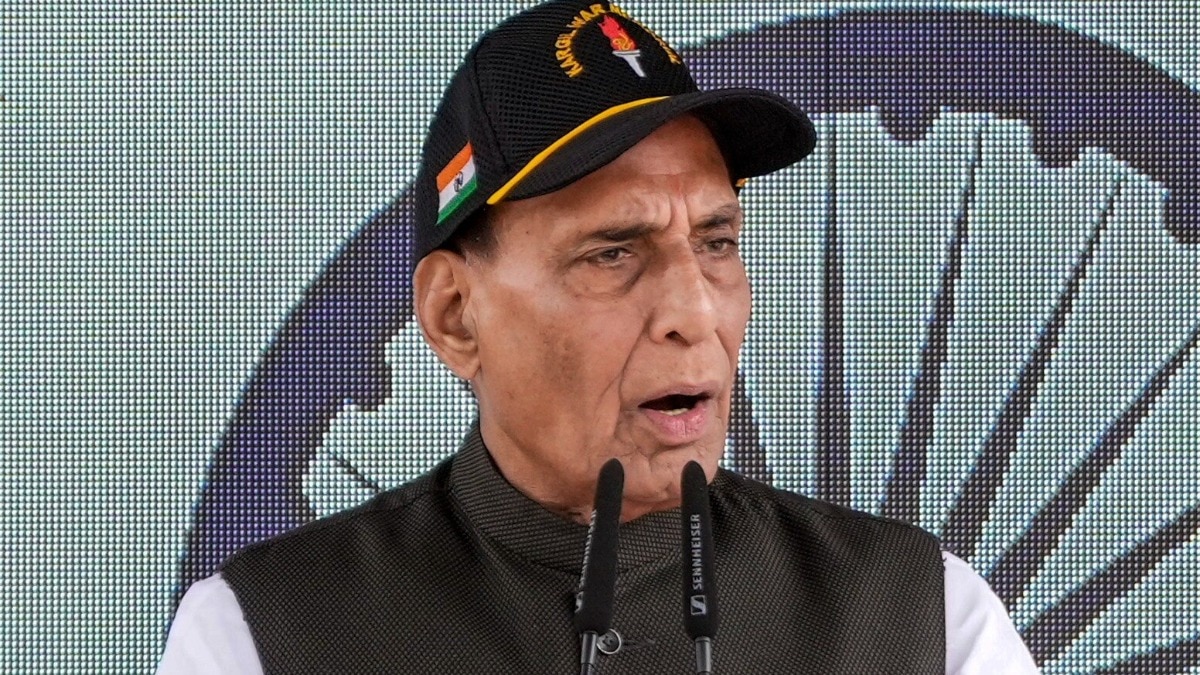
Defense Minister Rajnath Singh has asserted that under PM Modi's leadership, the Indian Army is proactively neutralizing terrorists in their own hideouts, while slamming critics of military valor.
- Defense Minister emphasized decisive action against terrorism and Naxalism.
- The Army is now conducting proactive strikes inside terrorist hideouts.
- Strong condemnation of those questioning the bravery of Indian soldiers.
- Naxalism identified as a cause of poverty, rather than a result of it.
Speaking at a high-profile event in New Delhi, Defense Minister Rajnath Singh delivered a powerful message regarding India's national security paradigm. He stated that under the leadership of Prime Minister Narendra Modi, the nation has adopted a zero-tolerance policy toward both terrorism and Naxalism, shifting from a reactive to a proactive stance.
The Defense Minister highlighted that the Indian Army is no longer waiting for threats to reach the borders; instead, they are entering the very homes and hideouts of terrorists to eliminate them. This strategic shift marks a significant era in India's defense doctrine.
Why This Matters
BozokMedia analysis shows that these remarks serve as a dual-purpose signal: a warning to cross-border terror modules and a reassurance to the domestic security apparatus. By validating the 'offensive-defense' strategy, the government is reinforcing the legitimacy of high-stakes military operations.
The Indian Army is neutralizing terrorists by entering their own hideouts; this is the new reality of our security.
Addressing the issue of Naxalism, Singh countered long-standing narratives. He argued that while critics often claim poverty fuels Naxalism, the reality is that Naxalite insurgency is what prevents development and spreads poverty in affected regions. He claimed that the government has successfully mitigated this internal threat.
Furthermore, the Minister touched upon the global standing of Prime Minister Modi, noting that his leadership has made security a top priority, earning him immense popularity in global surveys. He emphasized that the sovereignty and unity of India remain non-negotiable.
Historical Background
Historically, India's approach to counter-terrorism was largely defensive. However, following significant terror attacks over the years, the military doctrine evolved, leading to landmark operations that demonstrated India's capability to strike deep into enemy territory to prevent future incursions.
Frequently Asked Questions
Question 1: What was Rajnath Singh's stance on military valor?
Answer: He expressed deep sorrow over those who question the bravery of soldiers for political gain and reaffirmed the Army's courage.
Question 2: How does the government view Naxalism?
Answer: The government views Naxalism as a driver of poverty and has taken decisive steps to curb its influence.