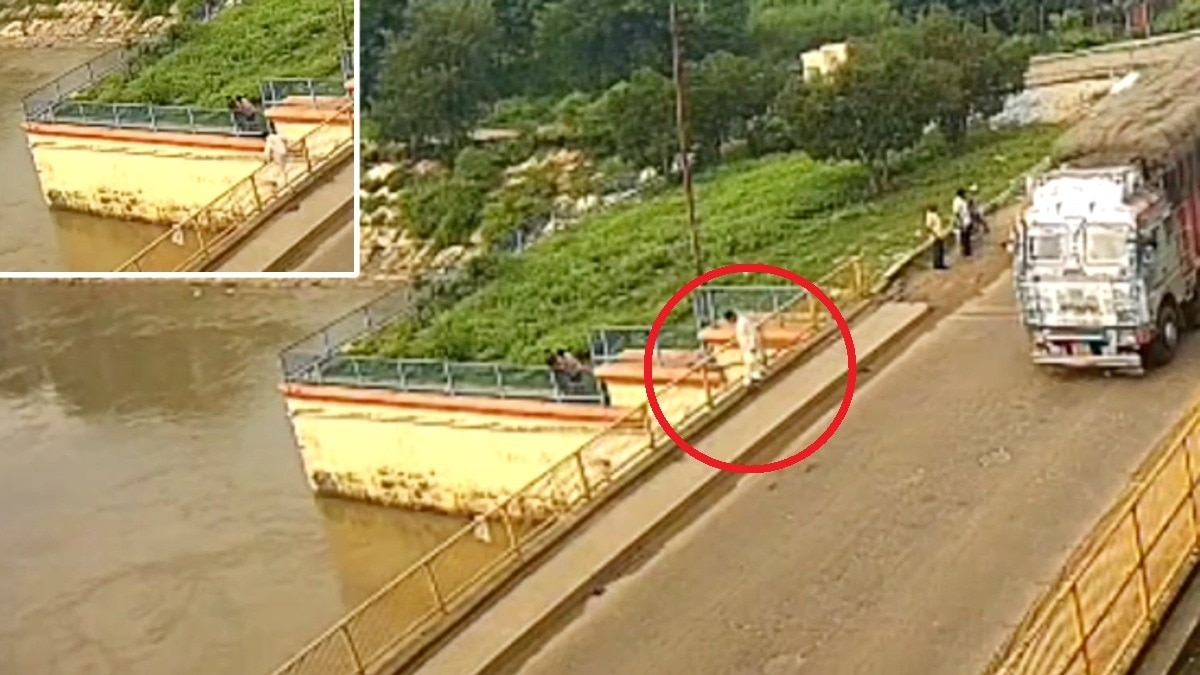
At 46, Jitendra leapt from the Ganga Bairaj Bridge into the river, where his chronic illness led to his death. CCTV footage provides a clear view of his final moments.
- Jitendra jumped from the Ganga Bairaj Bridge
- Underlying illness caused his death
- CCTV captured the entire incident
In Prayagraj, Uttar Pradesh, 46‑year‑old Jitendra was found dead in the Ganges last week after leaping from the historic Ganga Bairaj Bridge. Reports indicate he had been battling a serious chronic disease for years, which ultimately proved fatal.
The bridge, a key crossing built in 1975, is equipped with surveillance cameras. The footage shows Jitendra’s unstable gait, his jump, and the immediate aftermath, offering an unfiltered view of the tragedy.
Authorities have confirmed that the primary cause of death was his pre‑existing cardiovascular condition. Hospital records corroborate that he suffered from severe heart disease, making the physical strain of the jump unsurvivable.
This incident raises pressing questions about mental health support and safety measures at high‑traffic public infrastructures. Local officials have pledged to install additional cameras and warning signs to deter similar actions.
Why This Matters
BozokMedia analysis shows that incidents like these highlight the urgent need for better mental health support and stricter safety protocols at high‑risk public infrastructures across India.
"Without reinforced safety at public sites, tragedies of this nature will continue to occur," says Dr. Anjali Mishra, mental‑health specialist.
Frequently Asked Questions
Question 1: Was Jitendra’s death solely due to his illness?
Answer: Preliminary investigations indicate his underlying heart condition made survival after the jump impossible.
Question 2: Are steps being taken to prevent similar incidents?
Answer: Local authorities plan to increase surveillance and add prominent warning signage at high‑risk locations.