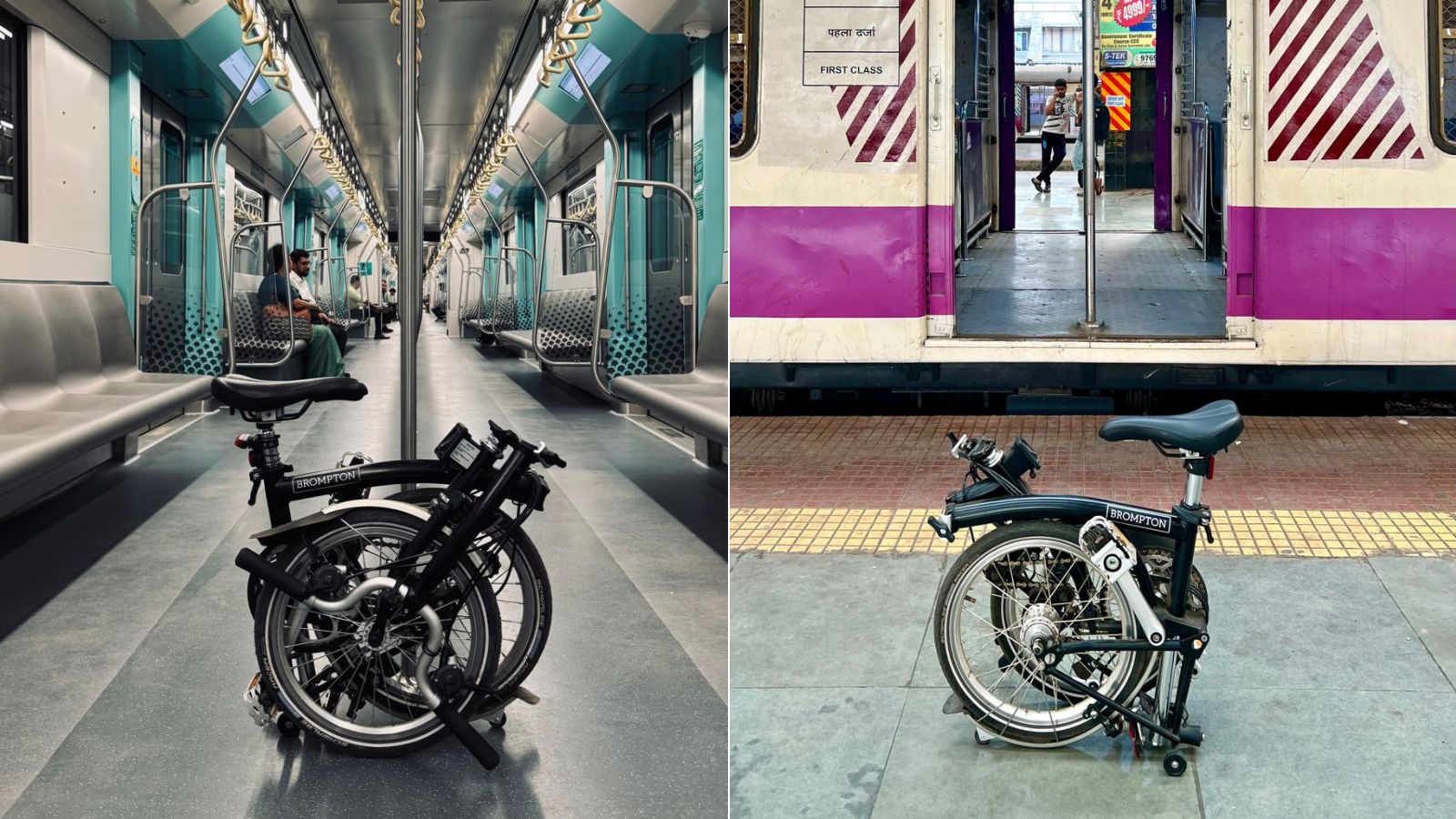
The Mumbai Metro Rail Corporation Limited (MMRCL) has banned folding bicycles on the Aqua Line, sparking a debate among urban planners and commuters regarding last-mile connectivity.
- MMRCL has confirmed that bicycles, including foldable ones, are prohibited on Metro Line 3 (Aqua Line).
- Urban planners argue the rule hinders 'last-mile connectivity' and promotes reliance on taxis/rickshaws.
- The decision comes at a time when Line 3 is struggling to meet its ridership targets.
A controversial new regulation on Mumbai Metro Line 3 (the Aqua Line) has drawn sharp criticism from urban planners, architects, and environmentalists. The Mumbai Metro Rail Corporation Limited (MMRCL) has officially stated that commuters are not permitted to carry bicycles—even in a folded or packed condition—on the underground metro premises or trains.
Architect Pranav Naik, who has long used a foldable bicycle to commute between Mahim and Fort, expressed his confusion over the sudden enforcement. Despite having traveled with his cycle previously, he was recently stopped by security officials. Naik pointed out the inconsistency in the rule, noting that while large bags and wheelchairs are permitted, compact folding bicycles are not.
Why This Matters
BozokMedia analysis shows that this policy creates a significant gap in the city's multi-modal transport strategy. By restricting lightweight, eco-friendly transit options like folding bikes, the authorities are inadvertently pushing commuters toward shared mobility services like auto-rickshaws and taxis, which often leads to increased traffic congestion and higher costs for the average passenger.
Restricting folding bicycles on the Aqua Line dilutes the core purpose of building a multi-modal transport system.
Firoza Dadan, Mumbai’s first bicycle mayor, highlighted the environmental implications. She argued that if the city aims to promote sustainable public transport, banning a practical solution for first and last-mile problems is counterproductive. Instead of reducing the carbon footprint, the rule increases dependency on fossil-fuel-based transport services.
Historical Background: Mumbai’s transit landscape has traditionally relied on the heavy-duty Local Train network and the BEST bus system. As the city integrates high-tech Metro lines, the challenge has always been 'seamless integration.' Previous metro lines in India have often allowed folded cycles to facilitate easier transitions between different modes of transport.
The debate is particularly timely as Line 3 is currently facing challenges in achieving its expected ridership numbers. Experts like Vijay Malhotra, founder of Pedal and Tring Tring, suggest that for modern infrastructure to succeed, it must align with green commuting trends rather than imposing restrictive barriers.
Frequently Asked Questions
1. Can I take a folded cycle on the Aqua Line?
No, according to current MMRCL security guidelines, even folded or packed bicycles are not allowed.
2. Why has MMRCL implemented this rule?
The MMRCL states the rule is based on security guidelines and the expectation of high passenger volumes on the line.