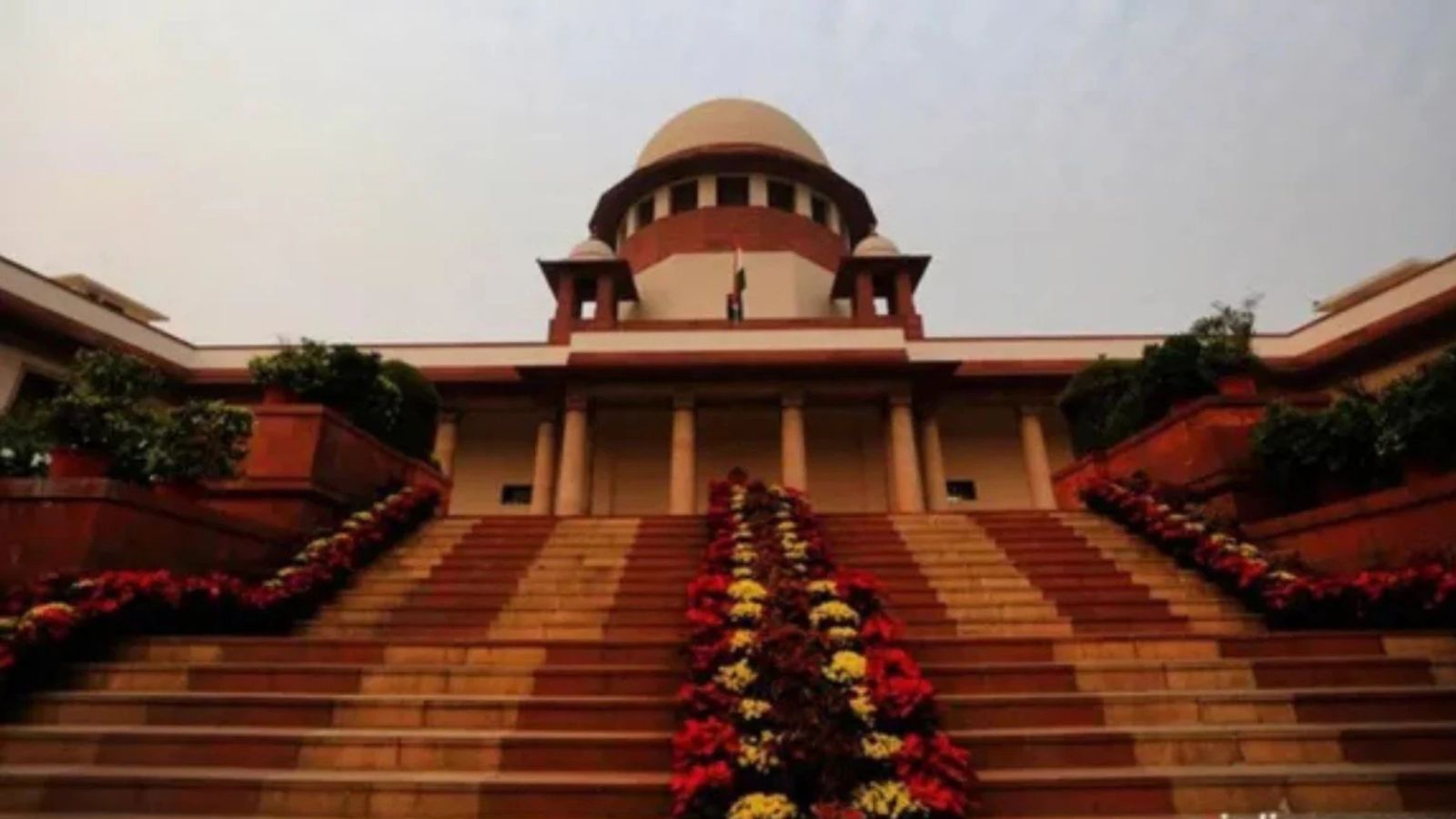
The Central Government has approached the Supreme Court for clarification on a landmark judgment regarding the OBC creamy layer, potentially affecting 100 candidates and the CSE-2025 batch.
- Centre seeks clarification on the March 11 SC ruling regarding OBC creamy layer criteria.
- Approximately 100 OBC candidates selected since 2016 face potential reinstatement.
- Government warns of a 'cascading effect' on CSE-2025 training, seniority, and pay fixation.
- SC ruled that income alone cannot be the sole criterion for determining creamy layer status.
The Government of India, through the Department of Personnel and Training (DoPT), has formally requested the Supreme Court to provide "clarifications and appropriate directions" regarding the applicability of its March 11 judgment. The ruling in question fundamentally challenges how the 'creamy layer' is determined for Other Backward Classes (OBC), specifically arguing that income should not be the exclusive metric for exclusion from reservation benefits.
This legal maneuver comes at a critical juncture, as nearly 100 OBC candidates who cleared the Civil Services Examinations (CSE) since 2016 had their claims rejected based on creamy layer criteria. While sources indicate the government had already begun document verification for these candidates, the sudden plea for clarification suggests a hesitation to apply the ruling retrospectively to the most recent recruitment cycle.
Why This Matters
BozokMedia analysis shows that this is not merely a technical legal query but a strategic move to prevent administrative chaos. The Centre argues that applying the judgment to the CSE-2025 batch—whose results were declared just five days before the verdict—would create an "acute anomaly." If the merit lists are reopened, it could disrupt the Foundation Course at the Lal Bahadur Shastri National Academy of Administration (LBSNAA) in Mussoorie, affecting cadre allocation for IAS and IPS officers and disturbing the seniority hierarchy of the entire batch.
The tension between judicial interpretations of social equity and the administrative necessity of finality in recruitment often leads to such legal deadlocks.
The root of the dispute lies in a 2004 DoPT clarification which stated that salary income from PSUs and the private sector would be counted toward the creamy layer, unlike salary from government service. Petitioners argued this created "hostile discrimination" between children of government employees and those of private sector employees.
In the case of Rohith Nathan, the Supreme Court observed that excluding candidates solely based on salary without considering the nature of the post (Group A, B, C, or D) violates the equality doctrine under Articles 14, 15, and 16 of the Constitution. The court emphasized that the goal of the creamy layer is to prevent artificial distinctions within the same social class.
| Criteria | Previous DoPT Interpretation (2004) | Supreme Court Ruling (March 11) |
|---|---|---|
| Income Basis | Salary from PSU/Private sector counted as creamy layer. | Income cannot be the sole criterion for exclusion. |
| Post Nature | Ignored the rank/grade of the parent's post. | Must consider nature of post (Group A, B, C, D). |
| Legal Standing | Administrative Memo (OM) | Constitutional Mandate (Articles 14, 15, 16) |
Frequently Asked Questions
1. Who is affected by this Supreme Court ruling?
Primarily OBC candidates who cleared the Civil Services Exam but were rejected because their parents' income in the private or PSU sector put them in the 'creamy layer'.
2. What is the government's main concern regarding CSE-2025?
The government fears that changing the merit list now would cause a cascading delay in training, pay fixation, and seniority for the incoming batch of officers.