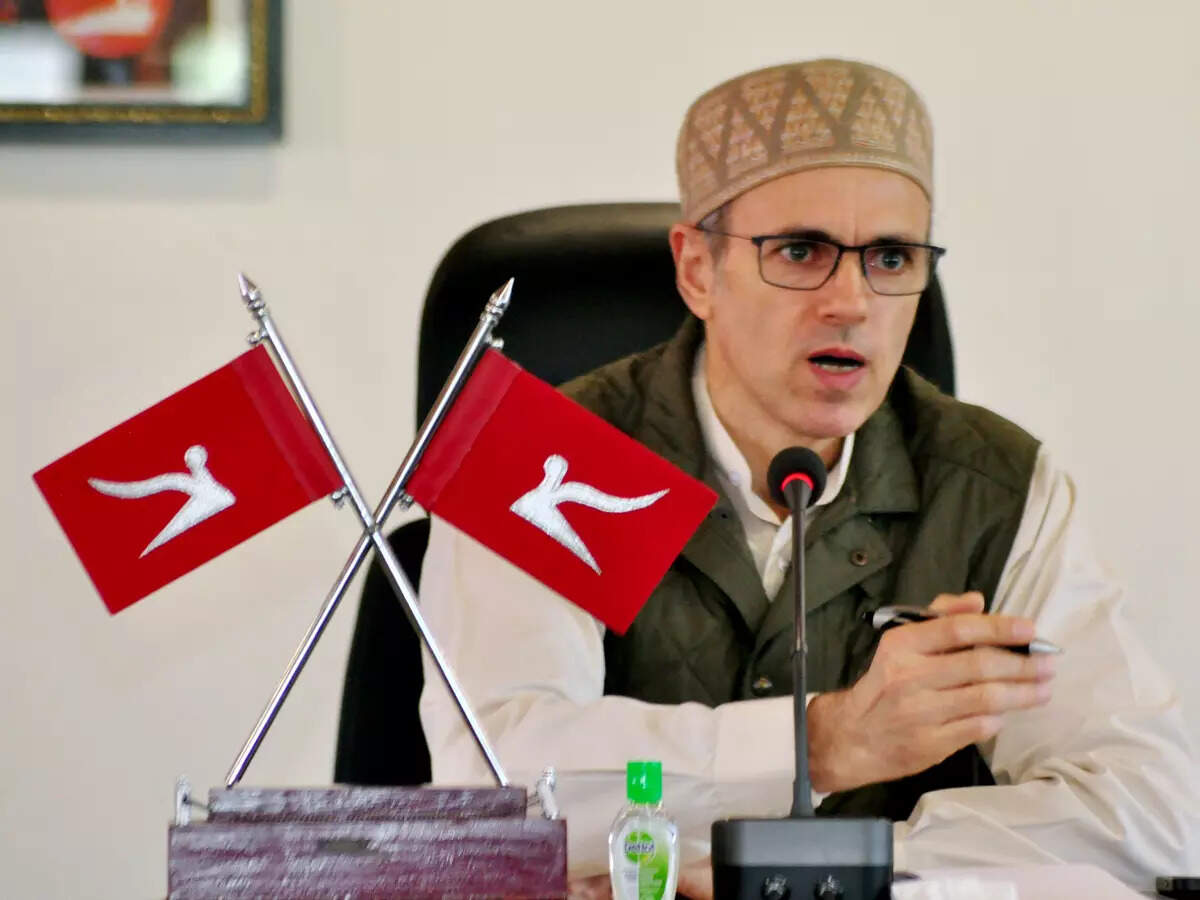
Jammu & Kashmir Chief Minister Omar Abdullah praised India's decision to suspend the Indus Water Treaty (IWT) and warned that the central government will respond to Pakistan's war‑like rhetoric. He argued that the treaty has long undermined the region's water rights and energy security.
Jammu & Kashmir Chief Minister Omar Abdullah today reiterated his support for New Delhi's move to suspend the Indus Water Treaty (IWT). Speaking to reporters in Srinagar, he described the 1960 accord as a historic betrayal that denied the state control over its own rivers and contributed to chronic water and power shortages.
Historical backdrop of the IWT
Signed shortly after the Partition, the IWT allocated the three eastern rivers – Ravi, Beas and Sutlej – to India, while granting Pakistan rights over the three western rivers – Indus, Chenab and Jhelum. At the time, the agreement was hailed as a diplomatic success, yet it left Jammu & Kashmir with only limited water entitlements, creating a structural imbalance that has worsened over the decades.
Suspension after the Pahalgam terror attack
Following the horrific terrorist assault in Pahalgam in 2025, the Indian government placed the treaty on hold, citing national security concerns. Officials argued that the water‑sharing mechanism could be exploited by hostile elements, and that an immediate review was essential to safeguard the region’s water infrastructure.
Abdullah’s political stance and implications
Abdullah, whose National Conference party has long opposed the IWT, said, “If there is any greater betrayal of India‑Pakistan relations, it is the Indus Water Treaty that stripped Jammu & Kashmir of control over its rivers.” He linked the treaty directly to the ongoing power crisis, asserting that the lack of water autonomy hampers hydro‑electric projects and agricultural irrigation across the valley.
Future ramifications and international perspective
The suspension adds a new layer of complexity to Indo‑Pak water diplomacy. Analysts warn that without a fresh bilateral dialogue, the risk of water‑related disputes escalating into broader security confrontations rises. For India, the pause offers an opportunity to invest in water‑storage, flood‑control and renewable energy infrastructure within the state, potentially reshaping the region’s economic landscape. The global community watches closely, viewing the move as a test of how water security intertwines with geopolitical stability in South Asia.