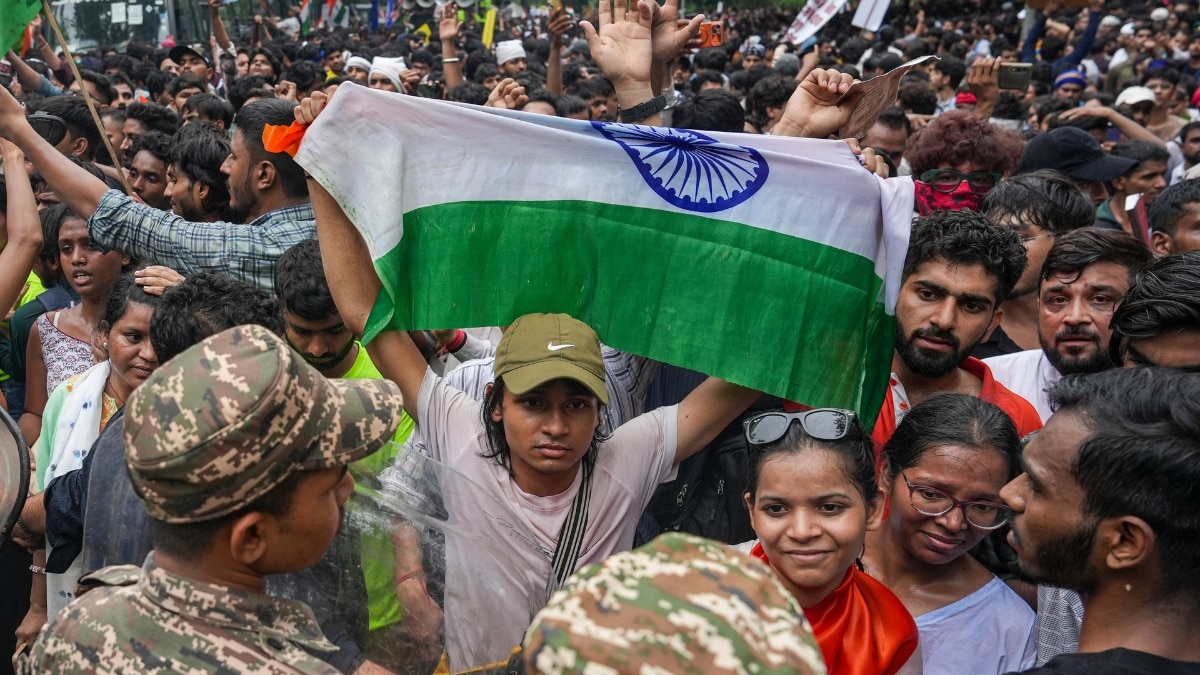
The political tension from Delhi's 'Chalo Sansad' march has spread to South India, with TVK chief Vijay and Kerala's Pinarayi Vijayan condemning the Centre's crackdown on protesters.
Key Takeaways
- The political fallout of the CJP protests and Rahul Gandhi's detention has reached Southern states.
- Tamil Nadu CM Vijay demands the complete abolition of NEET and moving education to the State List.
- Violent clashes erupted between BJP and Congress workers in Vijayawada, Andhra Pradesh.
- Kerala's Pinarayi Vijayan accused the Centre of attempting to suppress democratic protests.
The political showdown that began in New Delhi over the Cockroach Janta Party's (CJP) 'Chalo Sansad' march and the detention of Leader of Opposition Rahul Gandhi has ignited fresh confrontations across South India. What started as a localized protest in the capital has evolved into a nationwide debate involving major southern political figures and intense street-level clashes.
In Andhra Pradesh, the situation escalated into physical violence in Vijayawada. Clashes between BJP and Congress workers broke out following protests over the detention of opposition leaders. The Andhra Pradesh Congress Committee (APCC) alleged that BJP workers attacked their state office, resulting in injuries to Youth Congress president Pawan Teja, while the BJP maintained that the Congress was attempting to incite unrest through anti-national narratives.
Why This Matters (इसके मायने क्या हैं)
BozokMedia analysis shows that this escalation signifies a deepening rift in India's federal structure. As regional heavyweights like Vijay in Tamil Nadu and Pinarayi Vijayan in Kerala align themselves with the central protest movements, the issue shifts from a mere law-and-order concern to a fundamental debate on state autonomy versus central authority.
Furthermore, the focus on the NEET examination highlights a growing socio-economic anxiety among the youth. If the government fails to address the systemic flaws in national examinations, the resulting political friction could lead to prolonged instability in both the educational sector and regional governance.
"The detention of opposition leaders during peaceful protests often acts as a catalyst for regional leaders to assert their autonomy against the Centre."
Tamil Nadu Chief Minister and TVK leader Vijay has emerged as a vocal critic, calling the detention of Rahul Gandhi "against democracy." Vijay has doubled down on his stance regarding the NEET examination, demanding its total abolition and the return of 'Education' to the State List to ensure localized control and fairness for students.
Historical Background: The debate over the division of powers between the Union and States is a cornerstone of Indian politics. While the Seventh Schedule of the Constitution lists subjects like 'Education' under the Concurrent List, allowing both levels of government to legislate, the centralization of exams like NEET has sparked a modern-day constitutional tug-of-war regarding regional rights and academic standardization.
| Issue | Opposition/Regional View | BJP/Central View |
|---|---|---|
| Detention of Leaders | Suppression of Democracy | Maintaining Law and Order |
| NEET Examination | Abolish and return to States | Necessary for Uniformity |
| Protest Method | Fundamental Right | Risk of Unrest/Hijacking |
Frequently Asked Questions (अक्सर पूछे जाने वाले प्रश्न)
Q1: What triggered the protests in South India?
Answer: The protests were triggered by the police action against the CJP 'Chalo Sansad' march and the detention of Rahul Gandhi in Delhi.
Q2: What is Vijay's specific demand regarding education?
Answer: Vijay demands that NEET be abolished and that education be moved from the Concurrent List back to the State List.