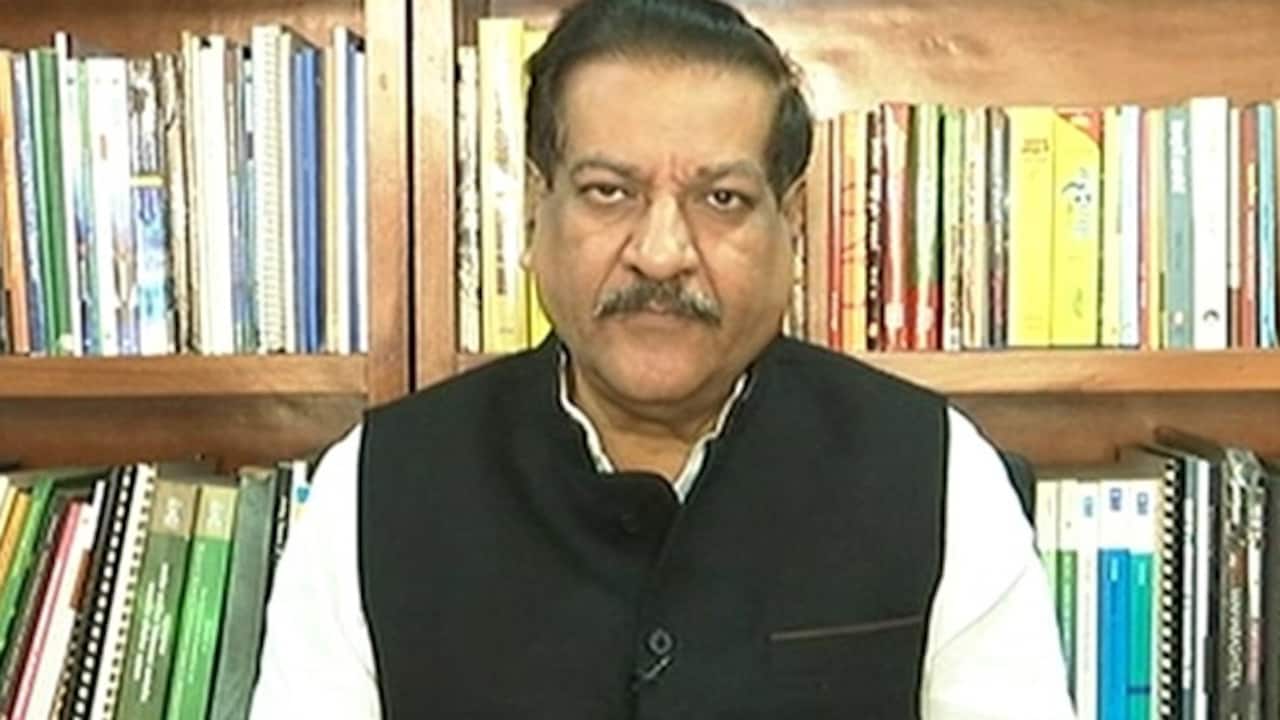
Senior Congress leader and former Maharashtra chief minister Prithviraj Chavan flagged growing unrest within Sharad Pawar’s Nationalist Congress Party (NCP). With five to six MPs reportedly dissatisfied, the party’s future hangs in the balance, and Congress’s maneuvers may deepen the crisis.
Maharashtra’s political landscape is witnessing a new flashpoint as the Nationalist Congress Party (NCP) led by Sharad Pawar appears to be slipping into a state of instability. Senior Congress figure and former chief minister Prithviraj Chavan publicly warned, “Five or six MPs from Sharad Pawar’s NCP are restless. It is unclear what they will do, but they are currently in a state of instability.” The remark is not merely an opinion; it signals deep‑seated fissures that could reshape power equations in the state.
Background
Founded in 1995 by Sharad Pawar, the NCP has long been a kingmaker in Maharashtra politics, often aligning with the Congress to form governments. The 2019 alliance secured a majority, but internal disagreements have simmered ever since. Recent talks between Pawar and Eknath Shinde have intensified the debate, as both leaders weigh divergent coalition options, prompting whispers of a possible split.
Current Developments
Following Chavan’s statement, several NCP parliamentarians have begun voicing discontent. Some describe the party’s decision‑making as “opaque” and “top‑down,” while others hint at exploring alternatives—ranging from contesting elections independently to re‑joining a Congress‑led front. Meanwhile, the Congress party is seizing the moment, attempting to position itself as the stabilising force, thereby amplifying the pressure on Pawar’s camp.
Potential Impact
If the NCP fragments or undergoes a major realignment, the repercussions for the upcoming Maharashtra assembly elections could be profound. Congress, already the principal opposition, could capitalize on the vacuum to expand its vote‑share, especially in pivotal districts such as Pune, Nagpur, and Nasik. Conversely, Pawar’s party must quickly restore internal cohesion; failure to do so could erode its traditional rural and urban strongholds, reshaping voter dynamics across the state.
Expert Opinions
Political analysts view this unrest as a classic symptom of a party at a crossroads. Dr. Ajay Patel, a scholar of Indian politics, notes, “The NCP’s current instability is less about personal rivalry and more about a strategic reassessment of its relevance in a changing electoral landscape. If Congress leverages this moment wisely, it could re‑anchor itself as the dominant force in Maharashtra.”
In sum, the NCP stands at a decisive juncture. Whether it manages to reconcile its internal dissent or succumbs to a split will determine not only its own fortunes but also the broader trajectory of Maharashtra’s political future.