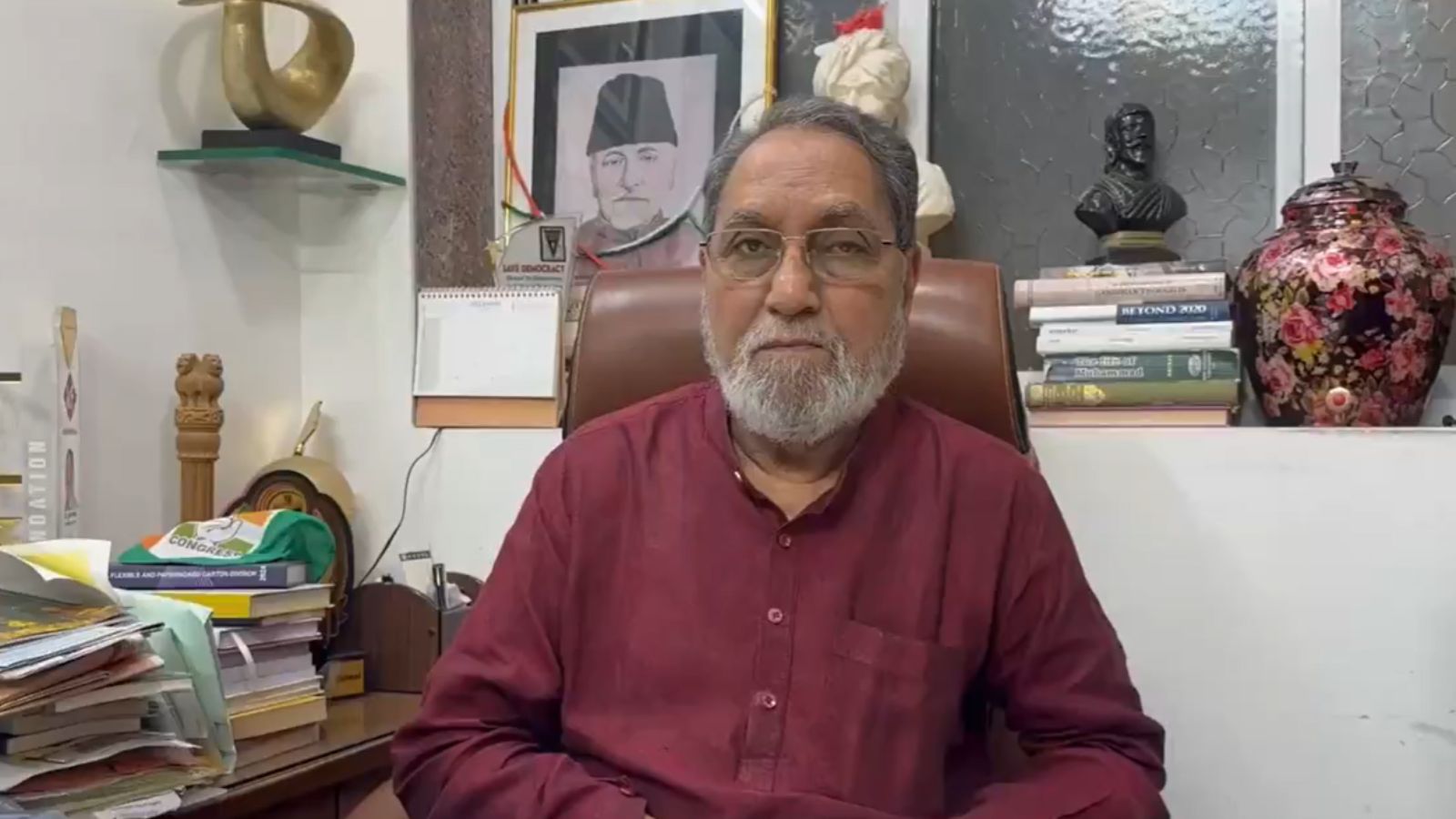
Senior Congress leader Hussain Dalwai submitted a memorandum to Maharashtra Chief Minister Devendra Fadnavis, highlighting the absence of Christian and Muslim members in the Uniform Civil Code drafting committee. He urged inclusion of all religious communities to ensure a democratic legislative process.
Key Takeaways
- The UCC drafting committee lacks Christian and Muslim representation.
- Congress leader Hussain Dalwai urges inclusion of all religious communities.
- A seven‑member panel headed by retired judge Ranjana Desai must submit its report within six months.
On July 10, 2026, senior Congress figure and former minister Hussain Dalwai handed a formal memorandum to Chief Minister Devendra Fadnavis, protesting the composition of the committee tasked with framing rules for the proposed Uniform Civil Code (UCC). Dalwai pointed out that the current panel contains no Christian or Muslim representatives, raising concerns about the inclusivity of the law‑making process.
Current Committee Composition
Fadnavis announced on July 9 that a seven‑member committee would be formed, led by retired Supreme Court judge Ranjana Desai. The roster includes former Bombay High Court judges R.C. Chavan and S.G. Mehare, ex‑Maharashtra chief secretary D.K. Jain, former state Advocate‑General Birendra Saraf, social activist Ramesh Patange, and educationist Dr. Suvarna Rawal. None of these members belong to the Christian or Muslim communities, prompting Dalwai to label the selection “non‑inclusive.”
Historical Context of the UCC
The Uniform Civil Code is enshrined as a directive principle in Article 44 of the Indian Constitution, envisioning a single set of personal laws for all citizens. Proposed by Dr. B.R. Ambedkar during the Constituent Assembly debates, the UCC has remained contentious, especially among religious minorities who view personal law as an essential facet of their faith. Over the decades, successive governments have postponed its implementation, fearing social backlash.
Political Ramifications and the Upcoming Session
Maharashtra plans to introduce the UCC bill during the upcoming winter legislative session, intensifying the political stakes. Dalwai’s memorandum has resonated beyond the state, with opposition parties across the country echoing the call for broader consultation. He emphasized, “A government decision on such a sensitive issue must listen to every segment of society and religion; that is the spirit of our Constitution.”
Looking Ahead
If the Fadnavis administration accedes to Dalwai’s demand and expands the committee to include Christian and Muslim voices, the resulting draft could carry greater legitimacy and withstand constitutional scrutiny. Conversely, ignoring the plea may push dissent into the courts or the streets, potentially delaying the UCC’s passage and amplifying communal tensions.