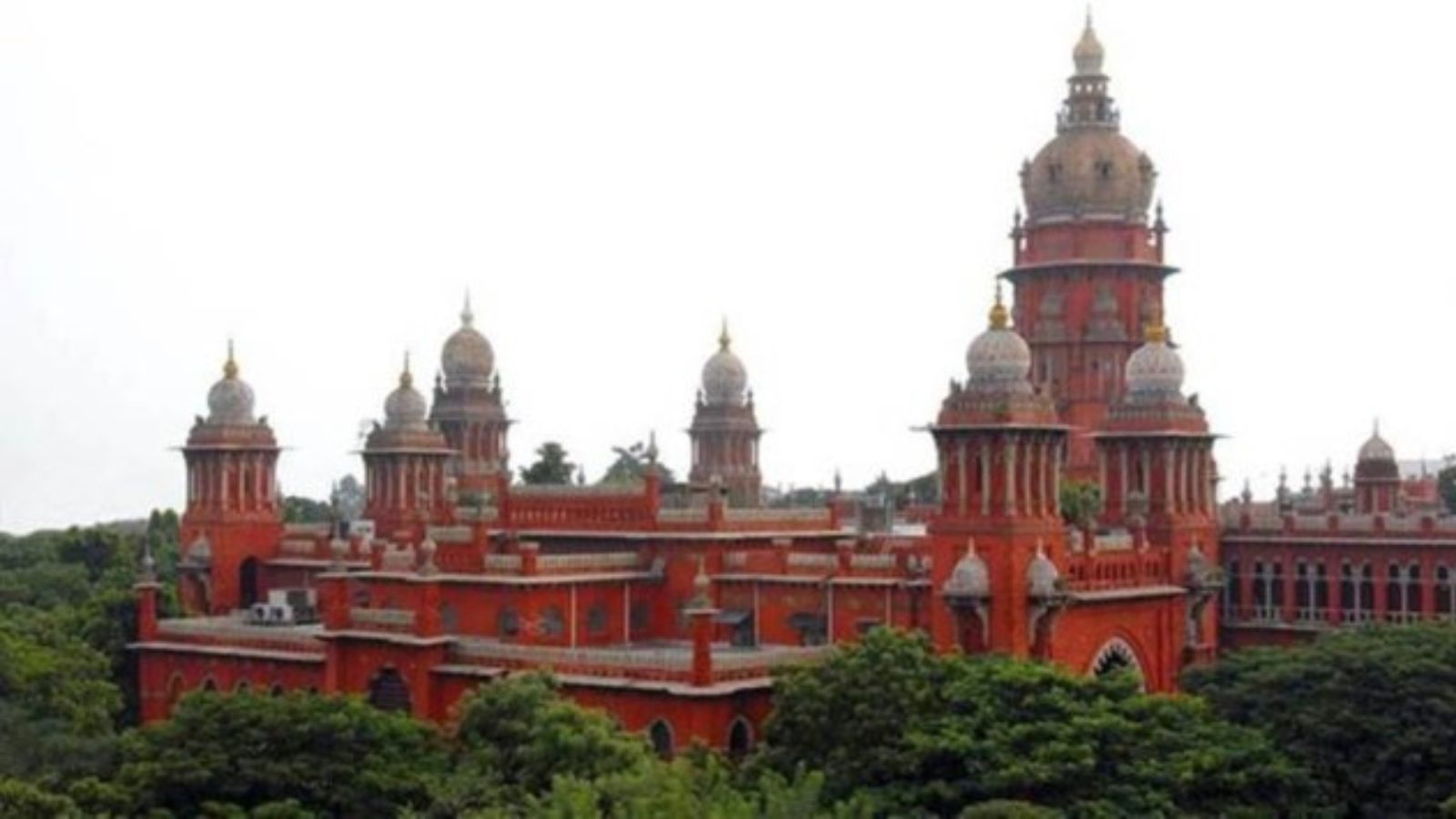
The Madras High Court issued an interim order halting the Election Commission of India from announcing by‑elections for Tiruchi (East), Perundurai, Ambasamudram, Viralimalai and Karur until July 31. The bench said pending election petitions must be resolved before any further electoral action to avoid constitutional complications.
Key Takeaways (मुख्य बिंदु)
- Madras High Court restrains ECI from issuing by‑election notifications for five assembly constituencies until July 31.
- The restraint stems from pending election petitions that have not yet been adjudicated.
- Holding by‑elections prematurely could create a constitutional anomaly with two competing representatives for the same seat.
The Madras High Court on Friday delivered an interim order that bars the Election Commission of India (ECI) from publishing any notification for by‑elections in the Tiruchi (East), Perundurai, Ambasamudram, Viralimalai and Karur assembly constituencies until July 31. The order was issued in response to a public interest litigation (PIL) filed by Tirunelveli‑based advocate K. Venkatachalapathy.
Legal Basis and Core Arguments
Under Section 151‑A of the Representation of the People Act, 1951, a vacancy is deemed “clear” only when the elected member’s position is unchallenged. The petitioner argued that the resignations of the elected members could not be treated as clear vacancies because their elections were already under challenge in the High Court.
Supreme Court Precedents Cited
The bench referenced several Supreme Court rulings, including D. Sanjeevayya v. Election Tribunal and Election Commission of India v. Telangana Rashtra Samithi. Those decisions warn that conducting a by‑election while an election petition is pending would result in “two candidates representing the same constituency at the same time,” a situation the Court deemed constitutionally untenable.
Advocates’ Positions
Advocate General Vijay Narayan, representing the Tamil Nadu Legislative Assembly Secretary, contended that some resignations took effect before the related petitions were filed, thereby creating genuine vacancies. ECI counsel Niranjan Rajagopalan countered that many petitions were still pending procedural scrutiny, and therefore the vacancies could not automatically be labeled as “clear.”
Court’s Ruling and Next Steps
The Court rejected the preliminary objection on locus standi, emphasizing that “in matters touching the purity of the democratic process, a narrow and pedantic interpretation of standing cannot be applied.” It ordered all respondents to file detailed counter‑affidavits within three weeks and adjourned the matter for further hearing on July 31.
This decision aims to prevent an unnecessary drain on the public exchequer and to avoid a potential constitutional deadlock that could arise from dual representation in a single constituency.