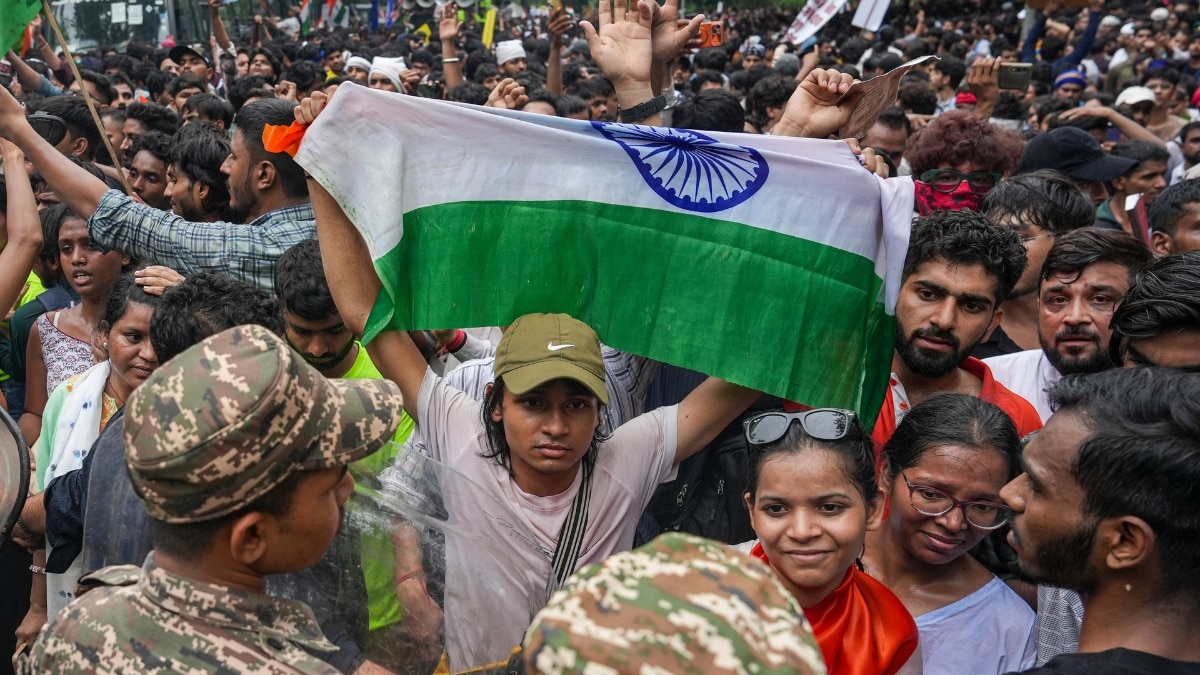
A 2025 government order mandating Hindi as the third compulsory language sparked widespread protests, uniting Shiv Sena and MNS against the policy. The clash revives a centuries‑old Marathi linguistic assertion dating back to Shivaji’s reforms, raising fresh questions on mother‑tongue education and federalism.
Key Takeaways
- Marathi linguistic identity has been defended since the 17th century.
- The 2025 Hindi‑as‑third‑language order triggered massive statewide protests.
- Language politics now shape federal structure and education policy in Maharashtra.
In April‑June 2025, the Maharashtra government, led by the Mahayuti coalition, issued two resolutions aligning state‑board schools with the National Education Policy‑2020 by making Hindi a compulsory third language from Class 1 onward in Marathi‑ and English‑medium schools. While the administrative change was limited, its political fallout was anything but modest.
Historical Roots of the Language War
By the early 17th century, Persian dominated the Deccan courts of the Mughals, Adil Shahi, and Nizam Shahi dynasties. Marathi speakers were taxed and judged in a foreign tongue. Shivaji rejected this hegemony. In 1630, about 86 % of administrative vocabulary was Persian; by 1677 it fell to 37 % after the creation of the Rājyavyavahārakośa, a thesaurus that replaced Persian and Arabic terms with Marathi or Sanskrit equivalents and renamed forts in Sanskrit. This early linguistic reform set a precedent for every subsequent Marathi language movement.
Colonial Era and Nationalist Mobilisation
Jyotirao Phule’s 1882 testimony before the Hunter Commission argued that colonial education served elite interests while exploiting Shudra labour. He demanded compulsory primary schooling, teachers drawn from agrarian communities, and instruction in the two Marathi scripts—Modi and Balbodh—demonstrating that Marathi could meet the highest moral and political purposes. The launch of Kesari (Marathi) and Mahratta (English) in 1881 turned the language into a mass‑mobilisation tool: Marathi for the people, English for the world.
Purity vs. Pluralism: Savarkar’s Linguistic Project
Vinayak Savarkar’s 1926 Bhāshā Shuddhikaran attempted to purge Arabic and Persian loan‑words from Marathi, coining terms like ‘doordarshan’ (television), ‘akashwani’ (radio), ‘sansad’ (parliament) and ‘hutatma’ (martyr). These words now populate India’s institutional vocabulary. Paradoxically, Savarkar later urged the Constituent Assembly in 1949 to adopt ‘Bharat’ as the nation’s name, ‘Hindi’ as the national language, and ‘Devanagari’ as the national script, while remaining a staunch defender of Marathi within Maharashtra. This unresolved duality continues to echo in contemporary language politics.
Modern Political Implications
The three‑language policy, with Hindi forced as the third language, has ignited fresh debates on federalism and state autonomy. Marathi‑rights groups have filed petitions in courts, claiming that mother‑tongue instruction is essential for cultural preservation and academic achievement. The central government, meanwhile, argues that a uniform language policy enhances national cohesion. How Maharashtra navigates this tension will shape not only its educational outcomes but also the broader discourse on linguistic diversity in India.