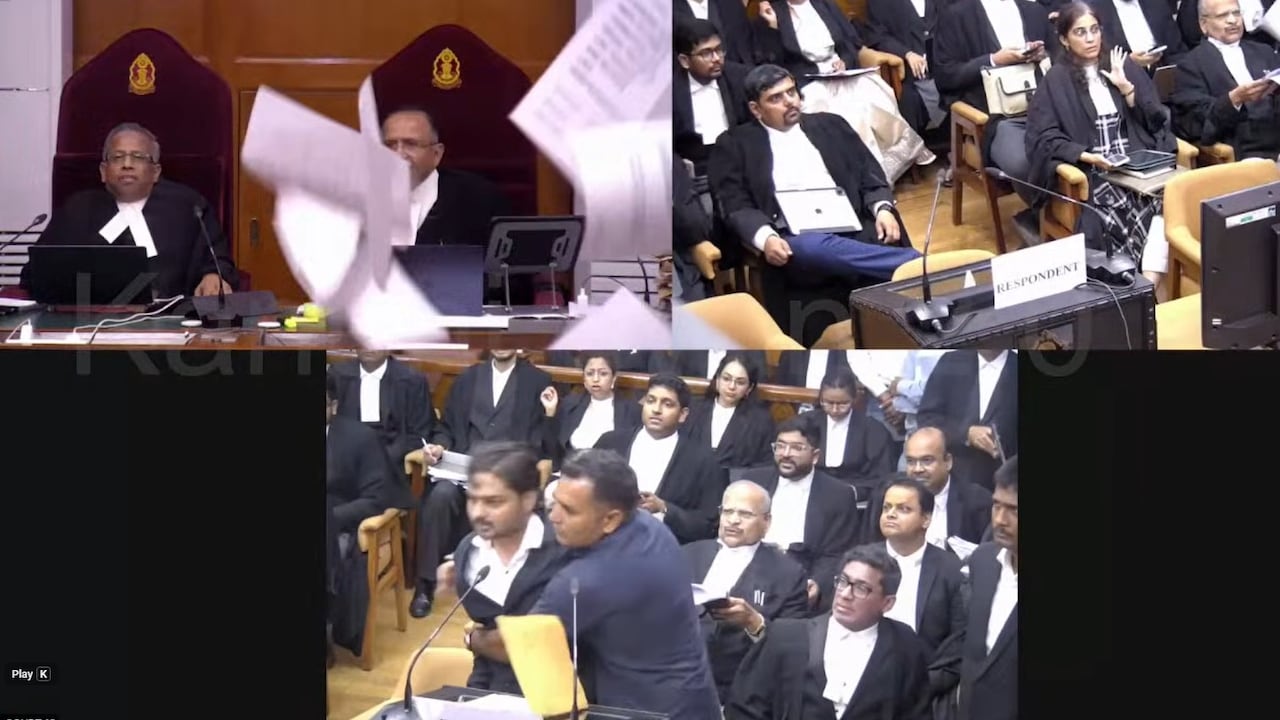
A petitioner verbally abused the chief justice and tossed papers in the Supreme Court, yet the bench chose not to pursue contempt proceedings. The incident highlights the judiciary's measured response to courtroom disruptions in India.
मुख्य बिंदु (Key Takeaways)
- The petitioner verbally abused the chief justice during a hearing.
- Paper tossing caused a brief disruption but no contempt action was taken.
- The incident underscores the Supreme Court's calm handling of courtroom tensions.
At approximately 11 a.m., a partial‑day bench of the Supreme Court comprising Justices K.V. Viswanathan and Alok Aradhe was interrupted by an unexpected outburst. The petitioner, frustrated with the proceedings, verbally abused the chief justice and tossed documents across the courtroom. Security personnel quickly intervened, preventing any physical confrontation, but the disruption briefly unsettled the hearing.
Context of the Disruption
According to multiple eyewitnesses, the petitioner’s agitation stemmed from perceived delays in the adjudication of his case. While rare, such overt displays of contempt have occasionally surfaced in Indian courts, prompting debates over the balance between courtroom decorum and freedom of expression. The incident, however, was contained without escalation, thanks to the prompt response of the bench and courtroom staff.
Judicial Response and Legal Framework
Despite the seriousness of the insult, the bench opted not to invoke contempt powers against the petitioner. Under Indian law, the Supreme Court holds the authority to punish contempt of court, yet it exercised discretion, deeming that a formal reprimand and procedural safeguards were sufficient. This decision reflects an emphasis on de‑escalation while preserving the dignity of the institution.
Historical and Societal Implications
The episode arrives at a time when public confidence in the judiciary is under scrutiny. By choosing restraint over punitive action, the Court signaled a commitment to maintaining public trust and avoiding further polarization. Nevertheless, the incident raises questions about the adequacy of existing security protocols and the need for clearer guidelines on managing dissent within the highest court.
Future Outlook
As civic engagement intensifies across India, the judiciary may need to revisit its procedural playbook to address similar confrontations proactively. The balance between protecting the sanctity of the bench and upholding individual rights will remain a delicate challenge, demanding both robust security measures and transparent disciplinary policies.