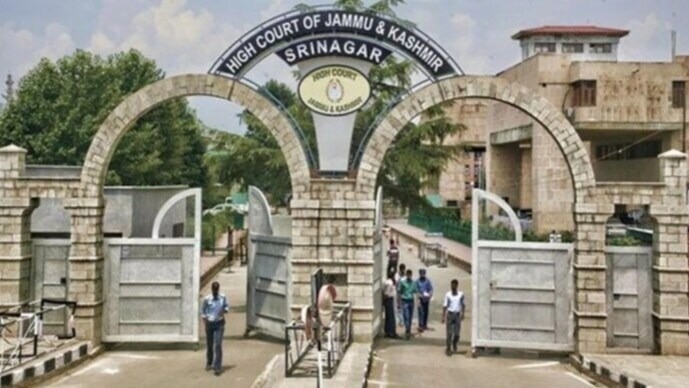
The Jammu & Kashmir and Ladakh High Court ruled that maternity leave is an inherent constitutional right rooted in women's dignity, not a state charity. The judgment struck down a government order that withheld salaries, ensuring full pay for women doctors during leave.
Key Takeaways
- Maternity leave affirmed as a constitutional right, not a charitable benefit.
- Government order stopping salaries was nullified.
- Sets precedent for equal pay during leave across public and private sectors.
The High Court of Jammu and Kashmir and Ladakh delivered a landmark judgment, emphasizing that maternity leave is not a discretionary benevolence of the State but a non‑negotiable constitutional entitlement anchored in the dignity of women. This ruling not only safeguards the financial rights of female doctors in government medical colleges but also charts a clear legal pathway for all women employees across India.
Background
India’s maternity‑benefit framework has evolved through a patchwork of central and state statutes since the 1990s, yet the guarantee of paid leave has often been inconsistently applied. In July 2024, the J&K government issued an order extending paid maternity leave to senior residents and tutors in government medical colleges. However, a subsequent communication dated 14 October 2025, issued by the Health and Medical Education Department on the Finance Department’s advice, declared that women doctors would be “out of assignment” and thus their salaries would be withheld during leave.
Case Details
Dr. Sonakshi Gupta, along with several senior residents and tutors, filed a petition challenging the salary stoppage. Their argument rested on the 2024 government order, which explicitly incorporated existing service rules that provide for paid maternity leave. The petitioners contended that they were never notified that availing leave would result in loss of pay. The Union Territory administration counter‑argued that the petitioners were appointed under the 2020 Academic Arrangement Rules as tenure‑based staff, not regular government employees, and therefore not entitled to salary during leave.
Judicial Reasoning
Justice Rajnesh Oswal observed, “Maternity leave cannot be reduced to a matter of state charity; it is an unassailable constitutional right anchored in the dignity of women. The right to full emoluments is an organic corollary of the right to leave itself, which cannot be defeated by an arbitrary executive fiat.” The Court held that the July 8 2024 order unequivocally extended paid maternity benefits, making the October 2025 communication ultra‑violet and therefore void. Consequently, the administration was directed to release the full salaries and allowances for the entire leave period.
Implications for the Future
This judgment reinforces the principle that any administrative action contradicting constitutional guarantees will not survive judicial scrutiny. Legal scholars predict that the ruling will influence similar disputes in other states, prompting revisions of service rules to align with constitutional standards. Moreover, private sector employers may pre‑emptively adjust their policies to avoid litigation, thereby advancing gender‑equitable workplace practices nationwide.
In essence, the decision strengthens the financial dimension of women’s workplace rights and underscores the judiciary’s role in upholding constitutional dignity over ad‑hoc administrative convenience.