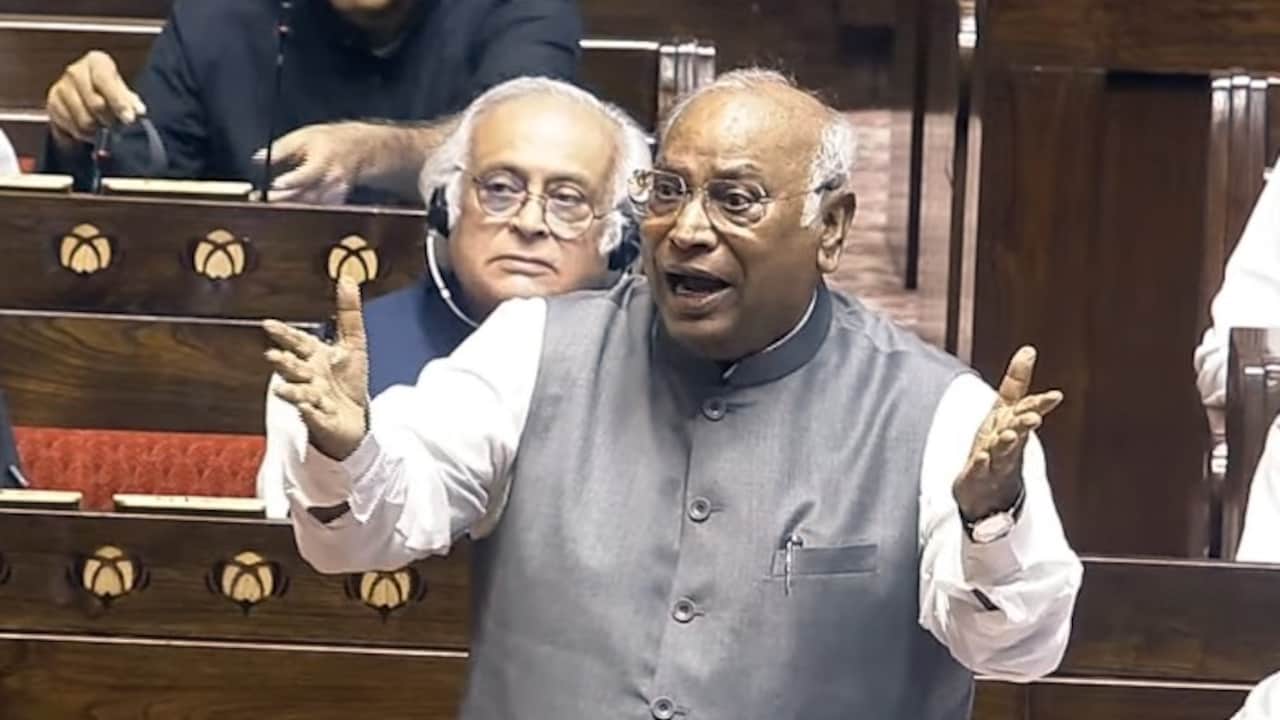
Congress president Mallikarjun Kharge accused the Madhya Pradesh government of a ₹1,200 crore rice scam, alleging that grain meant for malnourished children and women has been siphoned off. He warned that the public’s rightful grain is being looted and a probe involving central agencies is underway.
Key Takeaways
- ₹1,200 crore rice diversion scandal
- Grain earmarked for children and pregnant women misappropriated
- Central and state agencies have launched a joint investigation
Congress president Mallikarjun Kharge took to a public forum today to lambast the Madhya Pradesh administration, alleging a massive corruption episode that involves the diversion of rice worth roughly ₹1,200 crore. According to Kharge, the grain, originally allocated for under‑nourished children and pregnant women, has been turned into “public loot” by a network of officials and contractors.
Background and Allegations
Kharge cited multiple government orders that mandated the distribution of rice across several districts. Yet, numerous beneficiaries reported receiving nothing. A local activist’s grievance triggered a formal complaint, prompting the state to launch an inquiry. Kharge also reminded listeners of ongoing land‑scam accusations against Chief Minister Shivraj Singh Chouhan, suggesting a broader pattern of malfeasance.
Investigation Status
The state government announced a coordinated probe involving the Central Food Security & Welfare Department and the police. Preliminary findings indicate that certain government‑appointed contractors transferred the allotted grain to private warehouses, from where it was allegedly sold on the open market or diverted for personal gain.
Political Ramifications
The remarks have reignited the classic Congress‑BJP rivalry on the national stage. Beyond the financial loss, the scandal threatens the most vulnerable sections of society—children and expectant mothers—thereby amplifying public outrage. Opposition parties are positioning the issue as a test of the ruling government’s accountability and transparency.
Way Forward
Policy analysts warn that if the investigation uncovers collusion between contractors and political figures, the fallout could trigger judicial action and demand sweeping reforms. Experts advocate for greater transparency in the public‑distribution system, including digital grain‑tracking, stricter audit mechanisms, and real‑time monitoring to prevent recurrence of such large‑scale misappropriation.