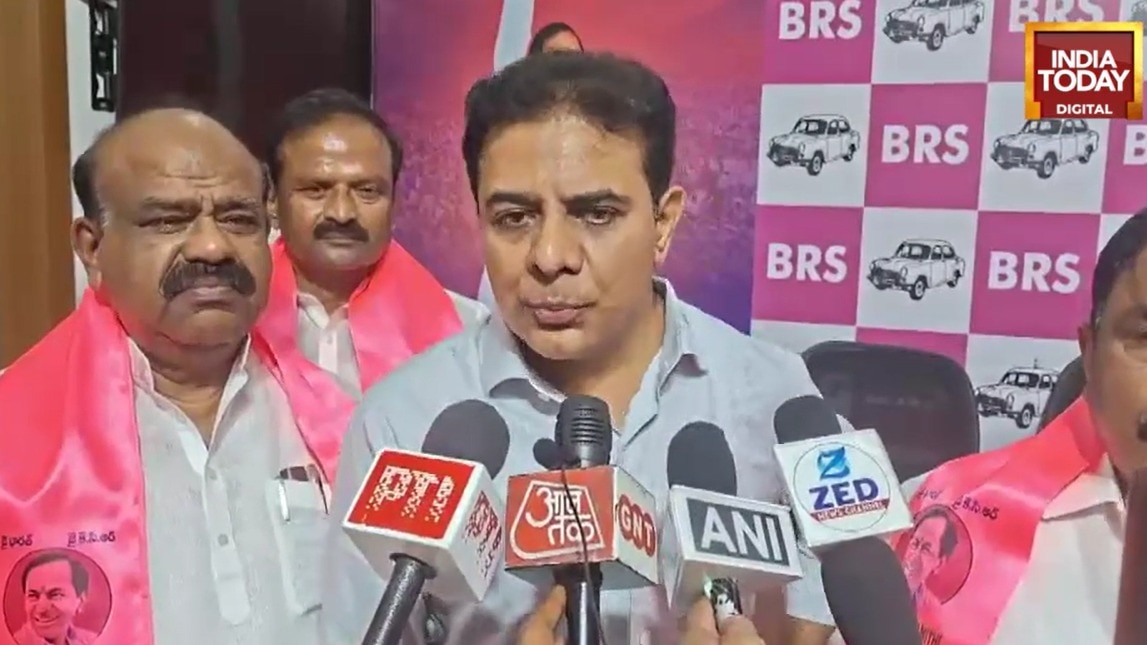
KTR has urged Telangana Chief Minister Revanth Reddy to dissolve the assembly and face fresh elections, claiming an internal CM survey forecasts 78 seats for the BRS.
Key Takeaways
- KTR challenges CM Revanth Reddy to call fresh elections
- Internal CM survey allegedly predicts 78 seats for BRS
- Accusations over misuse of Godavari water and farmer neglect
Telangana’s political arena has ignited once more as KTR (K.T. Rama Rao) publicly challenged Chief Minister Revanth Reddy to test his popularity by dissolving the assembly and contesting fresh polls. The provocation follows KTR’s claim that an internal survey conducted by the CM’s camp projected the Bharat Rashtra Samithi (BRS) to win 78 out of 119 Assembly seats.
Survey Controversy and Political Stakes
While the survey’s authenticity remains unverified, KTR leveraged the alleged figures to underline a perceived erosion of public confidence in the Congress‑led government. If the numbers hold any credibility, they suggest a substantial swing back to the BRS, which first captured power in 2014. Such internal polling is a familiar tool in Indian politics, often employed to shape narratives and pressure opponents ahead of elections.
Godavari Water Management – A Flashpoint
KTR’s criticism extended beyond political rhetoric to the state’s water policy. He accused the government of failing to maximize the Godavari’s potential through the Kaleshwaram Lift Irrigation Scheme (KLIS), insisting that reservoirs could be filled by lifting water directly from Kannepalli, bypassing reliance on the Medigadda barrage. The alleged mismanagement has stoked farmer unrest, a critical issue in an agrarian‑dominant state.
Implications for Upcoming Elections
Should Revanth Reddy accept the challenge, Telangana could witness an early dissolution of the Assembly, triggering by‑polls for seats vacated by defectors or the immediate conduct of pending local‑body elections. Political analysts warn that such a move would dramatically reshape the electoral map, potentially granting BRS a decisive advantage if voter dissatisfaction over water allocation and farmer welfare persists.
Strategic Outlook
Experts argue that the government’s response to water‑related grievances will be pivotal. A swift, transparent policy to operationalize pump houses and ensure equitable irrigation could mitigate the opposition’s momentum. Conversely, continued inertia may embolden the BRS to mobilize a statewide agitation, further destabilizing the incumbent’s standing.
In sum, KTR’s bold challenge introduces a new layer of uncertainty to Telangana’s political calculus, where water politics and farmer interests could become the decisive battlegrounds for the next election cycle.