U.S. Senator Lindsey Graham’s sudden death sparked jubilant reactions from Iranian state media, contrasting sharply with the solemn tributes offered by President Donald Trump and Israeli Prime Minister Benjamin Netanyahu. The divergent responses highlight the complex dynamics shaping U.S., Iran and Israel relations.
Key Takeaways (मुख्य बिंदु)
- Iranian media celebrated Graham’s death
- Trump and Netanyahu expressed mourning
- The incident may heighten Middle‑East geopolitical tensions
Senator Lindsey Graham of the United States died suddenly on Saturday, prompting two starkly different reactions on the world stage. Iran’s state‑run outlets turned the news into a celebration, while President Donald Trump and Israeli Prime Minister Benjamin Netanyahu paid personal tributes.
Iranian Media’s Jubilant Coverage
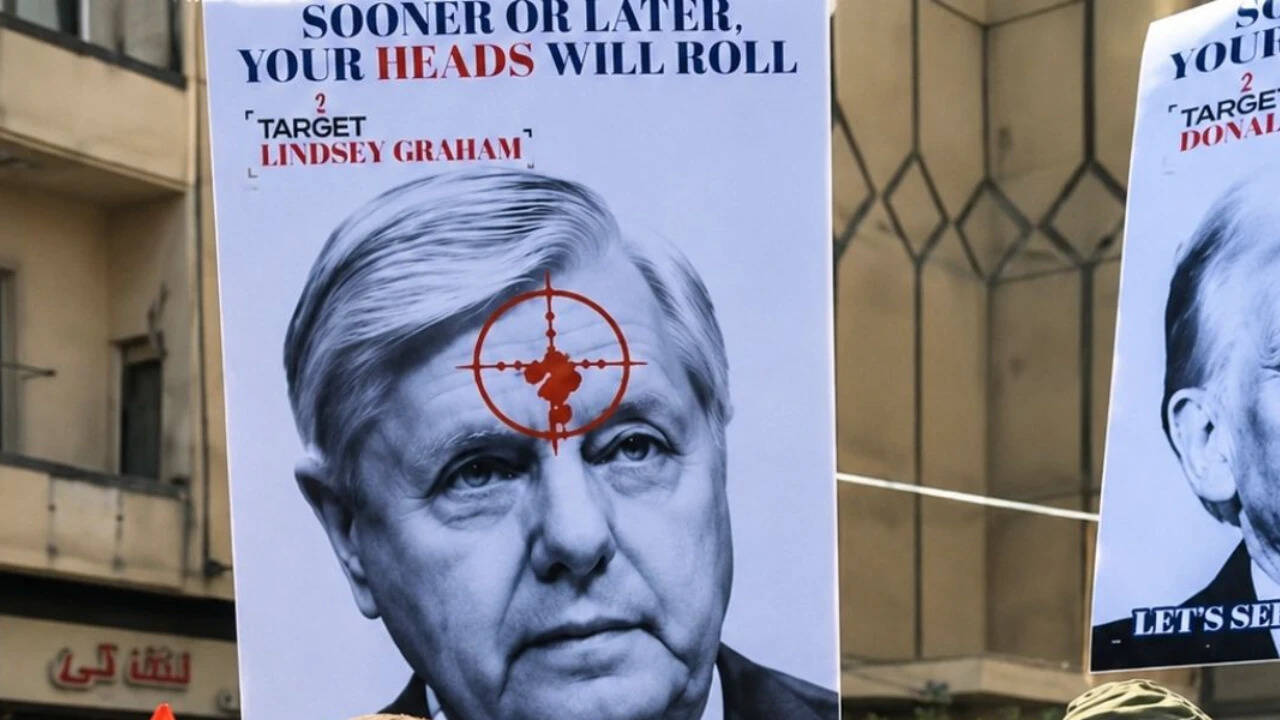
The regime‑affiliated news agency Tasnim ran a headline reading, “Graham dies, taking the destruction of Iran to the grave.” A state‑TV host exclaimed, “This news is so sweet I’m reading it twice.” On social platforms, a graphic showed Graham’s face crossed out with a red X, positioned among other figures allegedly marked for retaliation after the February attack on Iran. The image was captioned, “We will continue to update.”
Academic and Royal Family Reactions
University of Tehran professor Seyed Mohammad Marandi posted a sarcastic note, “It’s a shame. I wanted him to see oil prices on Monday before he went to hell.” In contrast, exiled Crown Prince Reza Pahlavi offered condolences, calling Graham “a steadfast friend of the Iranian people” and a defender of freedom, noting that Iranians had nicknamed him “Uncle Lindsey” for his support of the Lion and Sun Revolution.
U.S. and Israeli Tributes
Trump described Graham as “one of the greatest people and senators I have ever known” and a “hard‑working patriot.” Netanyahu said, “Israel has lost one of its greatest friends. America has lost a great patriot. I have lost a beloved friend.” The senator, 71, was reported by his office to have succumbed to a “brief and sudden illness,” later identified by emergency responders as cardiac arrest at his Capitol Hill residence.
Implications for Geopolitical Dynamics
Graham’s death, given his outspoken opposition to Iran, has become a propaganda tool for Tehran, reinforcing a narrative of victory over a perceived adversary. The contrasting reactions underscore the fragile balance in U.S.–Iran–Israel relations, where personal alliances often intersect with broader strategic calculations. Graham’s vocal support for Iranian dissidents and his criticism of the regime had made him a symbolic ally for Tehran’s opponents; his absence may create a diplomatic vacuum that could influence future negotiations and regional posturing.