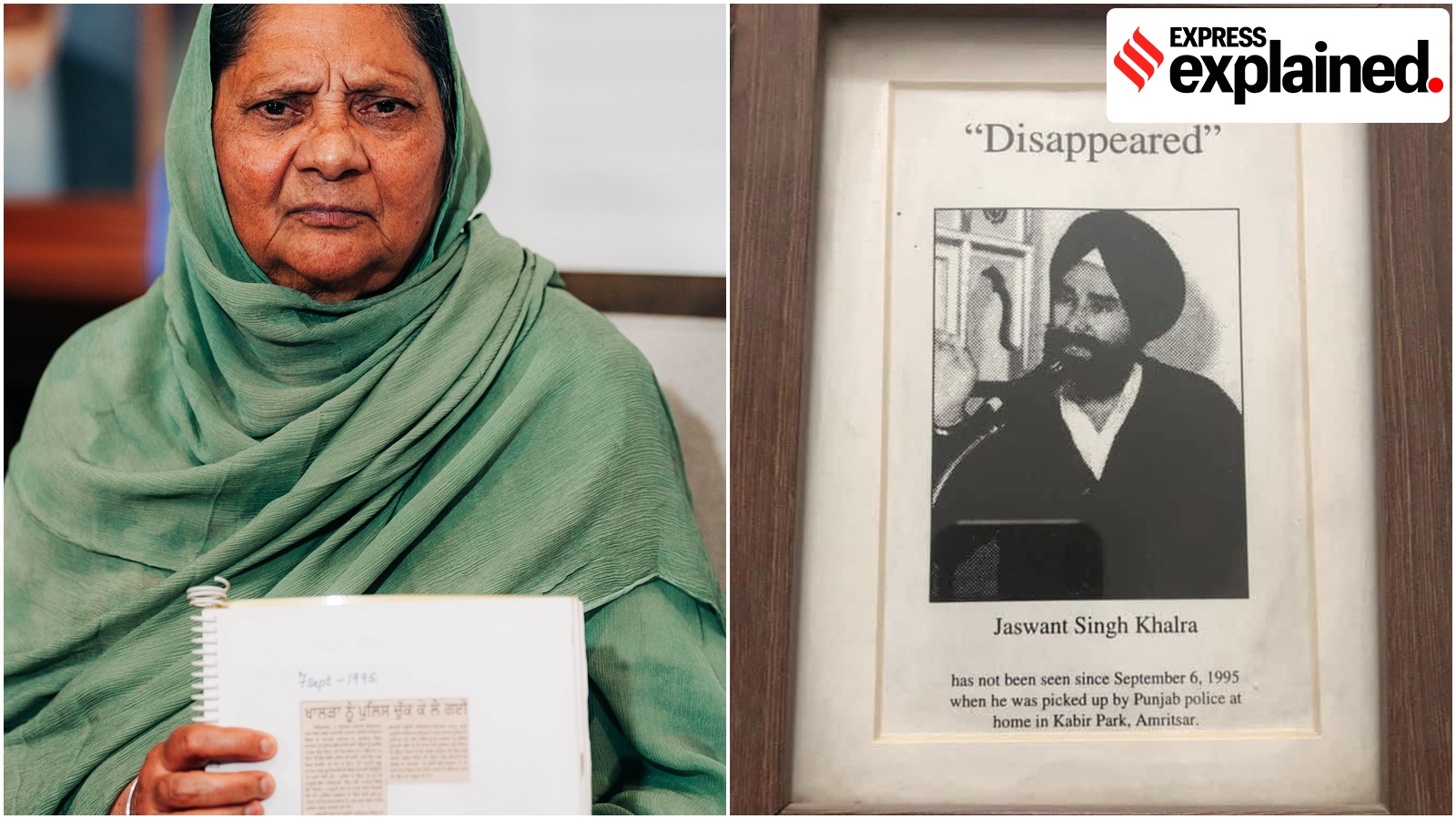
Thirty‑one years after his 1995 abduction, Punjab’s human‑rights champion Jaswant Singh Khalra resurfaces in legal discourse. This article decodes CBI and Supreme Court documents that trace his activism, the secret cremations, and the judicial journey that led to life sentences for police officers.
मुख्य बिंदु (Key Takeaways)
- Khalra’s 1995 kidnapping prompted the Supreme Court to order a CBI investigation.
- His press note exposed 2,097 ‘unclaimed’ bodies cremated in Amritsar, forming the basis of the probe.
- In 2011, five police officials received life imprisonment, yet many questions remain unanswered.
In the turbulent 1990s Punjab, dozens of youths vanished under the shadow of militancy. Jaswant Singh Khalra, then a 42‑year‑old human‑rights activist, dedicated sixteen years to exposing the clandestine cremations of thousands of bodies that police labeled “unclaimed”. This piece unpacks the legal filings that illuminate Khalra’s lifelong crusade and the circumstances of his custodial murder.
Background and Khalra’s Mission
Khalra, serving as the general secretary of the Human Rights Wing of the Shiromani Akali Dal, documented the systematic disposal of bodies without post‑mortem reports. By encouraging victims’ families to file writ petitions, he sought accountability from a police force that routinely transferred bodies to municipal cremation grounds, recording only the fire‑wood receipts.
The Press Note that Triggered CBI Action
On 16 January 1995, Khalra and associate Jaspal Singh Dhillon released a press note outlining that between June 1984 and the end of 1994, roughly 2,097 bodies in Amritsar district were declared “unclaimed” and cremated near the Durgiana Mandir. This note became the cornerstone of the Supreme Court’s decision to entrust the Central Bureau of Investigation with a full‑scale inquiry.
Supreme Court Intervention
Following Khalra’s abduction on 6 September 1995, SGPC president Gurcharan Singh Tohra sent a telegram to Justice Kuldip Singh, treating it as a habeas‑corpus petition. Simultaneously, Khalra’s wife, Paramjit Kaur Khalra, filed a petition under Article 32, asserting that her husband was targeted for exposing illegal cremations. The bench comprising Justices Kuldip Singh and S S Saghir Ahmad merged the telegram and petition, issuing a landmark order on 15 November 1995 that appointed the CBI to investigate both the disappearance and the broader extra‑judicial killings.
Findings, Convictions and Ongoing Challenges
The CBI’s 74‑page report, accepted by the Supreme Court on 22 July 1996, indicated that 984 bodies were cremated as “lavaris” in Tarn Taran alone. In 2011, the Court upheld life sentences for five police officers, including a DSP, for Khalra’s murder. Yet, many families still await closure, and the broader case of illegal cremations remains partially unresolved.
Legacy and Future Implications
Khalra’s relentless pursuit of truth transformed a personal tragedy into a catalyst for judicial scrutiny of Punjab’s security forces. His legacy underscores the power of documentary evidence in confronting state‑sanctioned violence, reminding activists that perseverance can eventually compel the highest courts to act.