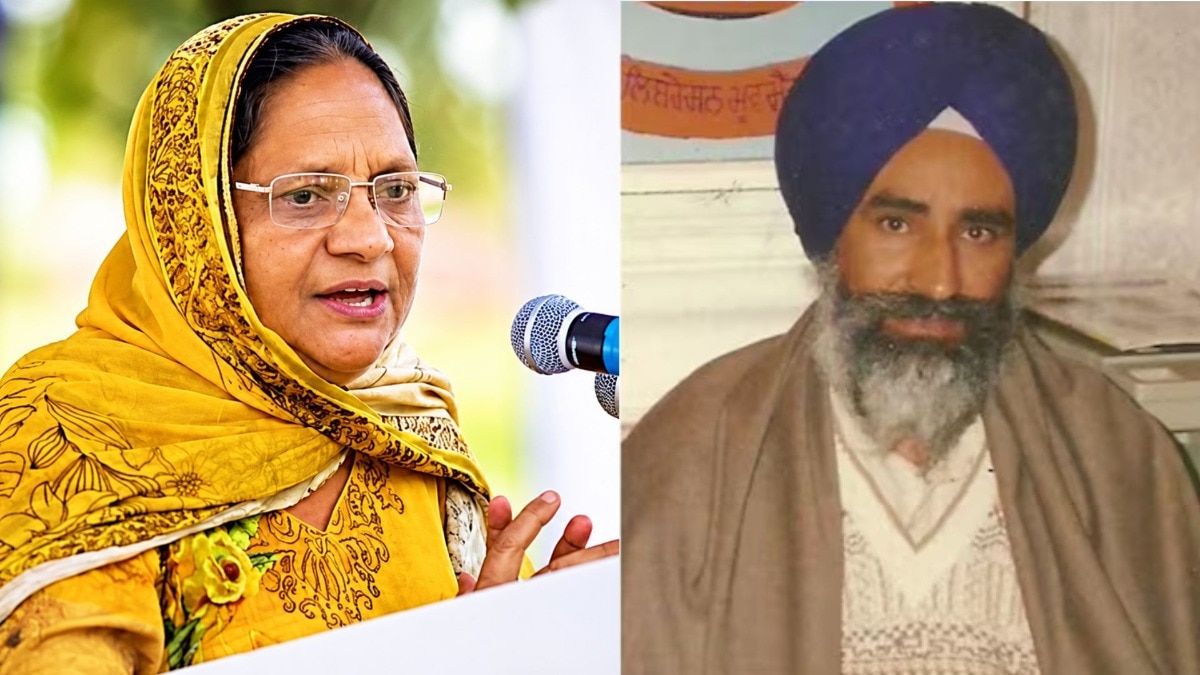
The Akal Takht has announced a special Ardas at Harike Pattan on July 14, urging large‑scale attendance after the film *Satluj* reignited debate over activist Jaswant Singh Khalra. His widow, Paramjit Kaur Khalra, has laid out three demands and called for a collective quest for truth and justice.
मुख्य बिंदु (Key Takeaways)
- Akal Takht scheduled a special Ardas at Harike Pattan on July 14.
- Paramjit Kaur Khalra issued three core demands and appealed for mass turnout.
- The controversy surrounding the film *Satluj* highlights unresolved human‑rights violations of the 1980‑1990 Punjab insurgency.
The Diljit Dosanjh‑starrer Satluj has thrust the life and disappearance of activist Jaswant Singh Khalra back into the national spotlight. The biopic, which dramatizes Khalra’s documentation of alleged extrajudicial killings during Punjab’s militancy years, sparked a fierce debate and was briefly removed from the streaming platform ZEE5. In response, the highest temporal seat of Sikhism, the Akal Takht, announced a dedicated Ardas at Harike Pattan – a site long alleged to be the dumping ground for hundreds of unidentified bodies during the 1980s‑1990s.
Harike Pattan: The Alleged Ground Zero
Witnesses claim that Khalra’s body, after his 1995 abduction, was discarded into a canal at Harike Pattan, the same location where police are said to have cremated or dumped bodies of youths killed in counter‑insurgency operations. The Akal Takht’s Jathedar, Giani Kuldeep Singh Gargaj, described the Ardas as a prayer for the “eternal peace” of those missing youths and for families still awaiting answers.
Paramjit Kaur Khalra’s Three Demands
Paramjit Kaur Khalra, the activist’s widow, used her X (formerly Twitter) platform to amplify the call. She outlined three non‑negotiable demands: (1) a full, independent investigation into the alleged police‑executed killings of the 1980‑1990 period, (2) life‑time imprisonment for those found guilty, and (3) comprehensive compensation and rehabilitation for the victims’ families. She appealed to Sikhs across Punjab, the global Sikh diaspora, and human‑rights advocates to converge at Harike Pattan on July 14, describing the gathering as a “collective quest for truth and justice.”
Political Overtones and Historical Context
Khalra’s work had exposed the mass cremations of unidentified bodies between 1984 and 1994—a dark chapter that still haunts Punjab’s collective memory. While four police officers were convicted in 2005 for his kidnapping and murder, subsequent court rulings upgraded their sentences to life imprisonment. Paramjit has since accused successive governments—first the Congress, then the Shiromani Akali Dal, and now the Aam Aadmi Party (AAP) led by Bhagwant Mann—of shielding convicted officers and failing to deliver justice.
Implications for Justice and Memory
If the Ardas draws a sizable crowd, it could become a watershed moment, pressuring Indian authorities to reopen cold cases and enforce stricter accountability for past human‑rights abuses. Such a public, faith‑driven demand may also set a precedent for addressing other unresolved atrocities across the country, reinforcing the principle that historical wounds must be healed through transparent legal processes.