The Lieutenant Governor’s administration in Jammu & Kashmir sealed the historic Martyrs’ Graveyard on Saturday, preventing leaders like Omar Abdullah and Mehbooba Mufti from paying homage on site. Both leaders instead honored the martyrs at their party headquarters, a move that underscores the post‑Article‑370 security framework.
मुख्य बिंदु (Key Takeaways)
- Martyrs’ Graveyard sealed by J&K administration
- Omar Abdullah and Mehbooba Mufti paid tribute at party offices
- July 13 and Dec 5 removed from public holidays after Article 370 abrogation
The Lieutenant Governor’s office deployed heavy security on Saturday around the historic Martyrs’ Graveyard in old Srinagar, effectively sealing the site. The restriction was aimed at curbing any political gathering that could turn the solemn ground into a rallying point, especially after last year’s episode when former Chief Minister Omar Abdullah breached police barricades and scaled a wall to reach the graves.
Alternative Homage at Party Headquarters
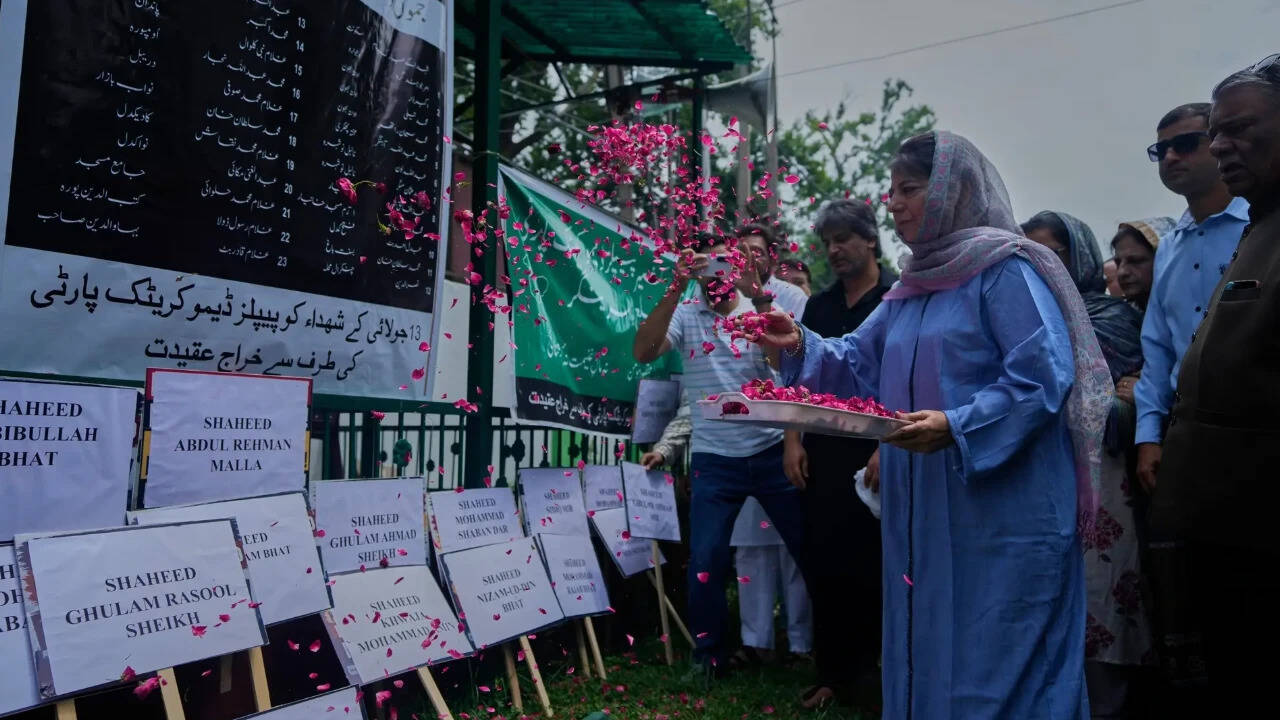
Denied access, Omar Abdullah and senior National Conference figures, including his father Farooq Abdullah, convened at the party’s headquarters and offered flowers and a moment of silence to the 22 martyrs of 1931. Simultaneously, Peoples Democratic Party (PDP) president Mehbooba Mufti laid rose petals at her party office, turning the tribute into a symbolic act of defiance against the administration’s curbs.
Historical Context of the Site
The Graveyard commemorates the 22 Kashmiri freedom fighters who were shot outside Srinagar Central Jail on July 13, 1931, during a protest against the Dogra monarchy. That date, along with December 5—celebrated as the birth anniversary of NC founder Sheikh Mohammad Abdullah—had been observed as public holidays until the Union government’s revocation of Article 370 in January 2020. The removal of these holidays was widely perceived as an attempt to rewrite regional memory.
Political and Social Ramifications
Analysts describe the sealing as a “security‑first” posture that limits public commemoration and, by extension, political mobilization. PDP’s Iltija Mufti labeled the administration “the most paranoid in J&K’s history,” while the National Conference decried it as “disrespect to our martyrs.” The move may deepen alienation among sections of Kashmiri society that view the martyrs as pillars of regional identity.
Looking Ahead
With elections looming, the restriction could reshape campaign strategies, forcing parties to find alternative venues for honoring Kashmiri heritage. If the administration persists with such measures, it risks exacerbating local disenchantment and complicating centre‑state dynamics. Experts suggest that a dialogue‑oriented approach, rather than outright bans, would better serve long‑term stability in the valley.