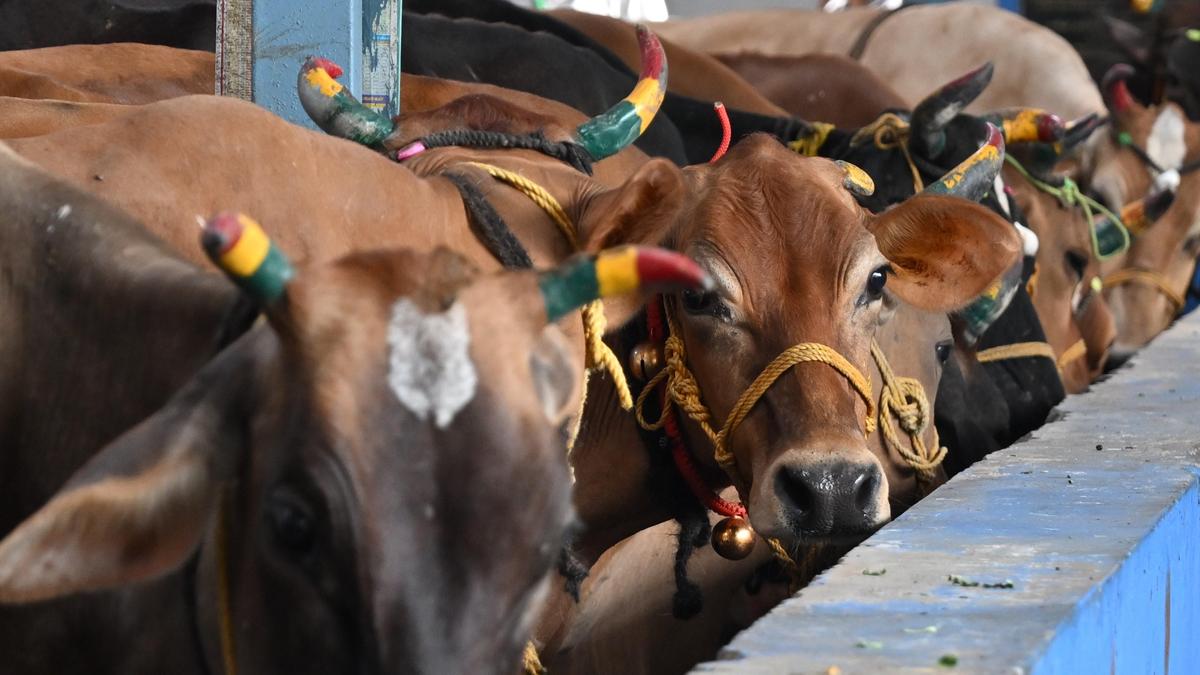
The Madras High Court directed the Tamil Nadu government to enforce the 1976 Government Order, imposing an instant statewide ban on cow slaughter. The ruling also bars the killing of goats and sheep outside licensed slaughterhouses, even during Eid‑ul‑Adha.
Key Takeaways
- Madras High Court imposes an immediate ban on slaughter of cows, goats and sheep.
- The 1976 Government Order is revived to boost milk production and rural economy.
- The decision applies even on the eve of Eid‑ul‑Adha, preventing illegal animal killings.
On Wednesday, May 27, 2026, a summer‑vacation bench of the Madras High Court ordered an immediate statewide prohibition on cow slaughter in Tamil Nadu. Justices G.R. Swaminathan and V. Lakshminarayanan instructed the Chief Secretary and the Director General of Police to ensure that no cow or calf is slaughtered anywhere in the state, whether on the eve of Bakrid (May 28) or on any other day.
Historical Context
The ban traces its roots to a Government Order dated August 30, 1976, which was originally issued to safeguard milk production and strengthen the rural economy. While the order remained on the books, enforcement varied over the decades, prompting periodic demands from animal‑welfare groups and religious organizations for stricter implementation.
Economic and Social Implications
Prohibiting cow slaughter is expected to boost the dairy sector by increasing the availability of milk and related products, thereby providing additional income streams for smallholder farmers. Extending the ban to goats and sheep during Eid‑ul‑Adha also addresses concerns about illegal animal slaughter during religious festivals, balancing communal sensitivities with animal‑rights considerations. Industry analysts predict a surge in demand for licensed slaughterhouses and dairy processing facilities, potentially creating new jobs in rural areas.
Legal Nuances and Potential Challenges
Following the court’s directive, the Tamil Nadu government must issue a fresh administrative order that explicitly bars any animal slaughter outside licensed facilities. Anticipated challenges include objections from livestock traders and meat‑processing businesses citing economic losses, as well as the logistical burden on police and local authorities to monitor compliance across the state’s vast geography.
Future Outlook
This ruling could serve as a template for other southern states contemplating similar bans. If effectively enforced, it may align with India’s broader animal‑welfare and agricultural‑development policies, setting a precedent that harmonises religious sentiment, economic growth, and ethical treatment of livestock at a national level.