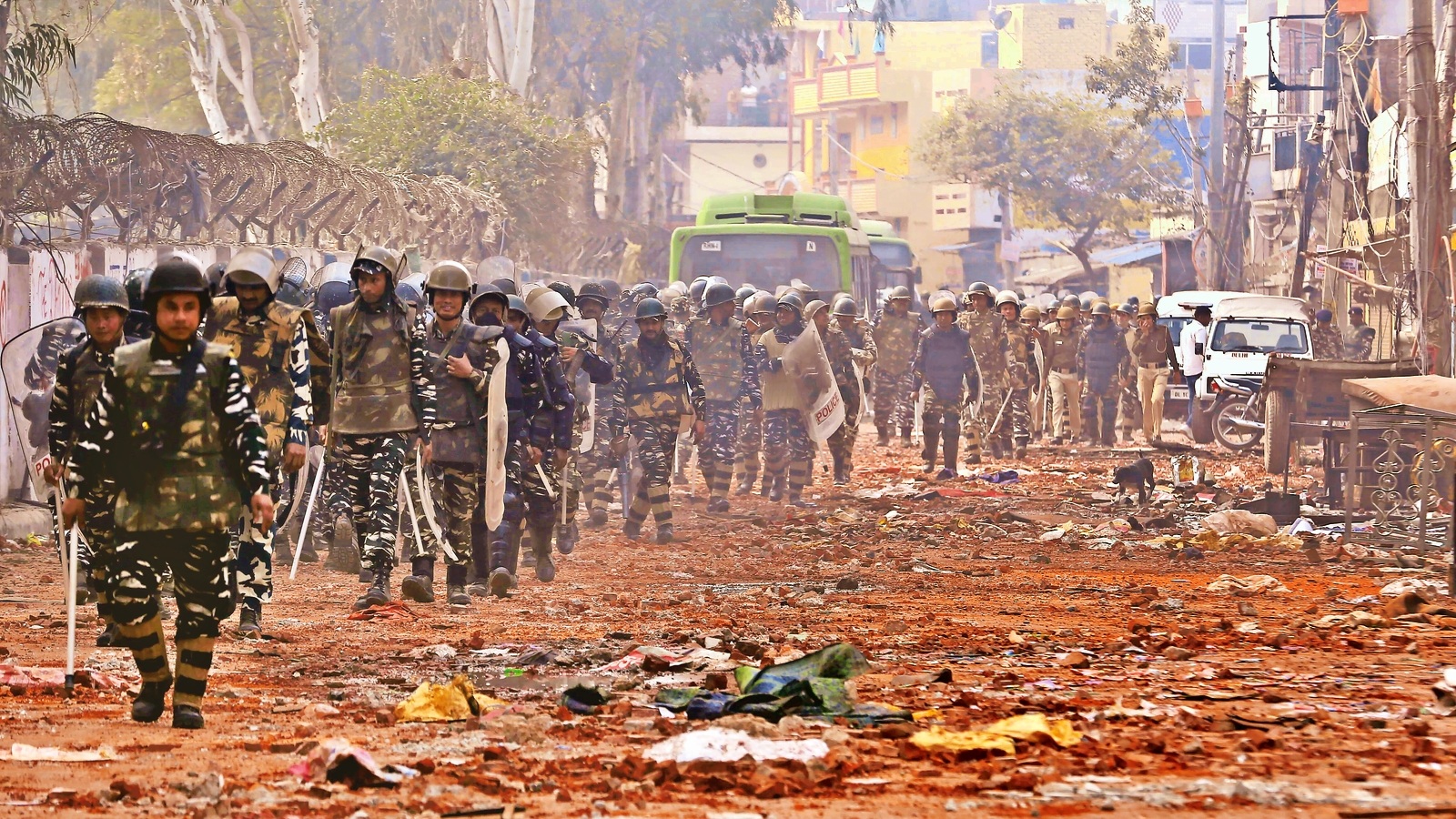
A Delhi court found former AAP councillor Tahir Hussain guilty of murdering IB staffer Ankit Sharma during the February 2020 northeast Delhi riots. Five eyewitnesses placed Hussain in a heavily armed mob that abducted and brutally killed Sharma.
Key Takeaways (मुख्य बिंदु)
- Tahir Hussain convicted for the murder of IB officer Ankit Sharma during the 2020 Delhi riots.
- Five eyewitnesses identified Hussain as an active participant in the violent mob.
- The court emphasized that any prudent person in an unlawful assembly knows the risk of lethal communal violence.
On July 15, 2026, Additional Sessions Judge Praveen Singh delivered a landmark verdict, concluding that the prosecution proved beyond reasonable doubt that former AAP councillor Tahir Hussain was part of the mob that surrounded Chand Bagh Pulia on February 25, 2020, abducted and killed 26‑year‑old Intelligence Bureau employee Ankit Sharma in a "savage and relentless assault."
Background and Chronology of the 2020 Riots
The northeast Delhi riots of 2020 erupted amid escalating communal tensions, resulting in widespread arson, looting, and loss of life. Ankit Sharma, an IB officer, became a high‑profile victim when he was seized by a heavily armed crowd that targeted members of the Hindu community under a pre‑planned agenda of retaliatory violence.
Eyewitness Testimony and Evidence
Five key witnesses – Pradeep Verma (parking lot operator), Aakash (tea vendor), his brother Bharat, Deepak Pradhan, and advocate Priyanka Gaur – testified that Hussain delivered incendiary speeches, accusing Hindus of vandalising Muslim homes and assaulting Muslim women. They described the mob assaulting Sharma with knives, sticks, bricks, and iron rods before throwing his body into a drain.
Legal Reasoning and Implications
Judge Singh stressed that participation in an "unlawful assembly" carries the implicit knowledge that communal clashes may lead to death. By affirming this principle, the judgment sends a deterrent signal to future agitators, reinforcing the rule of law against mob‑driven hate crimes.
Defense Arguments and Court's Rejection
The defense labeled several witnesses as “chance” or “stock” witnesses, arguing they were identified only after the investigation. The court dismissed this claim, noting the consistency of their statements and the lack of material contradictions after rigorous cross‑examination.
Overall, the conviction underscores the judiciary’s resolve to hold individuals accountable for orchestrating or participating in communal violence, marking a step toward restorative justice for the victims of the 2020 riots.