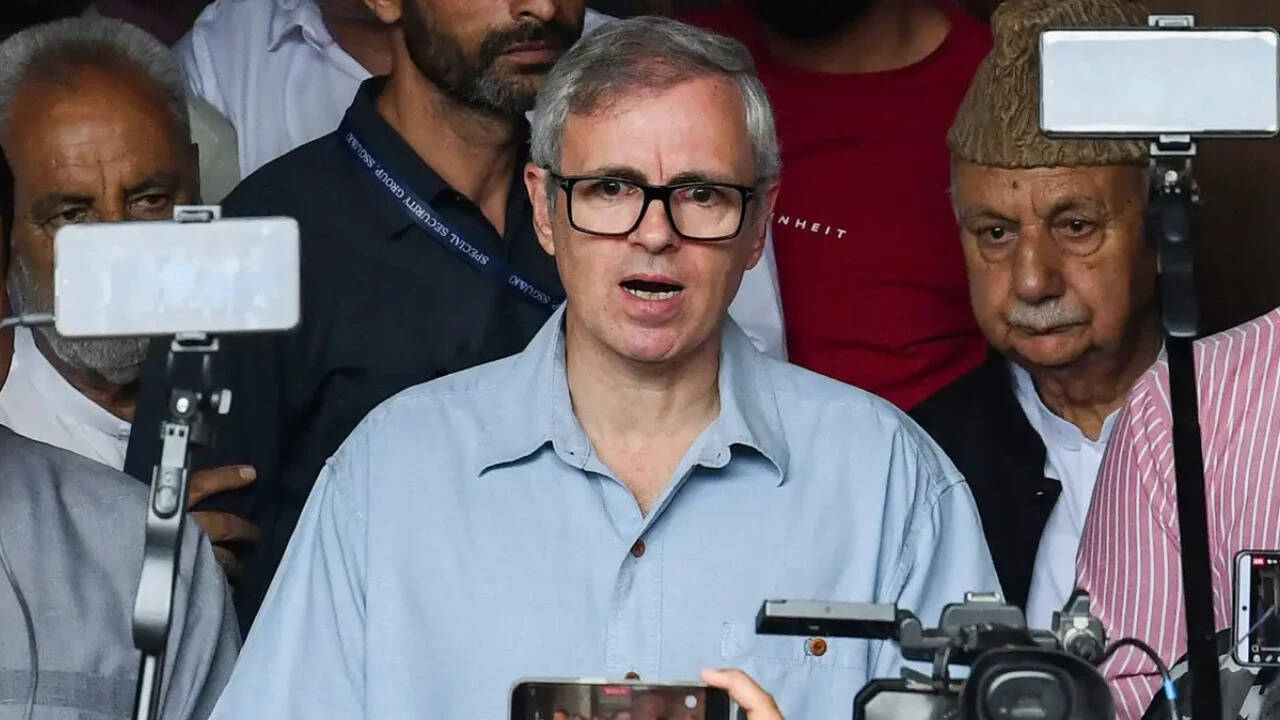
Jammu & Kashmir Chief Minister Omar Abdullah has reaffirmed the July 20 protest in Delhi demanding the restoration of statehood. The National Conference has invited 52 senior political figures to join the federalism‑driven march, while Congress backs a broader ‘Statehood Plus’ agenda.
मुख्य बिंदु (Key Takeaways)
- CM Omar Abdullah confirms a July 20 protest in Delhi for J&K statehood restoration.
- National Conference invites 52 senior political leaders to the federalism‑focused rally.
- Congress demands ‘Statehood Plus’ – land, jobs and constitutional rights for Kashmiris.
Jammu & Kashmir Chief Minister Omar Abdullah told reporters on July 16 that his party will proceed with the scheduled protest on July 20 in Delhi, despite mourning the death of his uncle, Dr. Mustafa Kamal, a senior National Conference (NC) leader. Abdullah said the party will travel to Delhi on July 19; if permission is granted, the march will be held at Jantar Mantar, otherwise the delegates will convene in the capital to decide their next steps.
Historical Context
The abrogation of Article 370 in August 2019 and the bifurcation of Jammu & Kashmir into two Union Territories remain a contentious issue. Former J&K chief minister and NC patriarch Farooq Abdullah has labeled the move a “deeply flawed decision” and framed the July 20 demonstration as a “cause of federalism.” In a letter to 52 political figures—including Sonia and Rahul Gandhi—Farooq invited them to join the protest, underscoring a broad coalition against the 2019 decision.
Allied Parties’ Stances
The Indian National Congress has expressed support for Omar’s demand but insists that “Statehood Plus” is essential, encompassing land rights, employment guarantees and full constitutional protections for the people of the region. Congress MP Pawan Khera emphasized, “We have always believed in statehood plus—land, jobs, and constitutional rights.” The Peoples Democratic Party (PDP), meanwhile, has not publicly clarified its position on the invitation extended to its leader Mehbooba Mufti, though it thanked Congress for highlighting the “real issues stemming from the disempowerment of J&K.”
Potential Implications
If the protest receives official clearance, it could become a high‑visibility, peaceful demonstration that pressures the central government to engage in dialogue. If denied, the NC’s decision to gather in Delhi and chart an alternative strategy could signal a shift toward more sustained political mobilization, possibly involving legal challenges and parliamentary advocacy. Analysts warn that the event may reignite national debates on centre‑state relations, autonomy, and the future of Jammu & Kashmir within the Indian Union.