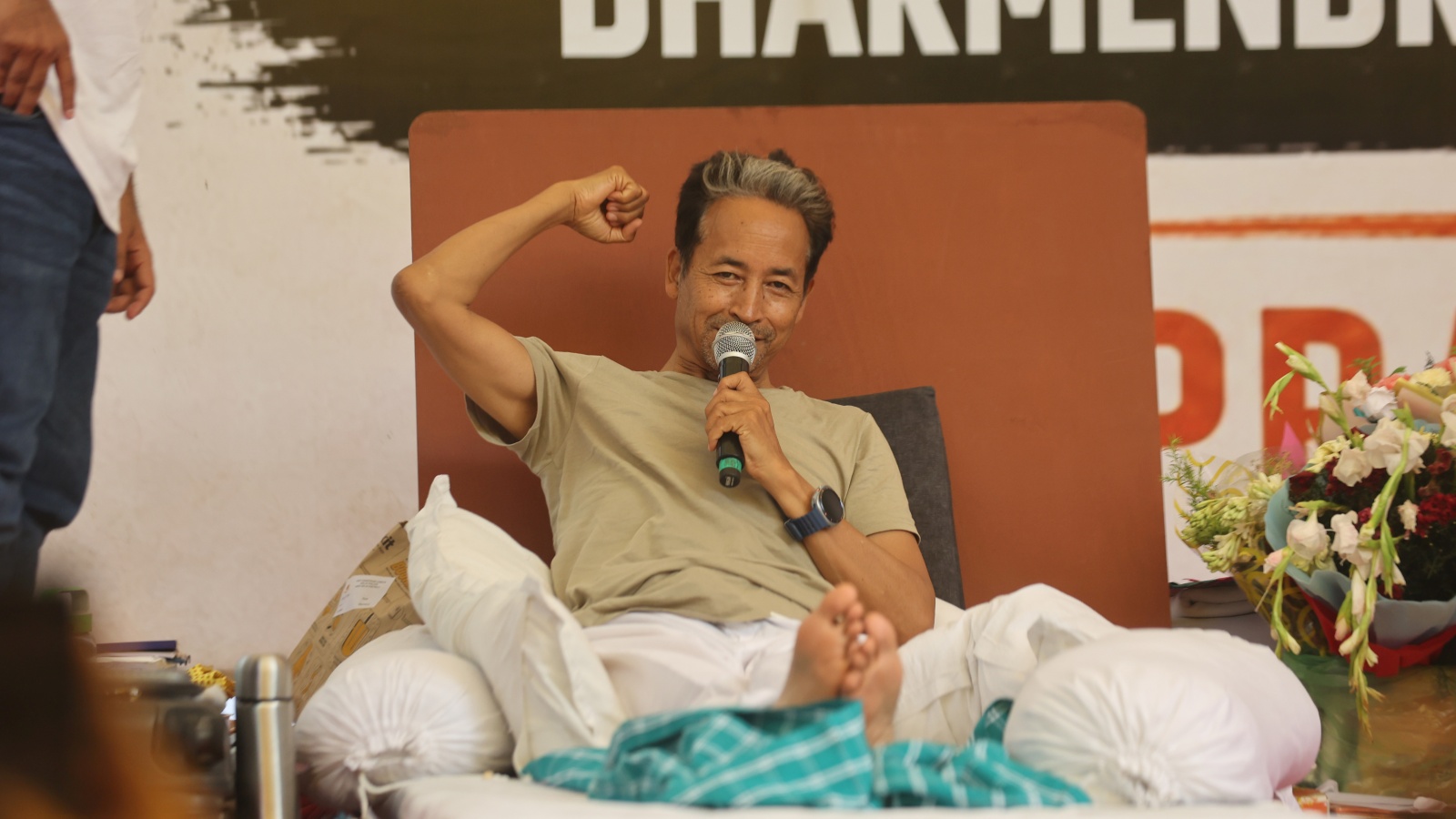
Delhi activist Sonam Wangchuk has shed nearly 9 kg during a 17‑day hunger strike, prompting doctors to warn that while he is currently stable, his health could deteriorate sharply in the coming days. A public‑interest litigation seeking forced feeding has been filed in the High Court.
Key Takeaways (मुख्य बिंदु)
- Sonam Wangchuk has lost about 9 kg over 17 days of fasting
- Doctors deem him stable but flag a high risk of critical health decline
- A PIL demanding forced feeding is pending before the Delhi High Court
New Delhi – Prominent activist Sonam Wangchuk, leader of the Cockroach Janata Party (CJP), has been on a hunger strike for 18 of the past 20 days, subsisting only on water and salt. During this period he has lost roughly 9 kilograms, a rapid decline that has drawn urgent attention from the medical community.
Medical Monitoring and Current Status
A team of four to five physicians from Ram Manohar Lohia Hospital, led by Dr. Satish Lamba, visits Wangchuk twice daily. His blood pressure reads 110/70 mmHg, blood sugar 80 mg/dL, and his weight today stands at about 57.15 kg. Despite being 59 years old, doctors note he has no pre‑existing conditions such as hypertension or diabetes, but the prolonged fast is raising his uric acid levels, indicating impending muscle breakdown.
Physiological Impact of the Fast
When food intake stops, the body first burns stored carbohydrates and then turns to fat, producing ketones. Ketones have been detected in Wangchuk’s urine, a red flag signalling metabolic stress. Continued fasting can trigger electrolyte imbalance, kidney strain, and significant muscle loss. Dr. Lamba likens the process to a motorcycle running low on fuel – the “carbohydrate” is the primary fuel, while fat and muscle act as reserves.
Legal Action and the Forced‑Feeding Debate
A public‑interest litigation (PIL) has been filed in the Delhi High Court requesting that Wangchuk be force‑fed, arguing that his life could be at risk within two days. Under Indian medical ethics, forced feeding is permissible only when a patient is deemed unstable or unable to make an informed decision. Dr. Lamba suggests that, if required, intravenous dextrose‑saline infusion would be the safest method, avoiding the complications associated with tube feeding.
Political and Social Context
The hunger strike is aimed at the removal of Union Education Minister Dharmendra Pradhan, a demand that has resonated with students and teachers across the nation. Wangchuk’s protest has therefore become a flashpoint, intertwining health concerns with broader questions of civil dissent, governmental accountability, and the limits of democratic expression.
While doctors assure that Wangchuk is presently stable, their vigilance underscores a narrow margin before his condition could become life‑threatening. The unfolding scenario is as much a medical emergency as it is a pivotal moment for India’s political discourse.